
Liquid Antibiotics and Reconstituted Suspensions: Why They Expire So Fast
Liquid antibiotics expire quickly after mixing-often in just 10 to 14 days. Learn why, how storage affects potency, and what happens if you use expired medicine.
- 8

When you find an old bottle of amoxicillin, a common antibiotic used to treat bacterial infections like strep throat, ear infections, and pneumonia. Also known as penicillin-type antibiotic, it works by stopping bacteria from building cell walls. But what happens when the expiration date passes? Many people assume expired meds are dangerous, but the truth is more nuanced. The FDA and independent studies show most antibiotics, including amoxicillin, retain most of their potency for years after the printed date—if stored properly in a cool, dry place. Still, that doesn’t mean you should take them.
The real risk isn’t always toxicity—it’s ineffective treatment, when a drug loses strength and fails to kill the infection. If your amoxicillin has lost potency, the bacteria might survive, multiply, and become resistant. That’s how superbugs form. This isn’t theoretical. A 2020 study in the Journal of Antimicrobial Chemotherapy found that 30% of expired amoxicillin samples dropped below 90% potency after just two years past expiration, especially if kept in humid bathrooms or sunny windowsills. And if it’s been sitting in a damp drawer for five years? Don’t risk it. You’re not saving money—you’re risking worse infection, longer recovery, or even hospitalization.
Storage matters more than you think. Amoxicillin suspension (the liquid form) lasts only 14 days once mixed, no matter what the bottle says. Tablets last longer, but heat and moisture break them down faster. If your pills smell funny, look discolored, or crumble easily, toss them. And never share antibiotics. What worked for your kid’s ear infection won’t fix your sinus infection—and might make it worse.
What about disposal? You shouldn’t flush it or throw it in the trash. The pharmaceutical waste, including expired antibiotics like amoxicillin, can pollute water and harm wildlife. Many pharmacies and hospitals offer take-back programs. If yours doesn’t, mix the pills with coffee grounds or cat litter, seal them in a bag, and throw them in the trash. It’s not glamorous, but it’s safer for everyone.
You’ll find posts here that dig into how drug potency fades over time, why some meds are riskier than others when expired, and how to tell if your medicine is still good. We also cover what to do when you can’t afford a refill, how to store antibiotics properly, and why some pharmacies still sell expired stock. This isn’t about scare tactics—it’s about knowing when to hold on and when to let go.
Nov, 23 2025
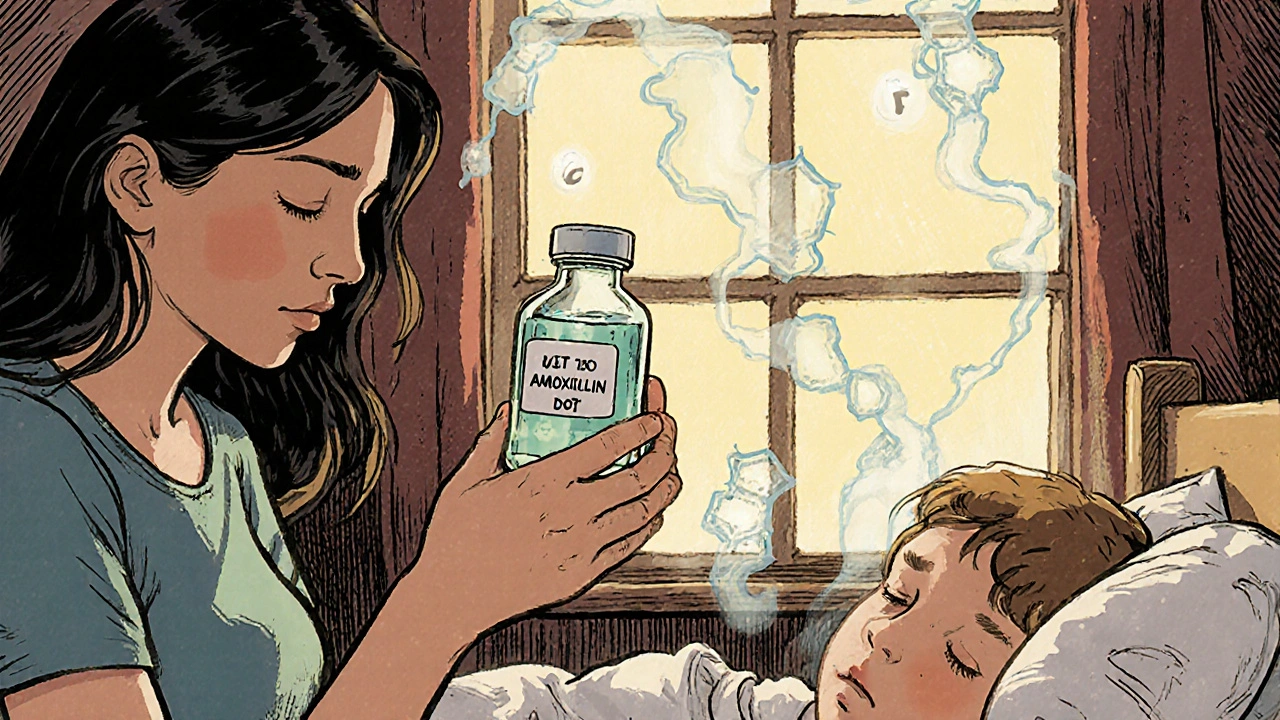
Liquid antibiotics expire quickly after mixing-often in just 10 to 14 days. Learn why, how storage affects potency, and what happens if you use expired medicine.