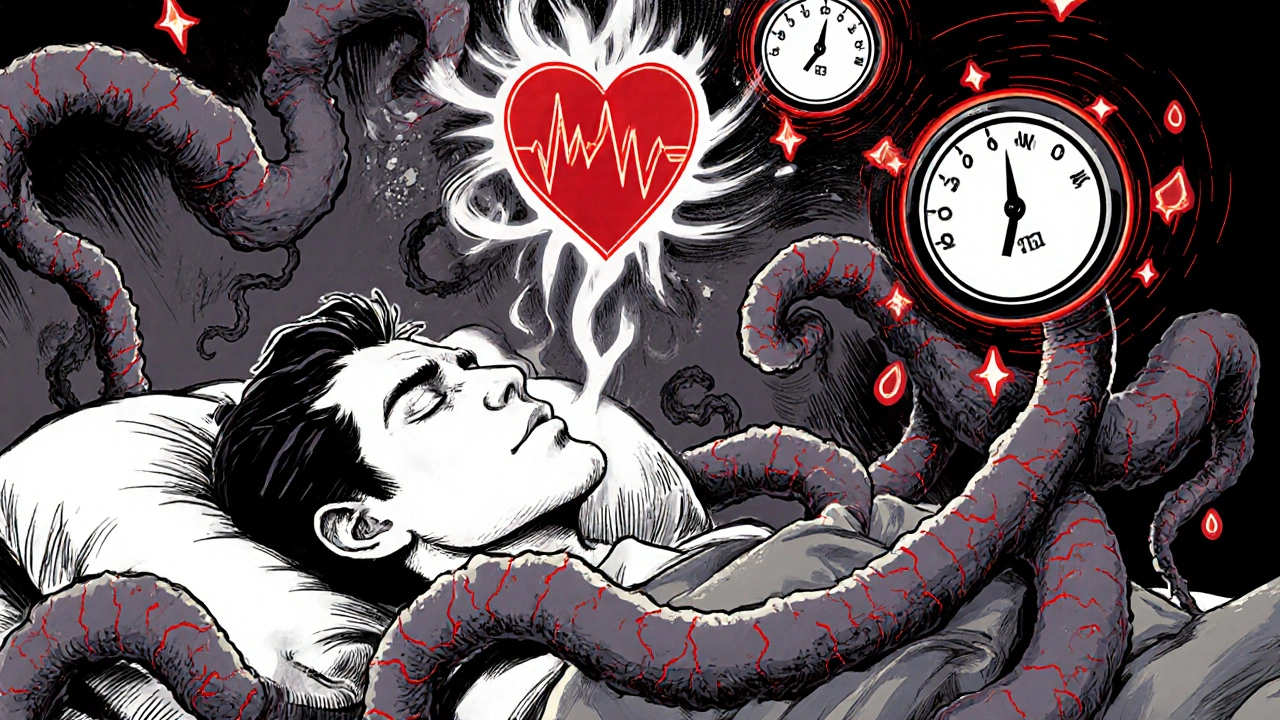
Obstructive Sleep Apnea: Causes, Risks, and What Actually Helps
When you have obstructive sleep apnea, a condition where throat muscles relax too much during sleep, blocking airflow and causing repeated breathing pauses. Also known as OSA, it’s not just about snoring—it’s your body struggling to breathe while you sleep, often without you even realizing it. This isn’t a minor annoyance. Every time your airway collapses, your brain wakes you up just enough to restart breathing—hundreds of times a night. You don’t remember it, but your sleep is shattered. And over time, that lack of restful sleep starts damaging your heart, your brain, and your daily life.
Obstructive sleep apnea is closely tied to excess weight, especially around the neck, which puts pressure on the airway. But it’s not only people who are overweight who get it—some have narrow airways, enlarged tonsils, or jaw structure issues. It’s also linked to daytime fatigue, the overwhelming tiredness that makes you zone out at work or nearly fall asleep while driving. Many people think they’re just "bad sleepers" or "stressed," but the real culprit might be OSA. Left untreated, it raises your risk of high blood pressure, stroke, heart attack, and even memory problems.
What helps? It’s not magic. The most effective treatment—CPAP—isn’t glamorous, but it works. It’s a machine that gently pushes air through your nose to keep your airway open. For some, weight loss, sleeping on your side, or oral devices that reposition the jaw make a big difference. And if you’re someone who snores loudly, wakes up gasping, or feels exhausted even after 8 hours in bed, you should get checked. It’s not about being lazy—it’s about your body fighting to survive every night.
Below, you’ll find real guides on how sleep apnea connects to other health issues—from how it worsens heart conditions to why it makes tinnitus worse at night. You’ll also see what treatments actually work, what doesn’t, and how medications or lifestyle changes can play a role. This isn’t theory. These are the stories and science behind what happens when you stop breathing in your sleep—and how to fix it.