

- 14
When you're managing a chronic condition like migraines or arthritis with feverfew, the last thing you want is to accidentally trigger a dangerous side effect-especially if you're already on blood thinners. Feverfew, a common herbal supplement used for migraine prevention, might seem harmless. But when combined with anticoagulants like warfarin, apixaban, or even low-dose aspirin, it can increase your risk of serious bleeding. This isn't just theory. There’s documented evidence, and real people have ended up in the hospital because of it.
What Is Feverfew, Really?
Feverfew (Tanacetum parthenium) is a flowering plant in the same family as daisies and chrysanthemums. It’s been used since ancient Greece to treat fevers, inflammation, and headaches. Today, it’s mostly taken as a capsule or liquid extract to prevent migraines. The active ingredient, parthenolide, works by blocking serotonin release in platelets, which reduces the clumping that leads to blood clots. That’s why it helps with migraines-many are triggered by abnormal blood vessel constriction and platelet activity.
Standardized feverfew supplements usually contain 0.2-0.7% parthenolide. A typical daily dose is 50-300 mg. But here’s the catch: even at normal doses, feverfew doesn’t just affect platelets. It also interferes with liver enzymes (CYP1A2, 2C9, 3A4) that break down many anticoagulant drugs. That means your blood thinner can build up in your system, making it stronger than intended.
The Real Risk: When Feverfew Meets Blood Thinners
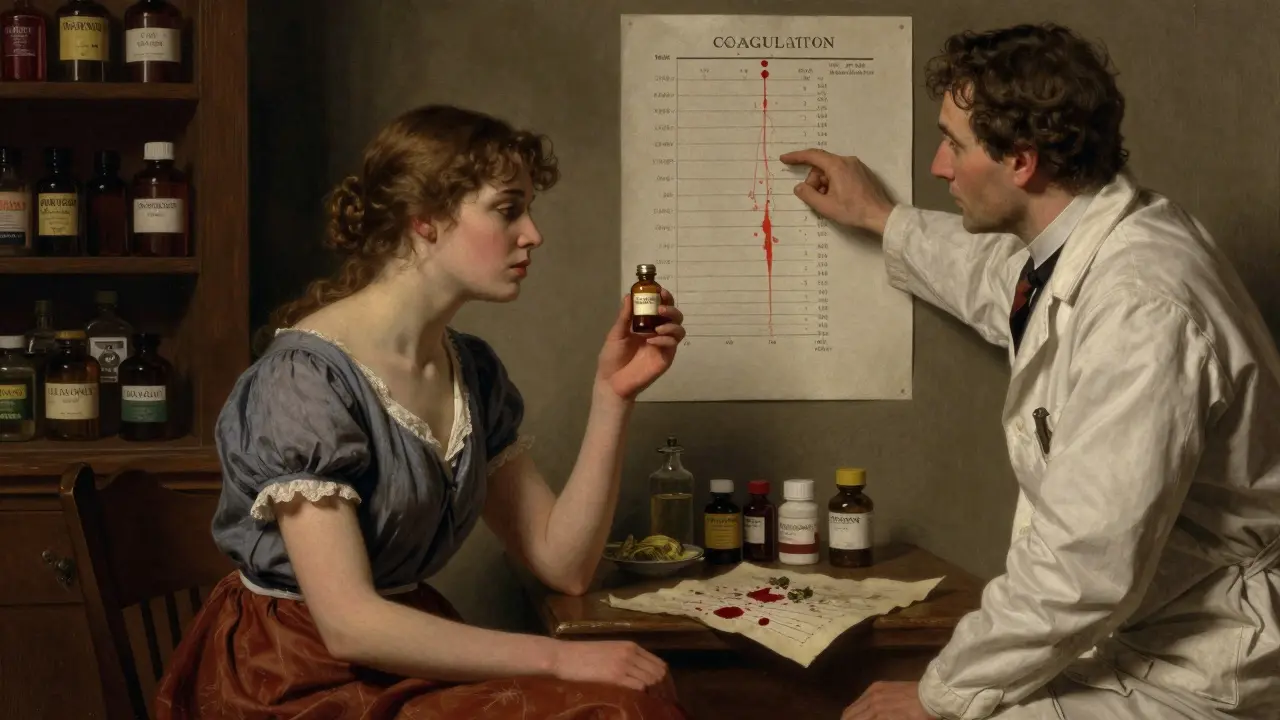
The danger isn’t just theoretical. In 2021, the NIH published a case report of a 36-year-old woman who took feverfew daily for months while also using warfarin. Her blood clotting times went way off the charts: prothrombin time (PT) hit 27.3 seconds (normal is 11-16), and partial thromboplastin time (PTT) reached 42 seconds (normal is 18-28). Her hemoglobin dropped to 10 g/dL, indicating internal bleeding. After stopping feverfew and waiting four months, her numbers returned to normal.
This isn’t an isolated incident. A 2020 survey of 300 feverfew users found that 11.3% developed mouth sores from chewing fresh leaves, and 6.7% had lasting oral inflammation. But the bigger red flag came from Reddit users on r/herbalremedies: 27 people reported easy bruising or nosebleeds lasting 15-45 minutes after combining feverfew with aspirin. For comparison, their normal nosebleeds lasted only 5-10 minutes. Healthline’s user reviews showed 41% of anticoagulant users reported increased bruising-compared to just 12% of people not on blood thinners.
What makes feverfew especially tricky is that it doesn’t affect all clotting pathways the same way. Unlike warfarin, which targets vitamin K-dependent factors, feverfew mainly blocks serotonin-induced platelet activation. That means standard tests like INR might not catch the problem. You could have a normal INR but still be at risk for spontaneous bleeding because your platelets aren’t working right.
How It Compares to Other Herbs
Feverfew is part of a group known as the "Few Gs"-feverfew, ginger, ginkgo, garlic, and ginseng-all known for potential bleeding risks. But not all are equal.
- Ginkgo biloba has over 12 documented cases of dangerous INR spikes with warfarin. It’s a stronger inhibitor of platelet aggregation and is often flagged first.
- Garlic and ginger clear from your system in about 72 hours. You can stop them a few days before surgery without much fuss.
- Feverfew lingers. It takes 2-3 weeks to fully leave your body, and stopping it suddenly can cause withdrawal symptoms: headaches (41%), insomnia (32%), joint pain (27%), and anxiety (73%).
- Dong quai is even riskier-it contains coumarin, a compound similar to warfarin. It’s classified as having a "documented risk." Feverfew? Only "theoretical." But the one documented case shows that "theoretical" can still be deadly.
That’s why guidelines vary. The American Society of Anesthesiologists says stop feverfew at least 14 days before surgery. For ginseng? Just 7 days. For garlic? 3-5 days. Feverfew demands more caution because of its lingering effects and unpredictable impact on clotting.
What Doctors Recommend
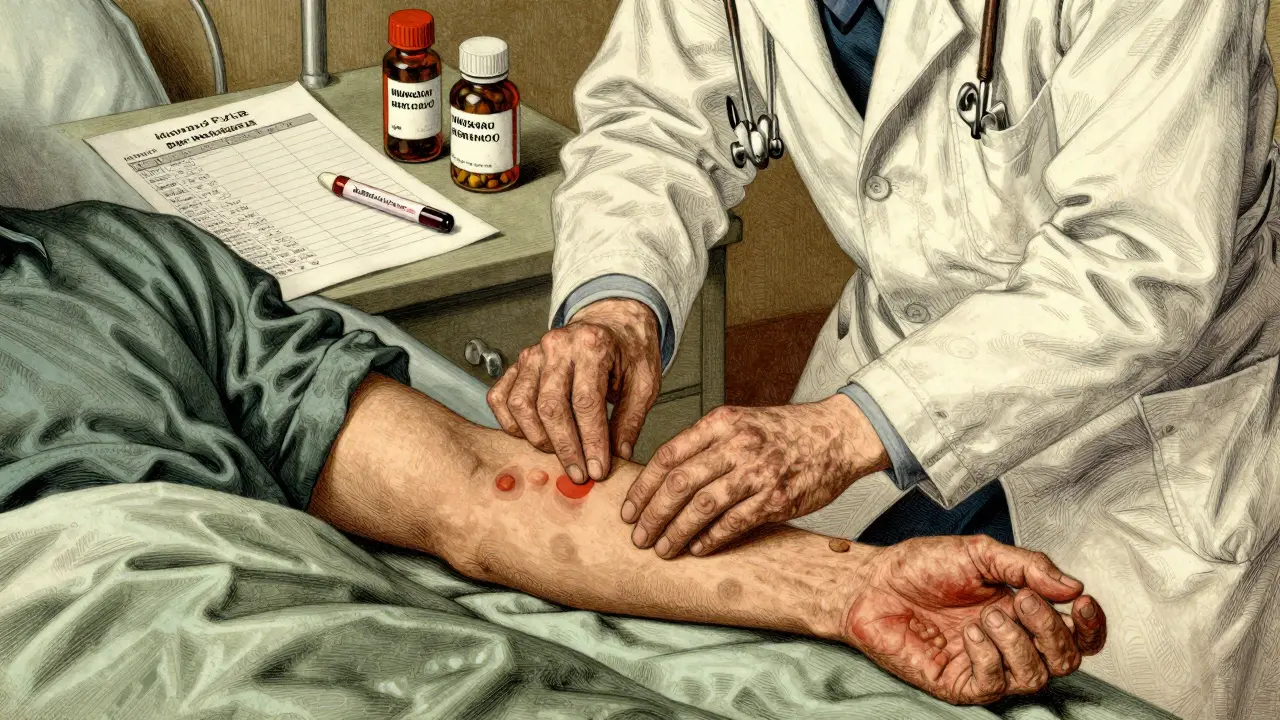
Experts agree: if you’re on anticoagulants, don’t take feverfew without supervision. The Memorial Sloan Kettering Cancer Center (2023) and the Restorative Medicine monograph (2022) both say the same thing-monitoring is non-negotiable.
Here’s what a responsible healthcare provider should do:
- Ask about herbal use during every medication review. Many patients don’t think of supplements as "medications."
- Get baseline blood tests before starting feverfew: PT, PTT, INR, and hemoglobin.
- Repeat tests every 2 weeks for the first month if you’re already on warfarin or another anticoagulant.
- If you’re planning surgery, stop feverfew at least 14 days ahead. For high-risk procedures (like brain or spine surgery), go for 21 days.
- Don’t quit feverfew cold turkey. Taper slowly over 2-3 weeks to avoid withdrawal symptoms like rebound headaches or anxiety.
Also, avoid fresh feverfew leaves. Chewing them causes mouth ulcers in about 1 in 9 users. Capsules eliminate that risk. Stick to standardized, encapsulated forms if you must use it.
Who Should Avoid Feverfew Altogether?
Some people should never take feverfew-even without anticoagulants:
- Pregnant or breastfeeding women-no safety data exists.
- People with liver or kidney disease-the liver processes parthenolide; kidneys clear metabolites. Impaired function = higher risk.
- Children under 18-no studies on safety or dosing.
- Anyone with a ragweed allergy-feverfew is in the same plant family. Cross-reactivity is common.
And if you’re on other drugs that affect bleeding-like clopidogrel, NSAIDs (ibuprofen, naproxen), or even SSRIs-add feverfew to the list of things to avoid.
What’s Coming Next?
Research is moving fast. In 2023, the NIH funded $1.2 million toward studying feverfew-anticoagulant interactions-a 300% increase from 2020. A major clinical trial (NCT05567891) is currently testing how feverfew affects apixaban levels in healthy volunteers. Results are expected in mid-2024.
Future guidelines may include:
- Standardized feverfew products with parthenolide levels below 0.2% for people on blood thinners.
- Point-of-care tests to measure parthenolide levels in blood-like a rapid check before surgery.
- Updated labeling on supplements requiring warning labels for anticoagulant users.
For now, the message is simple: if you’re on anticoagulants, don’t take feverfew unless your doctor approves it-and even then, monitor closely.
What to Do If You’ve Already Taken Feverfew with Blood Thinners
If you’ve been taking feverfew and anticoagulants together:
- Don’t panic. But don’t ignore it either.
- Stop feverfew immediately.
- Contact your doctor. Ask for a PT/INR/PTT check. Even if you feel fine, bleeding can be internal.
- If you’ve had unexplained bruising, nosebleeds, or heavy periods, mention it. Vaginal bleeding was the key clue in the 2021 NIH case.
- Wait 2-3 weeks before restarting any herbal supplement. Let your body reset.
And if you’re thinking about starting feverfew? Talk to your pharmacist or doctor first. Bring a list of everything you take-even "natural" stuff. Many drug interactions fly under the radar because people assume supplements are safe.
Can I take feverfew if I’m on warfarin?
No, it’s not recommended. Feverfew can increase warfarin’s effects by inhibiting the liver enzymes that break it down (CYP2C9 and CYP3A4). This raises your risk of bleeding, even if your INR seems normal. One documented case showed PT and PTT levels double after combining feverfew with warfarin. If you’re on warfarin, avoid feverfew unless your doctor specifically approves it and monitors your clotting factors closely.
How long should I stop feverfew before surgery?
Stop feverfew at least 14 days before any surgical procedure. For high-risk surgeries-like brain, spinal, or major abdominal operations-doctors recommend stopping 21 days ahead. Feverfew’s active compound, parthenolide, lingers in the body and can impair platelet function long after you stop taking it. Stopping early also helps prevent withdrawal symptoms like headaches and anxiety.
Does feverfew interact with aspirin or other antiplatelet drugs?
Yes. While most research focuses on warfarin, feverfew also increases bleeding risk with aspirin, clopidogrel, and other antiplatelet drugs. A Reddit survey of 147 users found 27 reported easy bruising or prolonged nosebleeds after combining feverfew with low-dose aspirin. The mechanism is additive: both drugs reduce platelet clumping, making it harder for your blood to clot when needed.
Can I switch from feverfew to another herb for migraines?
Yes, but choose carefully. Butterbur has strong evidence for migraine prevention and doesn’t affect clotting. However, it must be PA-free (free of pyrrolizidine alkaloids) to be safe. Magnesium, riboflavin (B2), and CoQ10 are also well-studied alternatives with no bleeding risk. Always discuss alternatives with your doctor before switching.
Why does feverfew cause withdrawal symptoms?
Long-term use of feverfew (over 6 months) appears to alter how your body regulates pain and inflammation pathways. When you stop suddenly, your body overcompensates, leading to rebound headaches (41%), insomnia (32%), joint pain (27%), and anxiety (73%). This is called "post-feverfew syndrome." To avoid it, taper off slowly over 2-3 weeks instead of stopping cold turkey.
Rachidi Toupé GAGNON
February 12, 2026 AT 13:50Vamsi Krishna
February 13, 2026 AT 03:51Brad Ralph
February 14, 2026 AT 17:03christian jon
February 14, 2026 AT 21:10Suzette Smith
February 14, 2026 AT 23:49Pat Mun
February 15, 2026 AT 17:08andres az
February 15, 2026 AT 21:08athmaja biju
February 16, 2026 AT 14:55Craig Staszak
February 18, 2026 AT 07:34alex clo
February 18, 2026 AT 16:52Alyssa Williams
February 19, 2026 AT 07:07Ernie Simsek
February 20, 2026 AT 01:10Joanne Tan
February 20, 2026 AT 07:47Ojus Save
February 21, 2026 AT 14:56