

- 13
Every year, more than a million people in the U.S. are harmed by medication errors. Many of these mistakes never reach the patient-not because of luck, but because a pharmacist caught them. In hospitals, community pharmacies, and long-term care facilities, pharmacists are the final, critical check before a pill goes into a patient’s hand. Their role isn’t just filling prescriptions. It’s stopping harm before it happens.
The Final Safety Net
Think of the medication journey: a doctor writes a prescription, it gets sent electronically or on paper, a pharmacy technician inputs it, and then the pharmacist reviews it. That last step isn’t a formality. It’s the last line of defense. According to the Institute for Safe Medication Practices, pharmacists intercept about one in four potentially harmful errors that would’ve otherwise reached patients. That’s not a small number. That’s tens of thousands of serious injuries or deaths prevented every year.These aren’t just typos. Errors include wrong doses, dangerous drug combinations, allergies ignored, or medications prescribed for conditions they shouldn’t treat. One 2022 study in a Tehran hospital found pharmacists caught 112 errors among 861 patients. Doctors made nearly half the mistakes. Nurses made almost as many. Patients themselves made a tiny fraction. The system is full of cracks. Pharmacists are the glue holding it together.
How They Catch Errors
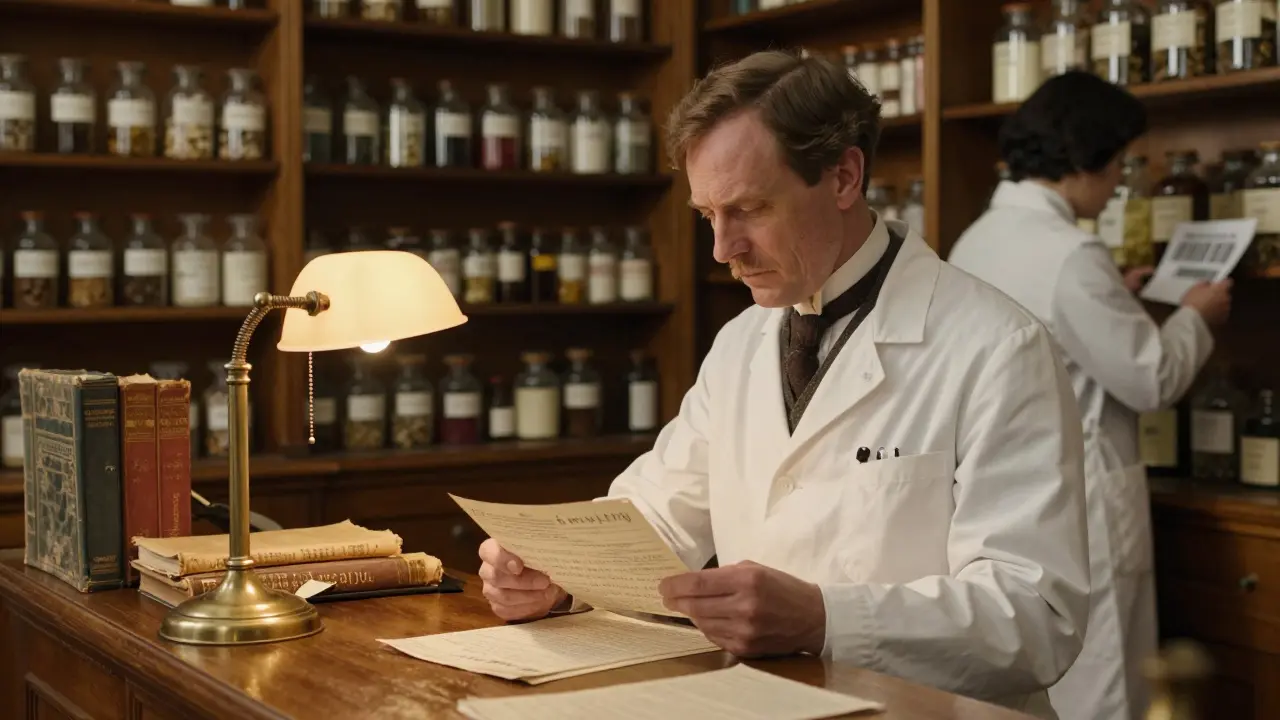
Pharmacists don’t just glance at a script. They use a mix of technology and trained judgment. Electronic health records show a patient’s full history-what they’re taking now, what they’ve taken before, allergies, kidney or liver function. Clinical decision support systems flag possible interactions. For example, if someone is on warfarin and a new prescription for an antibiotic comes in, the system might warn of a dangerous interaction that could cause internal bleeding. But the system doesn’t decide. The pharmacist does.That’s where human expertise matters. A computer might flag 10 potential interactions. Eight of them might be low-risk or already managed. The pharmacist knows which ones need action. In one real case, a pharmacist spotted a 10-fold overdose on a warfarin prescription. The patient would’ve bled out. The pharmacist called the doctor, the dose was corrected, and the patient stayed safe.
In hospitals, pharmacists do medication reconciliation during admissions and discharges. They compare what the patient says they’re taking with what’s in the chart. On average, they find 2.3 discrepancies per patient. One might be an old blood pressure pill no longer needed. Another might be a missing diabetes drug. Fixing these prevents readmissions and complications.
The Power of Double Checks
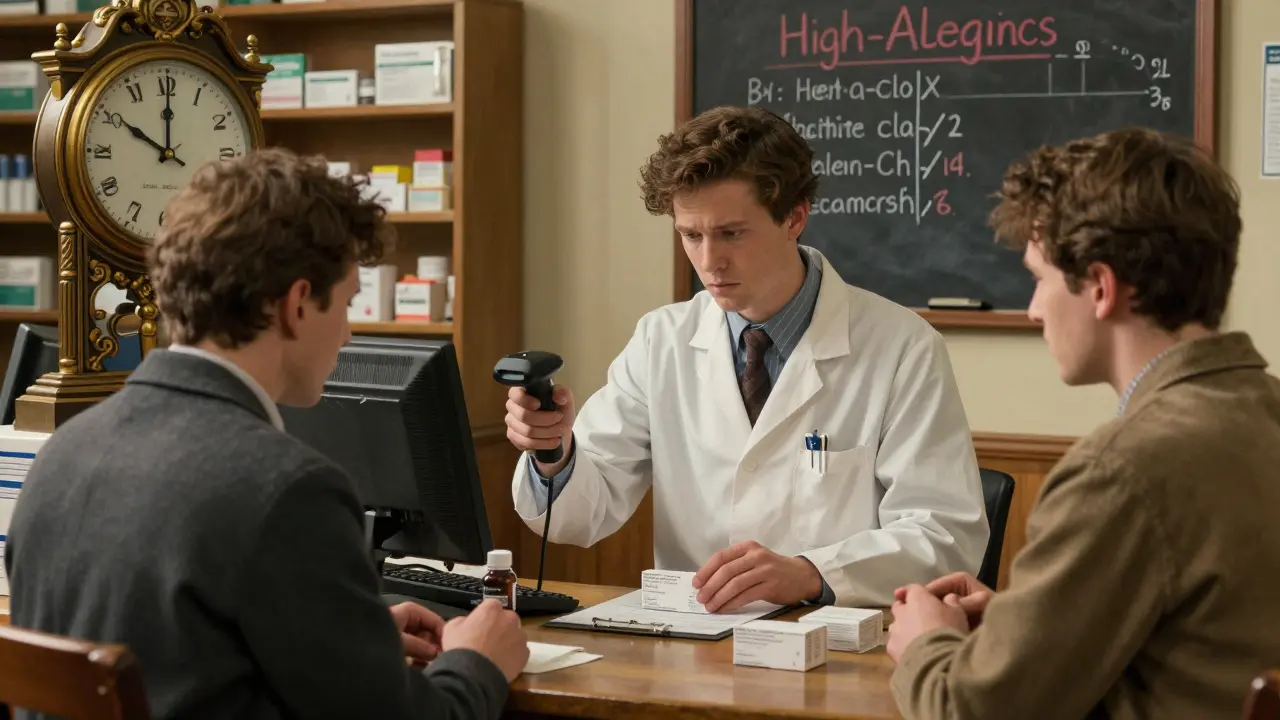
In community pharmacies, a common practice is the double-check system. A pharmacy technician pulls the medication and scans the barcode. Then, the pharmacist verifies it against the prescription. Studies show this cuts dispensing errors by 78% compared to single-check systems. It’s not about distrust. It’s about layers of protection.Barcodes, automated dispensing cabinets, and electronic prescribing have reduced errors from handwriting or misreading names. Electronic prescribing alone cuts errors from illegible scripts by 95%. But technology doesn’t catch everything. A patient might have a new allergy not yet entered into the system. A drug might be prescribed for off-label use that’s risky. A pharmacist’s training lets them spot these.
High-Risk Medications Need Extra Care
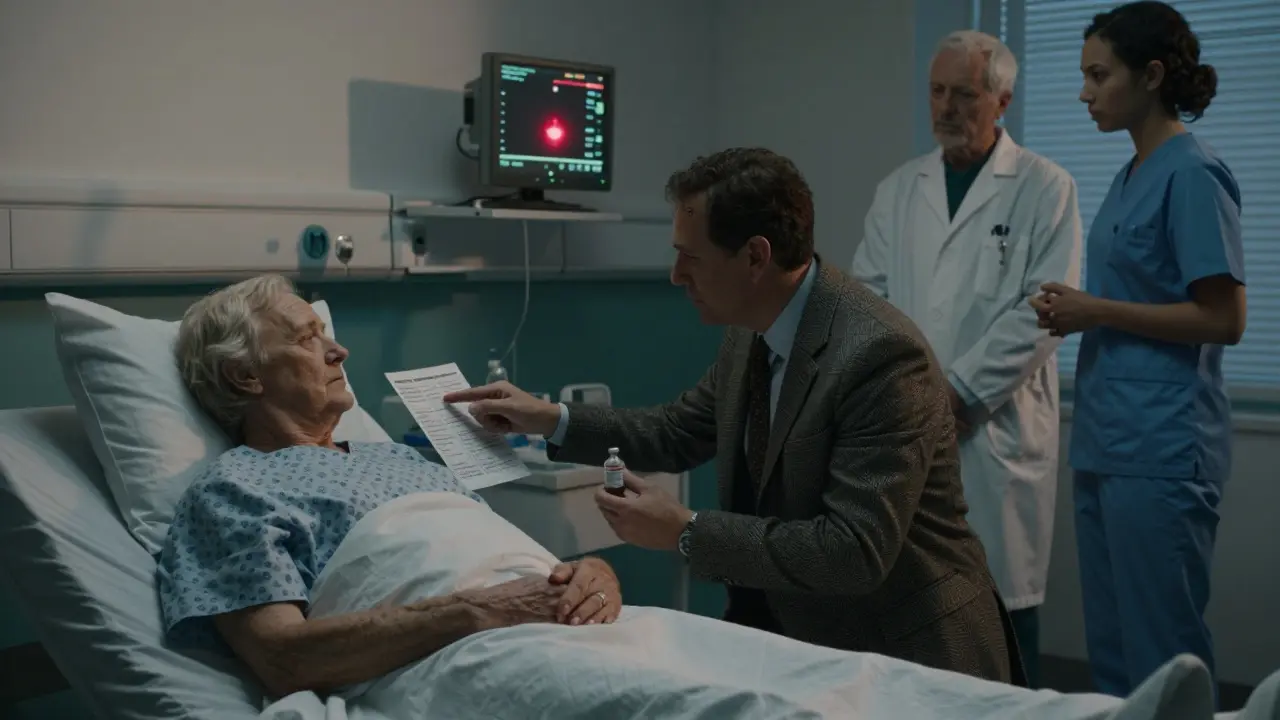
Some drugs are dangerous if used wrong. Insulin, anticoagulants like heparin or warfarin, opioids, and chemotherapy agents are called “high-alert medications.” A small mistake can kill. That’s why pharmacists use stricter protocols for these. Independent double-checks are required. Labels are reviewed twice. Doses are confirmed with the prescriber. In one hospital, implementing this for insulin reduced dosing errors by 42%.For drugs like isotretinoin (used for acne) or thalidomide, the FDA requires special Risk Evaluation and Mitigation Strategies (REMS). Pharmacists must verify the patient has had counseling, signed consent forms, and is using birth control if applicable. Skipping any step can lead to birth defects. Pharmacists are the gatekeepers here.
Technology Isn’t Enough
You might think computers could do all this. But studies show they can’t. Computerized order entry systems reduce errors by 17-25%. Add a pharmacist, and that jumps to 45-65%. Why? Because machines don’t understand context. A patient might be on multiple painkillers because they’re recovering from surgery. The system might flag a drug interaction. The pharmacist knows the patient is in the hospital for a fracture and needs the combination. They adjust, not eliminate.Alert fatigue is real. Pharmacists see hundreds of alerts a day. Many are low-priority or false. One study found they override nearly half of all drug interaction alerts because they seem irrelevant. But when systems are tuned to prioritize only high-risk interactions, override rates drop to 28%. That’s why good systems don’t just scream-they whisper when it matters.
What Happens When Pharmacists Are Overworked
This system only works if pharmacists have time. In the U.S., the average pharmacist spends 2.7 hours a week just resolving potential errors. In busy community pharmacies, they might handle 200-300 prescriptions a day. That’s one every 3-4 minutes. When the pace gets too fast, mistakes slip through.Reddit threads from pharmacy techs reveal the pressure: “I see 3-4 serious errors a week that the pharmacist misses because they’re rushing.” One tech described a patient getting the wrong antibiotic because the pharmacist was on a phone call with a doctor. The error was caught only after the patient called back with a rash.
It’s worse in low-income countries. A 2022 study found that in places with one pharmacist for every 500 patients, error reduction was only 15%. Staffing matters. Safety isn’t free. It needs people.
Teamwork Makes the Difference
The best outcomes happen when pharmacists work with doctors, nurses, and technicians-not in isolation. A 2022 study showed that when pharmacists were part of an interdisciplinary team, medication error rates dropped by 52%. When they worked alone, it was only 31%. Why? Because communication flows both ways. A pharmacist can call a doctor and say, “This dose is too high for an elderly patient with kidney issues.” The doctor adjusts. The patient wins.Pharmacists also help optimize regimens. After catching an error, they might suggest a cheaper alternative, reduce pill burden, or switch to a once-daily dose. One study found that after pharmacist intervention, 28% of medication regimens became more appropriate. That’s not just safety-it’s better care.
Cost Savings and Real Impact
Preventing errors isn’t just ethical-it’s economic. Each prevented error saves an estimated $13,847 in healthcare costs. That includes ER visits, hospital stays, and long-term care. Nationally, pharmacist interventions save $2.7 billion a year. That’s more than most hospitals spend on IT upgrades.Regulations are catching up. The Joint Commission now requires medication reconciliation in every care transition. That creates jobs. Hospitals are hiring more clinical pharmacists. The U.S. medication safety tech market hit $3.8 billion in 2022, and pharmacist-led services make up 42% of that. By 2026, analysts predict a 22% increase in dedicated medication safety pharmacist roles.
The Future Is Bright, But the Pressure Is Real
New tools are emerging. AI systems now help prioritize which prescriptions need the most attention. They analyze patterns and flag high-risk cases before the pharmacist even opens the file. One NIH study showed this cut cognitive load by 35% without missing a single error.In 27 states, pharmacists can now adjust medications under collaborative agreements-no doctor’s note needed. For example, if a patient’s blood thinner level is too low, the pharmacist can increase the dose. This reduces delays and keeps patients safe.
But there’s a looming problem: pharmacist shortages. The American Association of Colleges of Pharmacy predicts a shortfall of 15,000 pharmacists by 2025. If we don’t hire more, the safety net gets thinner. More prescriptions per pharmacist means more chances for errors to slip through.
Pharmacists aren’t just dispensers. They’re clinical experts, safety auditors, and patient advocates. They don’t just read scripts-they read people. They know when a patient sounds confused. They notice when a refill request comes in too early. They ask the questions no one else has time for.
Every time a pharmacist pauses, double-checks, calls a doctor, or says, “Wait, this doesn’t add up,” they’re preventing a disaster. That’s the quiet, essential work they do every day.
How often do pharmacists catch medication errors?
Pharmacists intercept about one in four potentially harmful medication errors before they reach patients, according to the Institute for Safe Medication Practices. In hospitals, they catch an average of 2.3 medication discrepancies per patient during admission. In community pharmacies, double-check systems prevent 78% of dispensing errors that would otherwise occur.
What types of errors do pharmacists catch?
They catch wrong doses, drug interactions, allergies, duplicate therapies, incorrect routes (like oral instead of IV), and prescriptions for conditions the drug doesn’t treat. They also spot illegible handwriting, confusing drug names (like hydralazine vs. hydroxyzine), and missing lab results needed to safely prescribe.
Can technology replace pharmacists in catching errors?
No. While electronic systems reduce errors by 17-25%, adding a pharmacist increases detection to 45-65%. Computers flag potential issues, but pharmacists understand context-like a patient’s kidney function, other medications, or recent hospital stays-that machines can’t fully interpret. Human judgment is irreplaceable.
Why do pharmacists sometimes miss errors?
Workflow pressure is the biggest reason. In busy pharmacies, pharmacists may handle 200-300 prescriptions a day. Alert fatigue from too many low-priority system warnings also causes them to overlook real risks. Staffing shortages, especially in rural or underfunded areas, make it harder to slow down and verify.
What’s the economic impact of pharmacist error prevention?
Each prevented medication error saves an estimated $13,847 in healthcare costs. Nationally, pharmacist interventions prevent $2.7 billion in annual expenses from hospitalizations, ER visits, and long-term complications. The U.S. medication safety market is worth $3.8 billion, with pharmacist services making up 42% of that value.
Oladeji Omobolaji
January 22, 2026 AT 16:26Man, I never thought about how much pharmacists do until I saw my grandma almost get the wrong pill last year. They’re the unsung heroes of the whole system.
Janet King
January 23, 2026 AT 09:13The data presented in this article is accurate and well-sourced. Pharmacists serve as critical clinical gatekeepers in medication safety, and their interventions are statistically significant in reducing preventable harm.
Anna Pryde-Smith
January 23, 2026 AT 21:29THIS IS WHY WE NEED TO PAY PHARMACISTS MORE AND STOP TREATING THEM LIKE ROBOT FILLERS. I WORKED IN A PHARMACY FOR THREE YEARS AND SAW A DOCTOR PRESCRIBE 100MG OF OXYCODONE TO A 78-YEAR-OLD WOMAN WITH KIDNEY FAILURE. THE PHARMACIST CALLED HIM OUT. THE DOCTOR YELLED AT HER. SHE STOOD HER GROUND. THAT WOMAN IS STILL ALIVE BECAUSE OF HER.
Sallie Jane Barnes
January 25, 2026 AT 07:30Let’s not forget the pharmacy techs who do the first pull and flag things too. They’re the eyes on the ground. Without them, even the best pharmacist can’t catch everything. We need to lift up the whole team.
Kerry Moore
January 26, 2026 AT 14:15It’s fascinating how much context a pharmacist brings to the table. A computer sees a drug interaction; a human sees a patient who’s been on that combination for six months with no issues, or a recent hospitalization that changed their renal function. That’s why automation alone fails.
Sue Stone
January 28, 2026 AT 00:45My cousin’s a pharmacist. She once spent 45 minutes on a single script because the patient was on 14 meds and the system was screaming like a banshee. She called the doctor, got it fixed, and the patient cried when she explained it. That’s the real work.
Dawson Taylor
January 30, 2026 AT 00:04Technology reduces noise. Humans reduce harm.
Laura Rice
January 31, 2026 AT 22:14Y’ALL. I just wanna say THANK YOU to every pharmacist who’s ever looked me in the eye and said, ‘Are you sure you want this?’ Like, I didn’t even know I was asking for the wrong thing. You saved me from myself. I’m not even joking. I cried in the parking lot after that visit. You’re angels in white coats.
Stacy Thomes
February 2, 2026 AT 20:08Pharmacists are the real MVPs. No cap. They’re the ones who catch the mix-ups, the overdoses, the allergies you forgot to tell your doctor about. We need more of them, not less. And yes, they deserve better pay and less pressure.
dana torgersen
February 3, 2026 AT 21:47...i mean, like, i know computers are supposed to be smart, right? but they dont understand that my auntie takes her blood pressure med with grapefruit juice, and that one alert was totally wrong, but then the pharmacist was like, ‘oh, that’s why she’s crashing’... and i was like... wow... thank you for seeing what the machine missed...
charley lopez
February 4, 2026 AT 22:27The pharmacoeconomic ROI of clinical pharmacist intervention is robust, with a cost-benefit ratio exceeding 1:10 in most peer-reviewed studies. The marginal utility of human adjudication in high-alert medication contexts remains statistically significant (p<0.01) despite algorithmic advances.
Kerry Evans
February 4, 2026 AT 22:30Of course pharmacists catch errors-because doctors are lazy and nurses are distracted. It’s not that pharmacists are heroes. It’s that the whole system is broken and they’re the only ones left trying to fix it with duct tape and caffeine.
Susannah Green
February 5, 2026 AT 07:47My mom’s pharmacist just called her last week because her new pill looked different-turned out the generic was switched to a brand that causes dizziness. She saved her from a fall. That’s not just a job. That’s family.