

- 9
Every year, thousands of people are harmed-not by the medicine they need, but by the one they get by mistake. And it’s not because someone was careless. It’s because two drugs look almost identical, or sound the same when spoken aloud. This isn’t rare. It’s happening in hospitals, pharmacies, and clinics every single day. The problem? Look-alike, sound-alike (LASA) generic drugs.
What Exactly Are Look-Alike, Sound-Alike Drugs?
Look-alike, sound-alike (LASA) drugs are medications that are confusingly similar in how they look, how they’re spelled, or how they sound when said out loud. These aren’t just minor mix-ups. They’re dangerous. For example:
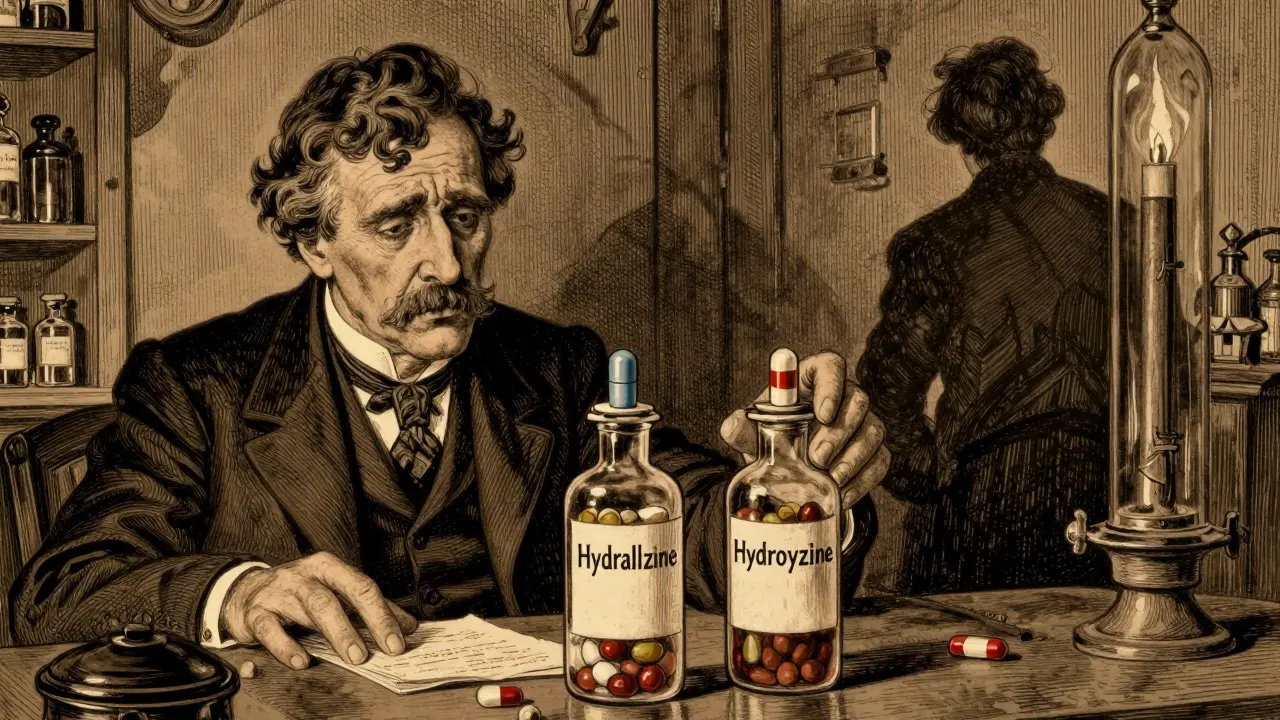
- Hydralazine (a blood pressure drug) vs. Hydroxyzine (an allergy medication)
- Quinidine (for heart rhythm) vs. Quinine (for malaria)
- Valtrex (for herpes) vs. Valcyte (for CMV in transplant patients)
These aren’t hypotheticals. They’re real cases documented by the Institute for Safe Medication Practices (ISMP) and the World Health Organization. The names are close. The packaging looks similar. Even the pill shapes and colors can match. And when a nurse hears "hydroxyzine" over a crackling intercom, they might grab the wrong bottle-especially if both are stored next to each other.
Generics make this worse. When multiple companies make the same generic drug, each one can choose its own packaging, color, or size. One company’s 10 mg hydralazine capsule might look exactly like another’s 10 mg hydroxyzine capsule. No one’s breaking the rules. But the system is broken.
Why Generics Are the Main Culprit
Brand-name drugs usually have unique packaging, logos, and consistent shapes. But generics? They’re designed to be interchangeable. And that’s the problem. A 2021 study in Pharmacy Practice found that over 10% of medication errors involved visual similarities in packaging. That’s not a glitch. It’s the norm.
Consider this: a patient on a transplant regimen needs valganciclovir to prevent CMV infection. But if the pharmacist grabs valacyclovir instead-because the names start the same, the bottles are similar, and the dosing looks alike-they’ve just given a drug meant for herpes to someone with a failing immune system. The consequences? Organ rejection, hospitalization, even death.
And it’s not just pharmacists. Doctors write prescriptions. Nurses administer doses. Patients take pills at home. At every step, LASA drugs create traps. The WHO estimates that 25% of all medication errors stem from these name and visual similarities. That’s one in four mistakes. And generics make up over 90% of prescriptions in the U.S. alone.
Where Do These Errors Happen?
These mistakes don’t happen in one place. They creep in at every stage:
- Prescribing: A doctor types "albuterol" but selects "atenolol" from a dropdown list because the names are next to each other on the screen.
- Dispensing: A pharmacist pulls a bottle off the shelf, sees "hydroxyzine," and doesn’t notice the extra "a" in "hydralazine." The labels look almost identical.
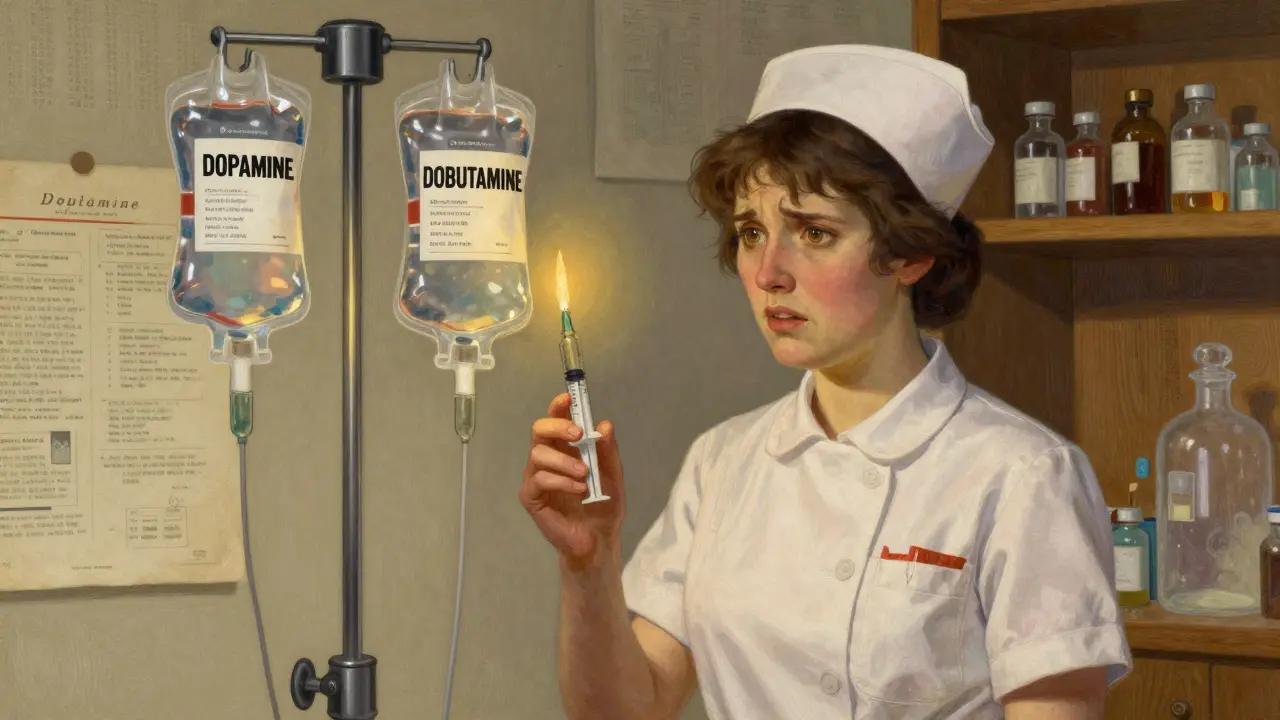
- Administration: A nurse hears "dopamine" over the phone and gives "dobutamine"-two critical IV drugs used in emergencies. One raises blood pressure. The other increases heart rate. Mix them up, and you can kill someone in minutes.
According to Merative’s 2023 analysis, 68% of medication errors happen during administration. That’s when the drug is actually going into the patient’s body. No second chances. No undo button.
And it’s not just hospitals. A 2022 survey in the Journal of the American Pharmacists Association found that 78% of pharmacists had encountered a LASA error at least once a month. One in three reported near-misses weekly. That’s not bad luck. That’s systemic.
How Do We Fix This?
Blaming people won’t work. Nurses aren’t lazy. Pharmacists aren’t sloppy. Doctors aren’t careless. The system is set up to fail. So we fix the system.
Tall man lettering is one of the most proven tools. It’s simple: capitalize the different parts of similar drug names. Instead of "prednisone" and "prednisolone," you write predniSONE and predniSOLONE. A 2020 study in the Journal of Patient Safety showed this reduced errors by 67% across 12 hospitals. It’s not fancy. It’s just smart typography.
Physical separation works too. If hydralazine and hydroxyzine are stored on opposite ends of the pharmacy shelf, the chance of grabbing the wrong one drops dramatically. Many hospitals now use color-coded bins or separate drawers for high-risk LASA pairs.
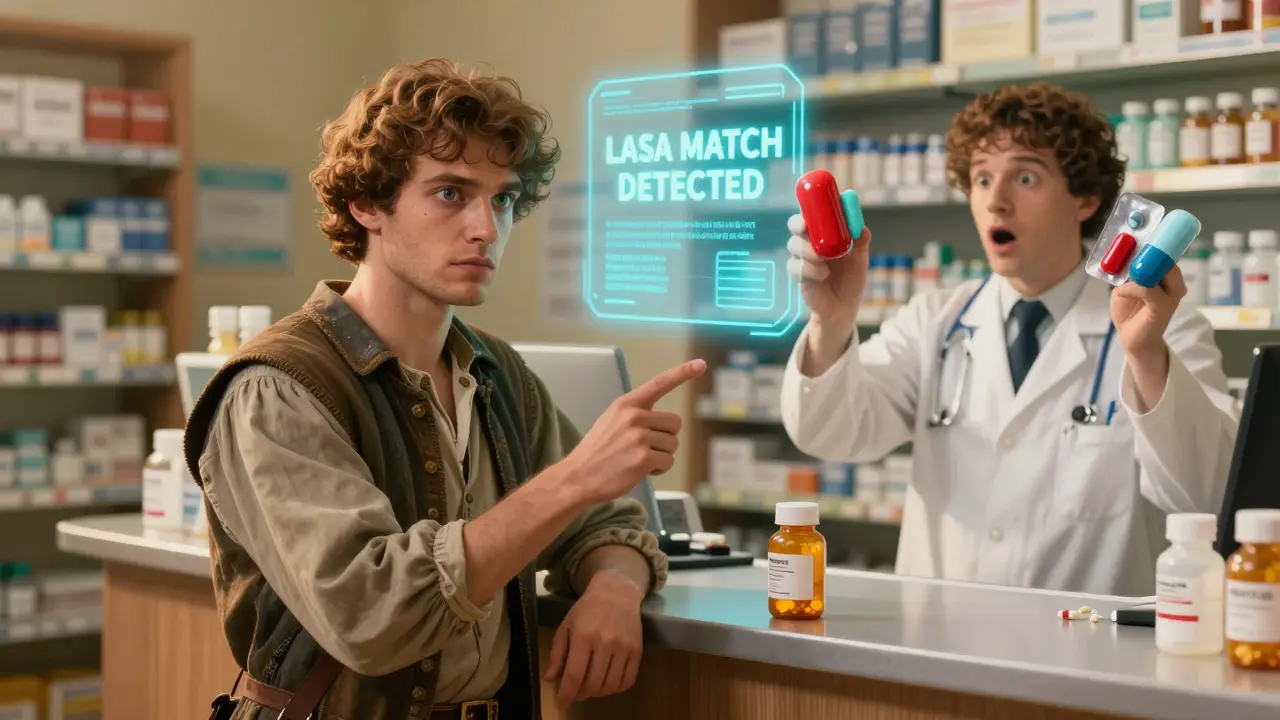
Barcodes and clinical decision support are game-changers. When a nurse scans a drug before giving it, the system checks: "Is this the right drug for this patient?" If the system flags a LASA match-like dopamine vs. dobutamine-it stops the process. One hospital system cut LASA errors by 45% using this combo.
But the real breakthrough? AI in electronic health records. A 2023 study in the Journal of the American Medical Informatics Association tested an AI tool that scanned every prescription in real time. It caught 98.7% of potential LASA errors-and only gave a false alarm 1.3% of the time. That’s better than any human. And it works 24/7.
What’s Being Done-And What’s Not
The FDA has rejected 34 drug names since 2021 because they were too similar to existing ones. The European Medicines Agency now requires all new drugs to pass a name-similarity test before approval. That’s progress.
But here’s the gap: no one forces generic manufacturers to standardize packaging. A generic hydralazine from Company A can look completely different from Company B’s version. And there’s no rule saying they can’t copy the color or shape of a brand-name drug they’re copying. That’s a loophole.
Even worse, most small clinics and rural pharmacies still don’t use AI alerts or barcode scanning. They rely on memory and labels. And when you’re short-staffed, tired, and juggling ten patients at once, a quick glance at a bottle isn’t enough.
Only Magnet-recognized hospitals-those with the highest nursing standards-use an average of 6.2 LASA prevention strategies. Non-Magnet hospitals? Just 2.4. That’s not a gap. That’s a chasm.
What You Can Do
Even if you’re not a doctor or pharmacist, you can protect yourself and your loved ones:
- Ask for the generic name when you get a prescription. Don’t just take the pill. Know what it is.
- Check the label every time you pick up a refill. Does it look different? Ask why.
- Read the purpose on the bottle. If it says "for high blood pressure" but you’re taking it for anxiety, something’s wrong.
- Speak up if something feels off. "This pill looks different than last time." That’s not being difficult. That’s saving your life.
Patients are the last line of defense. And sometimes, the only one.
The Bigger Picture
Medication errors cost the U.S. healthcare system an estimated $42 billion a year. LASA errors are a huge chunk of that. But money isn’t the only cost. There are lives. There’s pain. There’s trauma.
The WHO’s "Medication Without Harm" campaign wants to cut severe medication errors by 50% by 2025. That’s ambitious. But possible-if we stop treating these mistakes as human failures and start treating them as system failures.
We have the tools. We have the data. We know what works. Tall man lettering. Separation. Barcodes. AI alerts. These aren’t science fiction. They’re low-cost, high-impact fixes.
The question isn’t whether we can stop LASA errors. It’s whether we’re willing to make the changes. Because every time a pharmacist grabs the wrong bottle, someone’s life is on the line. And no one should have to gamble with their health because two drugs look too much alike.
What are the most common look-alike, sound-alike drug pairs?
Some of the most frequently confused pairs include hydralazine and hydroxyzine, quinidine and quinine, dopamine and dobutamine, and Valtrex (valacyclovir) and Valcyte (valganciclovir). These drugs are used for completely different conditions-blood pressure, allergies, heart rhythm, infections-but their names and packaging make them easy to mix up. The Institute for Safe Medication Practices updates its official list quarterly, adding new high-risk pairs as new generics enter the market.
Are generic drugs more likely to cause LASA errors than brand-name drugs?
Yes. Brand-name drugs usually have unique packaging, logos, and standardized appearances. Generics, however, are made by multiple manufacturers, each choosing their own pill color, shape, and label design. This lack of standardization increases confusion. A 2021 study found that 10.77% of medication errors involved packaging similarities, and generics are the main source of these visual overlaps. The problem isn’t the generic drug itself-it’s the inconsistent way they’re packaged and labeled.
How effective is tall man lettering in preventing errors?
Tall man lettering-capitalizing the differing parts of similar drug names (e.g., predniSONE vs. predniSOLONE)-has been shown to reduce LASA errors by up to 67% in hospital settings, according to a 2020 study in the Journal of Patient Safety. It’s simple, low-cost, and doesn’t require new technology. Most major hospitals use it, but many smaller clinics and pharmacies still don’t. The FDA and WHO both recommend it as a best practice.
Can AI really prevent these errors?
Yes. A 2023 study in the Journal of the American Medical Informatics Association showed AI-powered clinical decision support systems reduced LASA errors by 82% over six months. These systems flag potential matches in real time as prescriptions are entered or drugs are scanned. They caught 98.7% of dangerous pairs and gave false alerts in only 1.3% of cases. That’s far more accurate than human memory. The biggest barrier isn’t technology-it’s adoption. Many clinics still use outdated systems without these alerts.
What should I do if I think I got the wrong generic drug?
Don’t take it. Call your pharmacist immediately. Ask: "Is this the same drug I got last time?" Check the label for the generic name, strength, and purpose. If the pill looks different, the bottle has a different color, or the instructions changed, it might be a different drug. Never assume it’s just a packaging change. When in doubt, wait. It’s better to be safe than sorry.
What Comes Next?
The FDA’s Safe Use Initiative has set a goal to reduce LASA errors by 50% in high-risk settings by 2025. That’s doable-if every pharmacy, hospital, and clinic adopts the proven tools we already have.
But real change needs pressure. Patients need to ask questions. Pharmacists need to push for better systems. Hospitals need to invest in AI and barcode tech-even if it’s not cheap. And regulators need to close the loophole that lets generic manufacturers use any color or shape they want.
Medication safety isn’t about perfection. It’s about reducing preventable harm. And LASA errors? They’re 100% preventable. We just have to choose to act.
Kristen Russell
December 31, 2025 AT 19:17Finally, someone put this into words. I work in a rural clinic and we just got a new batch of generics that look identical to other meds. I almost gave a patient hydroxyzine instead of hydralazine. Scared me straight. Tall man lettering should be mandatory.
sharad vyas
January 1, 2026 AT 08:35In my country, we don’t have much choice but to use generics. But I’ve seen people confused by pills that change color every refill. It’s not their fault. The system is not designed for human minds. Maybe we need one standard for all generics, no matter who makes them.
Bill Medley
January 1, 2026 AT 18:41The data presented is unequivocally compelling. The implementation of tall man lettering, physical segregation of high-risk agents, and integration of clinical decision support systems constitute evidence-based interventions with demonstrable efficacy. Regulatory inertia remains the primary impediment to systemic improvement.
Austin Mac-Anabraba
January 2, 2026 AT 05:12Let’s be real. This isn’t about packaging. It’s about lazy professionals who don’t double-check. You think AI is going to fix human incompetence? No. It’s just a Band-Aid on a hemorrhage. If you can’t read a label or hear a name clearly, you shouldn’t be handling meds. Period.
Phoebe McKenzie
January 2, 2026 AT 13:02THIS IS A MASSIVE COVER-UP. The FDA and big pharma are letting this happen because generics make them more money. They don’t care if people die. Look at the numbers-68% of errors happen during administration. That’s not human error. That’s corporate negligence. Someone’s getting paid to ignore this.
Bobby Collins
January 3, 2026 AT 07:55Wait… what if this is all a psyop? Like… what if the government wants us to mix up meds so they can track us through hospital visits? I read on a forum that the pills have microchips now. And the colors? They’re coded. I’m not taking any more generics. Not until I get the truth.
Layla Anna
January 5, 2026 AT 01:14My grandma almost took the wrong pill last month 😢 she said the bottle looked different but the pharmacist just smiled and said "it's the same"... i cried for an hour. please someone fix this. i just want my grandma to be safe 🙏
Heather Josey
January 5, 2026 AT 09:27This is a critical public health issue that demands coordinated action across all levels of care. I commend the author for highlighting proven solutions like tall man lettering and AI-driven alerts. We must advocate for standardized packaging regulations and ensure these tools are accessible to every pharmacy, regardless of size or location.
Donna Peplinskie
January 6, 2026 AT 00:19Thank you so much for writing this!! It’s so important!! I’ve been telling my friends to check their pills every time, and I’ve even started keeping a little notebook with the names and what they’re for… and I think we need to push our reps to make the FDA require uniform packaging!! We can’t keep letting people get hurt like this!! Please, let’s make this a movement!!