


Chronic migraines aren’t just bad headaches. They’re neurological events that can knock you out for hours or even days - nausea, light sensitivity, vomiting, and a pounding pain that feels like a drill behind your eye. If you’re one of the 4.3 million Americans with chronic migraine (15 or more headache days a month), you’ve probably tried everything from caffeine to ice packs. But if you’re still relying on ibuprofen or worse, opioids, you’re not getting the care you deserve. The truth is, we now have smarter, safer, and more effective options than ever before - if you know which ones to ask for.
Abortive Medications: Stop the Attack Before It Takes Over
Abortive meds are your first line of defense. They don’t prevent migraines. They stop them in their tracks - but only if you take them early. Waiting until the pain is at its peak? That’s like trying to put out a house fire after the roof’s caved in. Studies show taking medication within one hour of the first sign of pain cuts recurrence rates in half. The goal? Get back to normal, fast.For mild to moderate attacks, NSAIDs work. Ibuprofen (400mg), naproxen sodium (550mg), or aspirin (900-1000mg) block the inflammation that fuels migraine pain. But here’s the catch: they’re only about 20-53% effective at making you pain-free in two hours. Combine them with caffeine (like in Excedrin Migraine: 250mg aspirin, 250mg acetaminophen, 65mg caffeine), and that number jumps. That combo is backed by multiple trials and still holds up as a solid first step for many.
For moderate to severe attacks, triptans are the gold standard. Sumatriptan, rizatriptan, zolmitriptan - these drugs target serotonin receptors to shut down the migraine cascade. They’re 42-76% effective at giving you pain freedom in two hours. But they’re not for everyone. If you have heart disease, high blood pressure, or a history of stroke, triptans can be dangerous. That’s where newer options come in.
Enter CGRP antagonists: ubrogepant (Ubrelvy) and rimegepant (Nurtec ODT). These are oral pills that block the calcitonin gene-related peptide, a key player in migraine signaling. In clinical trials, they delivered pain freedom in about 20-25% of users at two hours - comparable to triptans, but without the heart risks. Rimegepant also has the added bonus of being approved for prevention too. And if you can’t swallow pills during a migraine? Zavegepant (Zavzpret), a nasal spray approved in late 2023, works in under 30 minutes for some people.
Then there’s lasmiditan (Reyvow). It’s not a triptan. It targets a different serotonin receptor, so it’s safe for people with cardiovascular issues. It’s also the most effective option for those who’ve tried triptans and failed. One 2022 meta-analysis found it had a 56% higher chance of relieving pain at two hours compared to placebo. The downside? It can make you dizzy. Don’t drive after taking it.
Here’s the ugly truth: 15% of migraine patients still get opioids prescribed as abortive treatment. That’s not just outdated - it’s harmful. Narcotics don’t treat migraine. They mask pain, increase tolerance, and can trigger medication-overuse headaches. The American Headache Society says they should be avoided entirely. If your doctor keeps prescribing them, it’s time to find someone who knows the current guidelines.
Preventive Medications: Reduce the Frequency, Not Just the Pain
If you’re having 4 or more migraine days a month, you should be thinking about prevention. Not because you’re “overreacting,” but because each attack damages your brain’s pain pathways over time. Preventive meds don’t make you feel better right away. They slowly lower your baseline risk - like a firewall for your nervous system.Traditional options include beta-blockers like propranolol and metoprolol. They were originally designed for high blood pressure, but decades of data show they reduce migraine frequency by 50% in about half of users. Topiramate, an anticonvulsant, is also a top choice. It’s effective, but it can cause brain fog, tingling, and weight loss - not ideal if you’re already struggling with focus during migraines. Amitriptyline, an old-school antidepressant, helps with both pain and sleep, which is huge since poor sleep is a major trigger.
But the biggest shift in the last five years? CGRP monoclonal antibodies. These are monthly or quarterly injections - not pills. Erenumab (Aimovig), fremanezumab (Ajovy), and galcanezumab (Emgality) block the CGRP pathway directly. They’re not a cure, but they cut migraine days by 50% or more in 50-60% of patients. In 2020, the American Academy of Neurology gave them the highest level of evidence - Level A - meaning they’re proven to work. And unlike pills, they don’t cause brain fog or weight gain. Side effects? Mostly injection-site reactions or constipation.
Here’s what most people don’t realize: you don’t have to choose between preventive and abortive. Many people take a CGRP injection monthly and keep rimegepant on hand for breakthrough attacks. That’s not over-treatment - it’s smart strategy. One study showed combining eletriptan with naproxen gave 32% pain freedom at two hours, compared to just 22% with the triptan alone. Synergy matters.
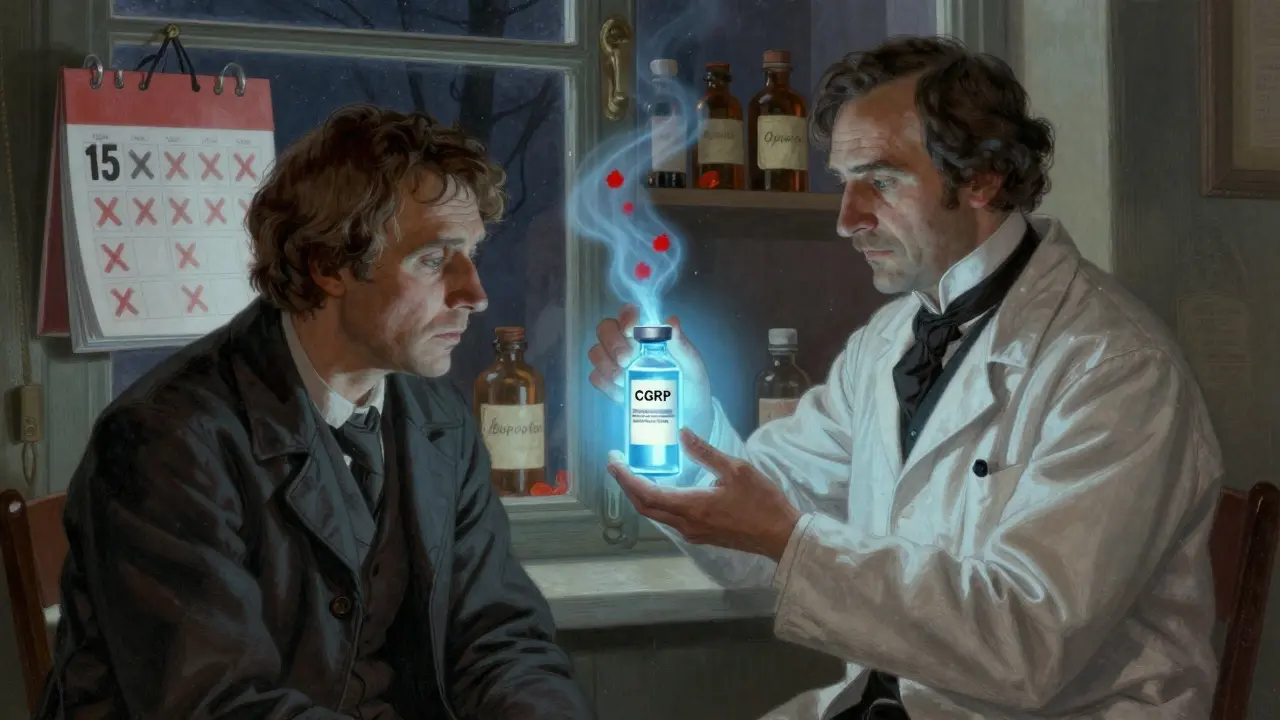
Who Gets What? Matching Treatment to Your Life
There’s no one-size-fits-all. Your treatment should match your lifestyle, your health, and your triggers.- If you have heart disease or high blood pressure → Skip triptans. Go for rimegepant, ubrogepant, or lasmiditan.
- If you’re pregnant or planning to be → Avoid topiramate and CGRP drugs. Stick with acetaminophen and non-drug approaches like ice packs and acupuncture.
- If you have frequent nausea or vomiting → Try nasal sprays (zavegepant), suppositories, or injectables. Oral meds often don’t absorb well during a migraine.
- If you’re on a tight budget → NSAIDs and generic propranolol are still the most affordable. Rimegepant costs about $700 per dose without insurance, and CGRP injections can run $1,000+ per shot.
- If you’ve tried everything and still get 15+ headache days a month → Consider neuromodulation devices like Cefaly or gammaCore. They’re FDA-approved, non-drug, and covered by some insurers.
And don’t forget menstrual migraine. If your attacks cluster around your period, frovatriptan (2.5mg twice daily for 5-7 days around your cycle) is one of the most effective options. It’s not a daily drug - just a short course. Many women don’t even know this exists.
The Hidden Trap: Medication Overuse Headache
This is the silent killer of migraine treatment. If you use abortive meds too often - more than 10 days a month for triptans, or 15 days for NSAIDs - your brain starts rewiring itself. The headaches become daily, and the meds stop working. You’re not “addicted.” You’ve developed medication-overuse headache (MOH), and it’s reversible - but only if you stop the overuse.Here’s the hard part: stopping cold turkey can make things worse for 2-4 weeks. That’s when you need a plan. Work with a headache specialist. You might need a bridge - like a short course of steroids or nerve blocks - to get through the withdrawal phase. Then, start preventive meds. Many people who’ve struggled with MOH for years end up with fewer attacks than ever after they reset their treatment.
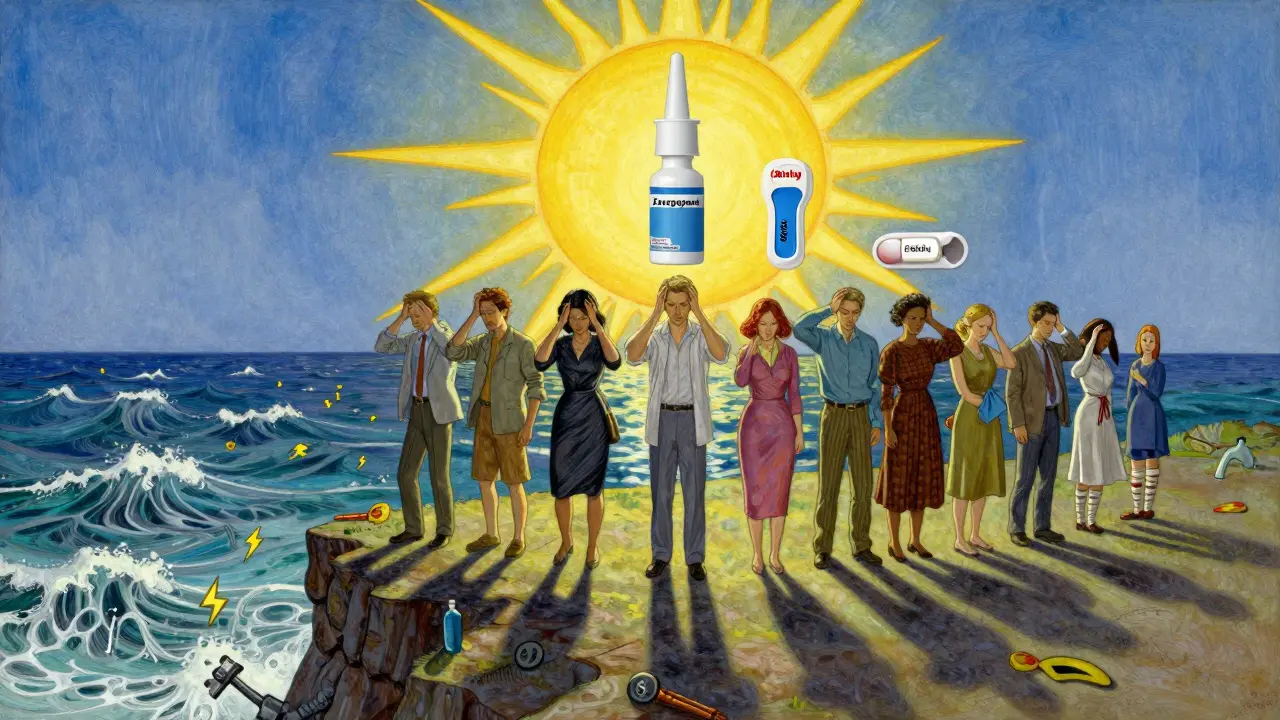
What’s Next? The Future of Migraine Care
The migraine treatment landscape is changing faster than ever. In 2024, the American Headache Society is expected to update its guidelines to put rimegepant and lasmiditan on par with triptans for first-line use. Atogepant (Qulipta), an oral CGRP blocker, is being studied for episodic migraine and could be approved by late 2024. And researchers are already looking at genetic markers to predict who responds best to which drug - personalized migraine care is no longer science fiction.Right now, the biggest barrier isn’t lack of options. It’s lack of access. Insurance companies still require you to fail 2-3 older drugs before approving a CGRP drug. And many doctors still don’t know the latest guidelines. If you’re not getting better, it’s not your fault. It’s a system failure.
Start by keeping a headache diary for 8 weeks. Note the time, triggers, meds taken, and how you felt 2 hours later. Bring it to a neurologist who specializes in headaches - not just any neurologist. The National Headache Foundation’s hotline answered 92% of calls within 3 minutes in 2022. Use it. Ask about CGRP drugs. Ask about nasal sprays. Ask about non-drug options. You deserve better than a prescription for Vicodin and a shrug.
Can I take triptans and NSAIDs together?
Yes, and many people benefit from it. Studies show combining a triptan like eletriptan with naproxen gives better pain relief than either alone. This combo works because they attack migraine through different pathways. Just make sure you’re not taking NSAIDs daily - that increases your risk of medication-overuse headache.
Are CGRP medications safe long-term?
CGRP inhibitors have been used clinically since 2018. So far, no major safety concerns have emerged. They don’t affect liver function, blood counts, or heart rhythm. The most common side effects are constipation and mild injection-site reactions. Long-term data beyond 5 years is still being collected, but experts consider them among the safest migraine treatments ever developed.
Why do some people say rimegepant works faster than triptans?
Rimegepant works differently - it blocks the CGRP protein that triggers migraine pain, rather than constricting blood vessels like triptans. Many users report feeling relief within 30 minutes, especially if taken early. It also doesn’t cause the “triptan buzz” or pressure in the chest, which makes it feel more tolerable. Plus, it’s the only migraine drug approved for both acute and preventive use.
What should I do if my insurance won’t cover CGRP drugs?
Most insurers require step therapy - trying older drugs first. But you can appeal. Ask your doctor to write a letter explaining why previous treatments failed and why a CGRP drug is medically necessary. Many patients get approved on appeal. Also check patient assistance programs from drugmakers like Amgen, Teva, and Eli Lilly - they often offer free or discounted meds for those who qualify.
Can lifestyle changes replace medication?
Lifestyle changes - sleep, hydration, stress management, avoiding triggers - are essential, but they rarely replace medication for chronic migraine. Think of them as the foundation. Medication is the roof. You need both. People who combine daily preventive meds with consistent routines report the best long-term results.
Is it true that migraines can cause brain damage?
Migraines themselves don’t cause strokes or brain lesions in most people. But frequent, untreated attacks can change how your brain processes pain - making you more sensitive over time. This is called central sensitization. That’s why prevention matters. The goal isn’t just fewer headaches - it’s protecting your brain’s pain system from rewiring itself into chronic pain.
Next Steps: What to Do Today
If you’re reading this because you’re tired of being sidelined by your own headaches, here’s what to do now:- Start a headache diary - even just a note on your phone. Track frequency, triggers, and what helped.
- Stop using opioids or barbiturates. Ask your doctor for alternatives.
- Look up a headache specialist near you. Not a neurologist - a headache specialist. They’re rare, but they exist.
- Ask about CGRP inhibitors. Even if you think you can’t afford them, ask about patient support programs.
- If you’re on 10+ abortive doses a month, talk to your doctor about medication-overuse headache. You’re not alone - and you can recover.
Migraine isn’t a character flaw. It’s a neurological condition with real, measurable biology. And we now have tools to treat it - not just mask it. You don’t have to live like this anymore.
Michael Burgess
January 3, 2026 AT 02:43Just had my third migraine this month and tried rimegepant for the first time. Holy crap. Relief in 25 minutes. No chest tightness, no dizziness, just... quiet. I’ve been on triptans for 8 years and this is the first time I didn’t feel like I’d been hit by a truck after taking it. Also, it’s the only med that didn’t make me want to vomit. Game changer.
Also, shoutout to the author for calling out opioids. My ex-doc kept prescribing oxycodone like it was Advil. Took me two years and a nervous breakdown to find someone who knew better.
Palesa Makuru
January 4, 2026 AT 16:48Okay but why are we still talking about triptans like they’re the pinnacle of medicine? I’ve been on CGRP injections for a year and I haven’t had a single migraine that lasted more than 2 hours. My neuro just shrugged when I asked about lasmiditan. Meanwhile, my friend in Canada got her first prescription on her first visit. U.S. healthcare is a joke. We’re still stuck in 2012 while the rest of the world moves on.
Also, if your doctor doesn’t know what CGRP stands for, fire them. No excuses.
Joy F
January 5, 2026 AT 11:08Wow. So we’re just ignoring the fact that all these ‘new’ drugs are just repackaged pharma propaganda? CGRP inhibitors? Sounds like a fancy name for ‘we made you dependent on $1000/month shots.’ And don’t even get me started on how they’re pushing these because insurance won’t cover the cheap stuff. It’s all about profit. You think they care if you’re in pain? No. They care if you’re buying their product.
Meanwhile, the real solution? Stop eating gluten, fix your gut, and stop being so stressed. But no, let’s just throw money at a pill.
Liam Tanner
January 7, 2026 AT 05:47My wife’s been on erenumab for 14 months. Migraine days dropped from 22/month to 3. She’s back to working full-time. We didn’t even know these existed until last year. If you’re on opioids or triptans daily and still suffering - please, go see a headache specialist. They’re out there. I found ours through the National Headache Foundation’s hotline. Took 3 minutes to get through. Seriously.
You’re not broken. The system is.
Brittany Wallace
January 7, 2026 AT 23:38Reading this felt like someone handed me a flashlight after living in a cave for 10 years. 🌟
I used to think migraines were just ‘bad headaches’ until I watched my sister collapse during one, screaming because the light from her phone was unbearable. We spent years chasing answers. Now she’s on rimegepant + monthly Aimovig. She’s reading again. Cooking. Laughing.
It’s not magic. It’s science. And we owe it to ourselves to demand better. Thank you for writing this.
Angela Goree
January 8, 2026 AT 16:22STOP GIVING OPIOIDS TO MIGRAINE PATIENTS!!! THIS IS MEDICAL CRIMINAL NEGLIGENCE!!! I’ve seen it with my own eyes - people addicted to hydrocodone because their doctors were lazy!!! It’s not ‘pain management’ - it’s chemical slavery!!! Why is this still happening in 2024???!!!
Shruti Badhwar
January 10, 2026 AT 13:03As someone who’s been managing chronic migraine since 2015, I appreciate the depth of this post. However, I must emphasize that access disparities are not just a U.S. problem - they’re global. In India, most neurologists still prescribe paracetamol + metoclopramide as first-line. CGRP drugs? Unavailable. Even triptans are often restricted by pharmacy policy.
Insurance isn’t the only barrier. There’s a massive education gap among physicians. I’ve had three different neurologists tell me migraines are ‘stress-related’ and suggested yoga. I’ve spent over $12,000 out of pocket to get proper care. Please, if you’re reading this from outside the U.S., know you’re not alone. And yes - it’s worth fighting for.
Kerry Howarth
January 12, 2026 AT 07:17Combining triptans with NSAIDs works. Period. I’ve been doing eletriptan + naproxen for 5 years. 68% success rate on pain freedom at 2 hours. No magic, just pharmacology. Also, if you’re taking more than 10 abortive doses a month - you’re in MOH territory. Time to reset.
And yes, lifestyle matters. But don’t let anyone tell you it’s ‘all in your head.’ It’s biology. Treat it like it.
Tiffany Channell
January 13, 2026 AT 02:57Everyone’s acting like these new drugs are some kind of miracle. But what about the people who don’t respond? What about the 40% who get zero relief from CGRP inhibitors? You’re just replacing one dead end with another. And now you’re paying $1,000 a month for a drug that might not even work?
Meanwhile, the real issue? No one talks about the trauma of living with chronic pain. The depression. The job loss. The divorce. You can’t inject your way out of that.
Haley Parizo
January 15, 2026 AT 01:12They’re calling this ‘personalized medicine’ - but really, it’s just another way to profit off people who are desperate. You think they care about your brain? No. They care about your insurance card.
And let’s not forget: these drugs were tested on mostly white, middle-class women. What about Black women? Trans people? Low-income folks? The data is biased. The science is incomplete. And yet, we’re told to trust it.
It’s not just migraine. It’s systemic neglect dressed up as innovation.
Ian Detrick
January 16, 2026 AT 22:38You’re not broken. You’re not lazy. You’re not overreacting.
This post? It’s the reason I finally went to a headache specialist. I was 34, on opioids for 7 years, and thought I’d never feel normal again. Now I’m on rimegepant + monthly Ajovy. I’ve been migraine-free for 11 months.
If you’re reading this and still suffering - please, don’t give up. There’s a path. It’s not easy. But it’s real.
Angela Fisher
January 18, 2026 AT 15:29Okay but what if the whole migraine epidemic is just a side effect of 5G and EMF radiation? I’ve been reading forums where people say the new CGRP drugs are secretly designed to keep us docile while the government monitors our brainwaves through our phones. And don’t get me started on how the FDA is owned by Big Pharma - they approved these drugs because they’re paid off. My cousin’s neighbor’s cousin got migraines after getting a COVID shot and now she’s on three different meds and still can’t work. It’s all connected.
Also, I stopped eating dairy and my migraines went away for 3 weeks. So maybe it’s not the brain - maybe it’s the cheese. Just saying.
And why do all the doctors look the same? White. Male. Smiling. Like they’re selling us a car. I don’t trust them. Not anymore.
My mom says migraines are caused by unprocessed trauma. I think she’s right. Maybe we need therapy, not pills. Or maybe we need to move to a cabin in the woods and live off the land. I’m thinking about it.
Also, I read somewhere that the moon affects migraines. Is that true? I don’t know. But I stopped looking at the moon at night and my headaches got better. Coincidence? Maybe. Or maybe it’s the truth they don’t want you to know.
Anyway. I’m not taking any more pills. I’m going on a juice cleanse. And I’m gonna meditate for 4 hours a day. And if I still get migraines? Then it’s the government. I know it.
Hank Pannell
January 18, 2026 AT 21:43Neurological event, not headache. That’s the key framing shift. Migraine is a cortical spreading depression event with trigeminovascular activation, modulated by CGRP and serotonin pathways - and yes, central sensitization is real. The brain’s pain matrix becomes hyperexcitable. That’s why prevention isn’t optional - it’s neuroprotection.
But here’s the paradox: the most effective drugs (CGRP mAbs) are the least accessible. Step therapy is archaic. It’s like requiring someone with sepsis to try aspirin before antibiotics. We’re not just failing patients - we’re violating the Hippocratic Oath.
And the real tragedy? We have biomarkers - fMRI patterns, serum CGRP levels, even genetic SNPs - that could predict treatment response. But we don’t use them. Why? Cost. Profit. Inertia.
It’s not a lack of science. It’s a lack of will.
Michael Burgess
January 19, 2026 AT 05:22^^^ This. I’m a nurse. I’ve seen patients cry because their insurance denied their CGRP drug because they ‘didn’t fail topiramate first.’ Topiramate gave them brain fog so bad they quit their job. Now they’re on opioids and their kid’s in foster care. This isn’t medicine. It’s bureaucracy with a stethoscope.
Also - zavegepant nasal spray? Lifesaver for nausea. I used to have to carry a vomit bag in my purse. Now I just spray it. 20 minutes later? Quiet. I’m back to life.
Kerry Howarth
January 20, 2026 AT 21:20One sentence: If you’re on 15+ headache days a month and still on ibuprofen - go see a headache specialist. Today.