

- 8
Statin and Red Yeast Rice Risk Calculator
Calculate Your Risk
This tool estimates your risk of muscle damage from combining statins with red yeast rice based on dosage levels.
People take red yeast rice because they want a "natural" way to lower cholesterol. Many believe it’s safer than prescription drugs. But here’s the truth: if you’re already taking a statin, adding red yeast rice isn’t a smart move-it’s risky. And it’s not just a theory. Real people end up in the hospital because of this combo.
What Is Red Yeast Rice, Really?
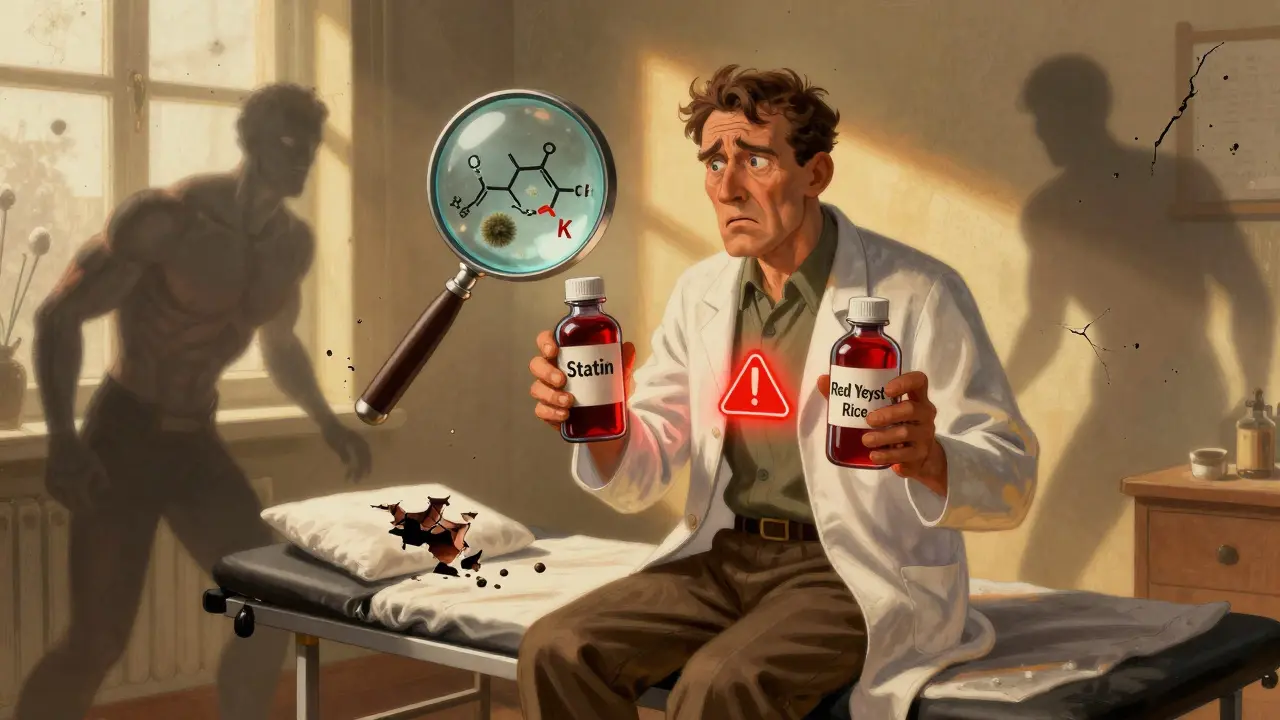
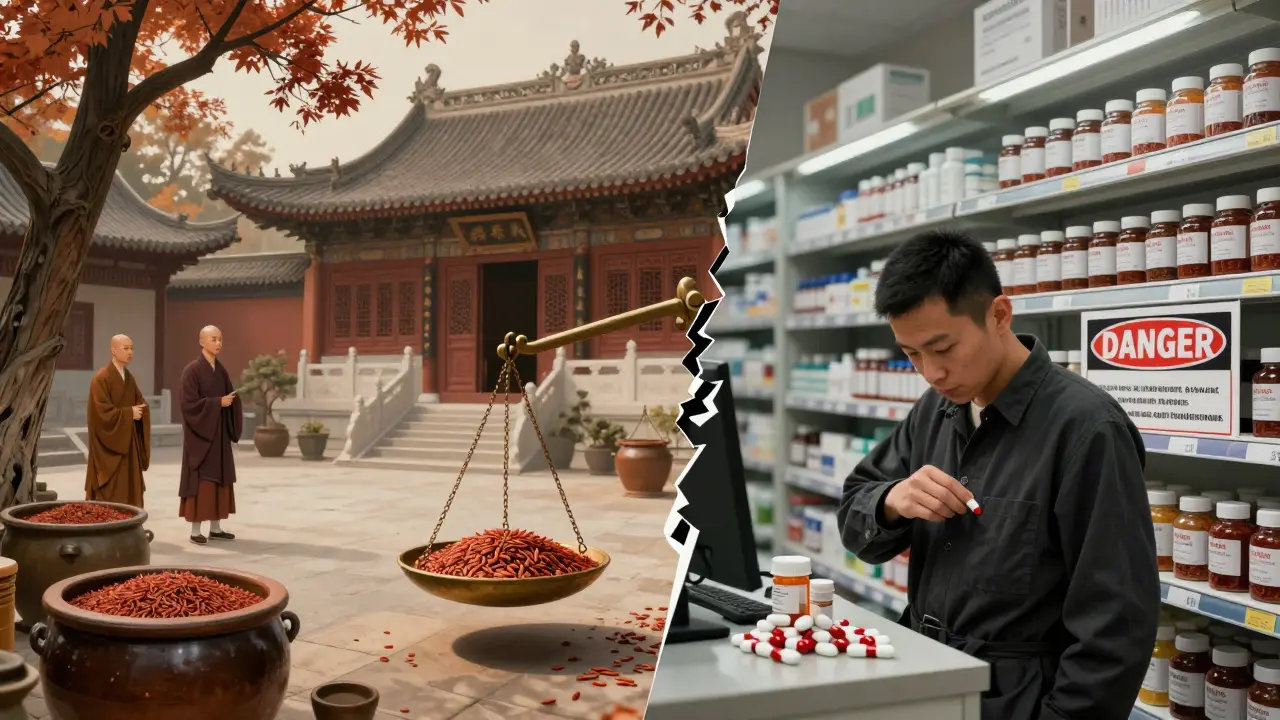
Red yeast rice isn’t some mystical herb. It’s rice fermented with a mold called Monascus purpureus. For centuries in China, it was used for digestion and circulation. But modern science found something else: it contains monacolin K. That’s the same chemical as lovastatin-the active ingredient in the prescription statin drug Mevacor.
That means red yeast rice doesn’t work like a vitamin. It works like a drug. It blocks HMG-CoA reductase, the exact enzyme statins target to lower LDL (bad) cholesterol. Studies show it can reduce LDL by 21-30%, similar to low-dose statins. But unlike pills you get from a pharmacy, red yeast rice supplements aren’t regulated. One bottle might have 3 mg of monacolin K. The next might have 15 mg. Or none at all.
Why Statins Are Different
Prescription statins-like atorvastatin, rosuvastatin, or simvastatin-are made in controlled labs. Every pill has the same amount of active ingredient. Dosing is precise. Doctors know exactly how much you’re getting. They monitor your liver enzymes, muscle enzymes (CK), and cholesterol levels. If you have side effects, they adjust the dose or switch you to another drug.
Red yeast rice? No such control. The FDA has sent over a dozen warning letters to manufacturers since 2008 because their products contain active pharmaceutical ingredients-without approval. And that’s not the worst part.
The Real Danger: Duplicate Therapy
Combining red yeast rice and a statin is like taking two doses of the same drug at once. You’re doubling down on the same mechanism. That doesn’t double your results-it doubles your risk.
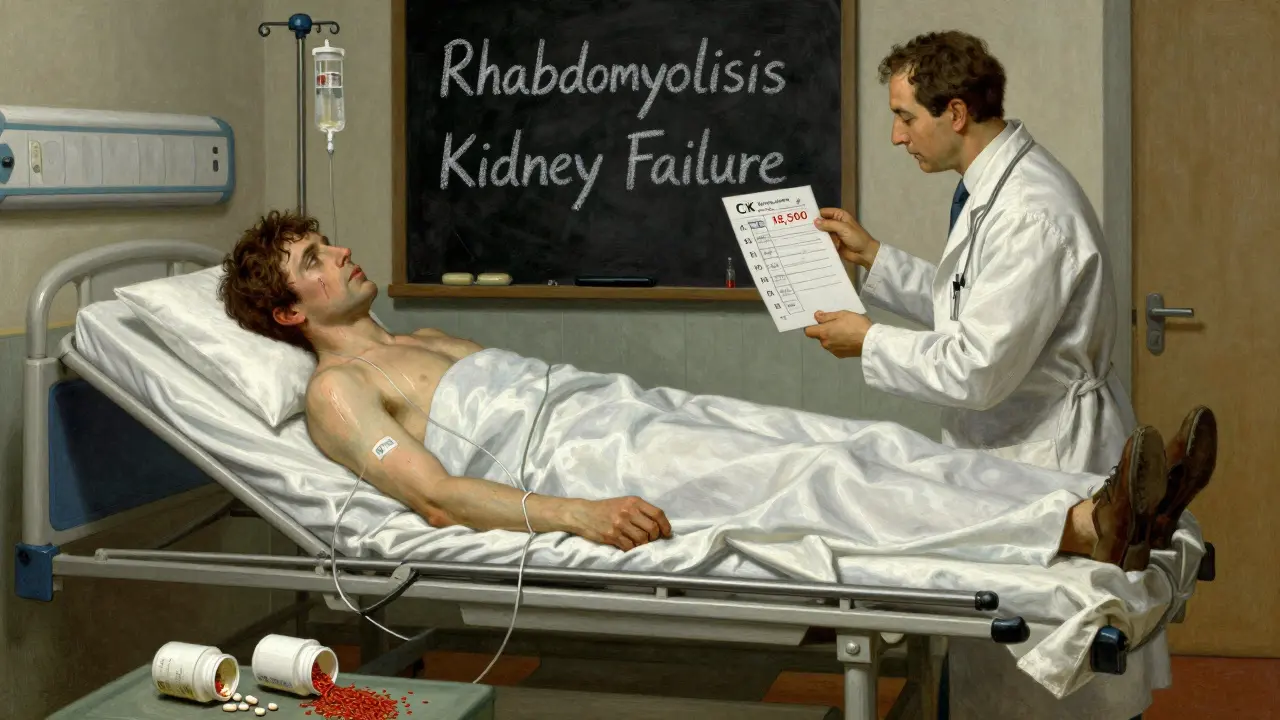
The biggest danger? Muscle damage. Statins already carry a risk of myopathy-muscle pain, weakness, or worse, rhabdomyolysis, where muscle breaks down and floods your kidneys with toxic proteins. Add red yeast rice, and that risk jumps. The Mayo Clinic says the chance of muscle injury increases 3.7 times when you combine them.
Real cases are terrifying. One Reddit user, on a thread with 142 upvotes, described being hospitalized after taking red yeast rice with 20 mg of atorvastatin. His CK levels hit 18,500 U/L. Normal is under 200. He needed IV fluids and intensive care. Another user on Amazon wrote: "Doctor said I was lucky to avoid kidney damage."
It’s not rare. Between 2018 and 2022, the FDA recorded 127 cases of severe muscle damage linked to people taking both. That’s a 2.8-fold increase from the previous five years.
What About People Who Can’t Tolerate Statins?
Here’s where things get tricky. About 7-29% of people who take statins develop muscle pain or other side effects. For them, red yeast rice looks like a lifeline. And in some cases, it works.
A 2017 study found 60% of statin-intolerant patients could handle a low-dose red yeast rice supplement (about 3 mg monacolin K daily) without side effects. Their LDL dropped 25-30%. Some even stopped statins entirely and switched over.
But here’s the catch: that only works if you’re NOT taking a statin anymore. If you’re still on your statin, even a low-dose red yeast rice supplement can push you over the edge. The problem isn’t the supplement-it’s the combo.
What Else Is in Red Yeast Rice?
It’s not just monacolin K. Red yeast rice also contains other compounds like compactin (mevastatin), which also affects cholesterol-but less effectively. Worse, up to 30% of commercial products are contaminated with citrinin, a toxin that damages kidneys. The European Food Safety Authority flagged this back in 2017. And it’s not listed on labels.
Even if you buy a "high-quality" brand, there’s no guarantee. A 2022 ConsumerLab.com test found only 30% of red yeast rice products matched their label claims. Some had too much monacolin K. Others had none. And a few had citrinin.
What Should You Do?
If you’re on a statin: do not take red yeast rice. Not even "just a little." The risk isn’t worth it.
If you’re thinking about switching from statins to red yeast rice: talk to your doctor first. Don’t quit your statin cold turkey. Get your cholesterol tested. Ask for a USP-verified product-only about 15% of the market meets this standard. Start with 600 mg daily. Monitor your liver enzymes and CK levels after 8-12 weeks. Avoid grapefruit juice, certain antibiotics, and antifungals-they interfere with how your body breaks down both statins and red yeast rice.
If you’ve already been taking both: stop the red yeast rice immediately. Call your doctor. Get a blood test for CK and liver enzymes. Don’t wait for symptoms. Muscle damage can happen without pain.
What Are the Alternatives?
If statins don’t work for you, there are safer options than red yeast rice:
- Ezetimibe: A pill that blocks cholesterol absorption in the gut. Works well with or without statins. Low risk of muscle side effects.
- PCSK9 inhibitors: Injectable drugs that lower LDL by up to 60%. Used for high-risk patients. Costly, but very safe.
- Prescription niacin: Can raise HDL (good cholesterol) and lower triglycerides. Side effects include flushing and liver stress.
- Lifestyle changes: Diet (oats, nuts, plant sterols), exercise, weight loss. These aren’t magic, but they’re proven and risk-free.
None of these require guessing what’s in your supplement bottle.
Why Does This Keep Happening?
Because the law lets it. The Dietary Supplement Health and Education Act of 1994 says supplements don’t need FDA approval before sale. The FDA can only act after someone gets hurt. That’s why red yeast rice is still on shelves-even though the FDA calls it an unapproved drug.
Companies sell it as "natural," and people believe it. They don’t realize they’re taking a drug with unknown strength and hidden toxins. And they don’t tell their doctors. A 2021 Mayo Clinic study found 45% of patients didn’t mention they were taking red yeast rice-until something went wrong.
What’s Changing?
There’s hope. In 2023, the FDA released draft guidance on botanical drugs. It could lead to standardized, pharmaceutical-grade red yeast rice-like a real medicine, not a supplement. The American Herbal Pharmacopoeia updated its standards in January 2023, requiring minimum monacolin K and maximum citrinin levels. But until then, the market is a gamble.
Dr. Steven Nissen from Cleveland Clinic put it bluntly: "Until we have pharmaceutical-grade red yeast rice with consistent dosing, it remains a dangerous gamble."
That’s the bottom line. Red yeast rice isn’t a magic bullet. It’s a powerful, unpredictable compound that can do real harm-especially when mixed with statins.
Jocelyn Lachapelle
December 15, 2025 AT 19:33Melissa Taylor
December 17, 2025 AT 01:55Christina Bischof
December 18, 2025 AT 15:21RONALD Randolph
December 20, 2025 AT 12:33Raj Kumar
December 20, 2025 AT 15:41Jake Sinatra
December 20, 2025 AT 20:37John Brown
December 22, 2025 AT 02:51John Samuel
December 23, 2025 AT 19:21