

Every 40 seconds, someone in the U.S. has a stroke. And every 4 minutes, someone dies from one. The good news? Most strokes are preventable. The catch? You need to know what you’re dealing with. Not all strokes are the same. Two main types - ischemic and hemorrhagic - behave differently, need different treatments, and require different prevention strategies. Mixing them up can cost precious time, and time is brain.
What’s the difference between ischemic and hemorrhagic strokes?
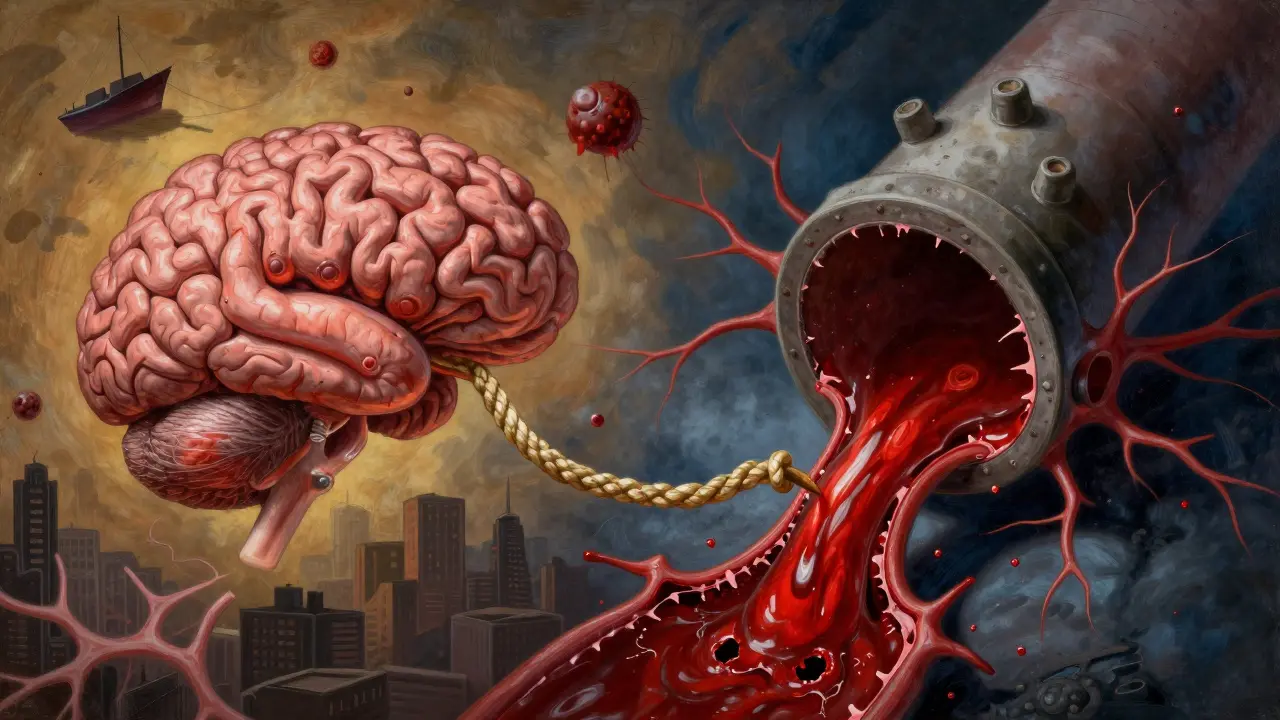
Imagine your brain as a city. It needs constant power - blood flow - to keep the lights on. An ischemic stroke is like a power outage caused by a blocked cable. A clot forms in an artery leading to the brain, or travels from elsewhere (like the heart), and cuts off oxygen. This is the most common kind - about 87% of all strokes.
A hemorrhagic stroke is more like a burst water main. A blood vessel in or around the brain ruptures, spilling blood into brain tissue. This creates pressure, damages cells, and can quickly become life-threatening. Though it only makes up 13-15% of strokes, it’s more deadly at first. About 40% of people who have a hemorrhagic stroke don’t survive the first month.
The key difference? One is a blockage. The other is a leak. That’s why treatment can’t be the same. Giving a clot-busting drug to someone with a bleed could make things worse - even fatal.
Subtypes of ischemic strokes
Not all blockages are created equal. Ischemic strokes break down into three main subtypes:
- Thrombotic strokes (50% of ischemic cases): A clot forms right in a brain artery, usually because of fatty buildup (atherosclerosis). These often happen slowly - you might wake up with weakness on one side.
- Embolic strokes (20% of ischemic cases): A clot forms elsewhere - often in the heart due to irregular rhythm like atrial fibrillation - then travels to the brain. These strike suddenly. No warning.
- Cryptogenic strokes (30% of ischemic cases): No clear cause is found after testing. These are frustrating, but not hopeless. Many turn out to be hidden atrial fibrillation or tiny clots from heart valves.
Small vessel strokes, called lacunar strokes, are a type of thrombotic stroke. They affect tiny arteries deep in the brain. Symptoms might be mild - maybe just a slight numbness or trouble walking. But they’re warning signs. Each one increases your risk of a bigger stroke later.
Types of hemorrhagic strokes
Hemorrhagic strokes split into two main categories:
- Intracerebral hemorrhage (8-10% of all strokes): Blood bursts directly into brain tissue. This is the most common hemorrhagic stroke. It’s often tied to high blood pressure - 78-88% of cases are linked to uncontrolled hypertension.
- Subarachnoid hemorrhage (about 5% of all strokes): Blood leaks into the space between the brain and the skull. This is usually caused by a ruptured brain aneurysm - a weak, balloon-like bulge in a blood vessel. People describe the headache as the worst of their life - sudden, explosive, unlike anything before.
These aren’t just medical terms. They’re real experiences. Survivors of subarachnoid hemorrhages often say they felt like their head was going to split open. Some passed out instantly. Others remember the pain, then nothing.
How do the symptoms differ?
Both types can cause sudden numbness, confusion, trouble speaking, or trouble walking. But hemorrhagic strokes often come with extra red flags:
- Severe headache - 92% of hemorrhagic stroke patients have it. Only 19% of ischemic stroke patients do.
- Seizures - happen in 17% of hemorrhagic cases. Almost never in ischemic.
- Dilated pupils or unequal pupil size - seen in 87% of hemorrhagic strokes, rare in ischemic.
- Agitation or confusion - 80% of hemorrhagic cases, only 7% in ischemic.
- Eye gaze problems - looking sideways or unable to move eyes properly - much more common in bleeding strokes.
Ischemic strokes tend to creep in. Someone might say, “I felt weird all morning,” then notice their arm getting weaker over 20 minutes. Hemorrhagic strokes hit like a hammer. One second you’re fine. The next, you’re screaming in pain or unconscious.
Treatment: What happens in the ER?
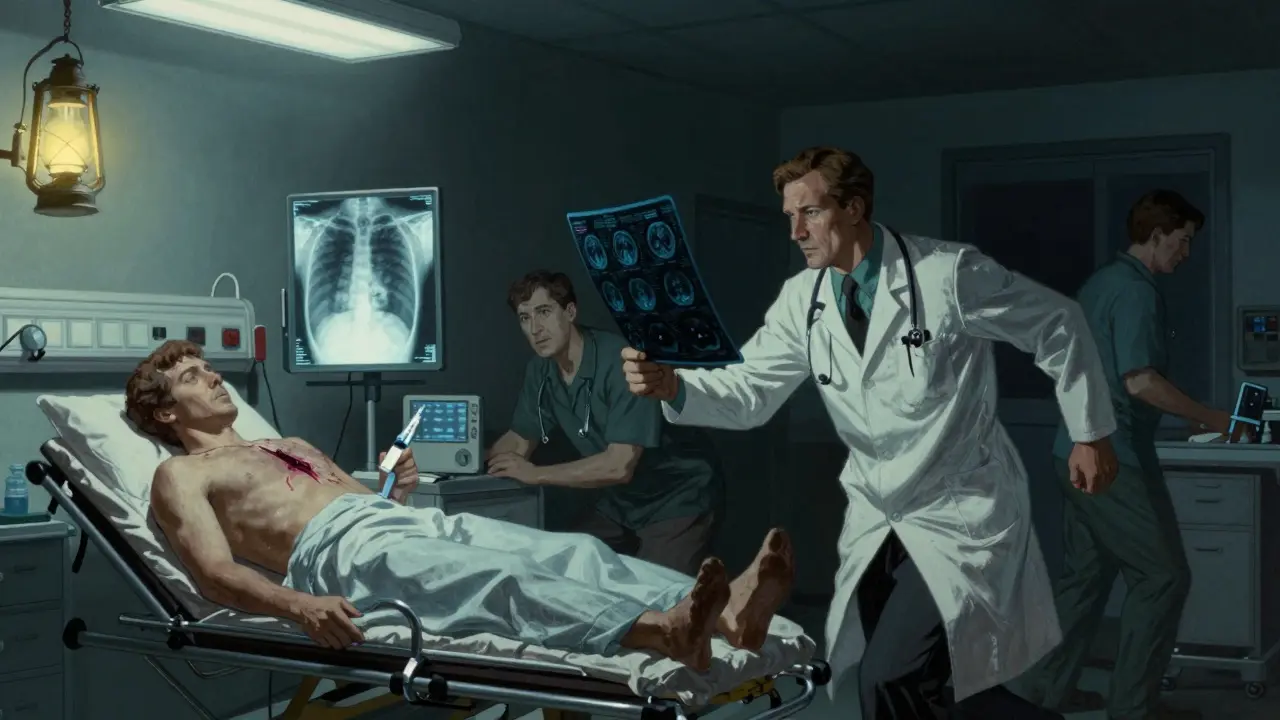
First thing doctors do? A CT scan. It shows if there’s bleeding. No scan? No treatment. Giving the wrong drug can kill.
For ischemic strokes, the goal is to reopen the blocked artery. If you get to the hospital within 3 to 4.5 hours, you might get tPA (alteplase) or tenecteplase - clot-busting drugs. For larger clots, especially in major brain arteries, a mechanical thrombectomy can remove the clot physically. This works up to 24 hours after symptoms start, if imaging shows salvageable brain tissue.
For hemorrhagic strokes, the goal is to stop the bleeding and reduce pressure. Surgery might be needed:
- Clipping: A neurosurgeon opens the skull and places a metal clip on the ruptured aneurysm.
- Coiling: A catheter is threaded from the groin up to the brain. Tiny coils are placed inside the aneurysm to block blood flow.
- Minimally invasive surgery: Newer techniques drain blood through small holes in the skull, reducing damage.
Medications are also used to lower blood pressure, prevent seizures, and reduce swelling. Recovery is slower and more uncertain than with ischemic strokes.
Prevention: What actually works?
Prevention isn’t one-size-fits-all. You need to target your risk.
For ischemic stroke prevention:
- Treat atrial fibrillation: If you have AFib, your stroke risk jumps 500%. Blood thinners like apixaban or warfarin cut that risk by 60-70%. Don’t skip doses.
- Take aspirin or clopidogrel: If you’ve had a prior stroke or TIA, daily low-dose aspirin (81 mg) or clopidogrel reduces recurrence by 25%.
- Lower cholesterol: Statins don’t just protect your heart. They stabilize plaque in brain arteries, cutting stroke risk.
- Control diabetes and high blood pressure: These damage blood vessels over time. Even mild high blood pressure increases ischemic stroke risk.
For hemorrhagic stroke prevention:
- Keep blood pressure under 120/80: The SPRINT trial proved that lowering systolic pressure to under 120 mmHg - not 140 - reduces hemorrhagic stroke risk by 38%. That’s huge.
- Don’t smoke: Smoking weakens blood vessel walls. Quitting cuts stroke risk in half within a year.
- Avoid excessive alcohol: Heavy drinking raises blood pressure and increases bleeding risk.
- Screen for aneurysms if you have a family history: If two close relatives had a brain aneurysm, talk to your doctor about an MRA scan.
Both types benefit from:
- The Mediterranean diet: Rich in olive oil, fish, nuts, vegetables. Reduces overall stroke risk by 30%.
- 150 minutes of walking per week: Just 30 minutes a day, five days a week. Lowers stroke risk by 27%.
- Manage stress: Chronic stress raises cortisol and blood pressure. Meditation, sleep, and social connection matter.
What about those “silent” strokes?
Many people have tiny strokes - called silent infarcts - without knowing it. They show up on brain scans done for other reasons. These don’t cause obvious symptoms, but they’re a red flag. People with silent strokes are 3x more likely to have a major stroke later. They’re also at higher risk for dementia. If your doctor finds one on a scan, don’t ignore it. It’s a wake-up call to get your numbers in check.

Why timing matters more than type
Dr. Sozener from Michigan Medicine says it plainly: “Initial stroke severity often determines outcome - not just the type.” That’s true. But here’s the catch: you can’t know the type without a scan. And you can’t get a scan without getting to the hospital.
That’s why the FAST acronym is your best friend:
- F - Face drooping. One side sags. Ask them to smile.
- A - Arm weakness. Can they raise both arms? One drops.
- S - Speech difficulty. Slurred, strange, or hard to understand.
- T - Time to call emergency services. Don’t wait. Don’t drive yourself.
Studies show that people who recognize these signs within 5 minutes and call 911 have 73% better outcomes. Every minute counts. Brain cells die at 1.9 million per minute during a stroke.
What’s new in stroke care?
Things are changing fast:
- AI tools: Platforms like Viz.ai analyze CT scans in seconds and alert stroke teams. They’ve cut door-to-needle time by over 50 minutes.
- Blood tests: A new biomarker called GFAP can tell if a stroke is hemorrhagic or ischemic within 15 minutes - before a scan. This could help paramedics decide where to take you.
- Extended treatment windows: MRI-guided therapy now lets some ischemic stroke patients get tPA up to 9 hours after symptoms start - if brain tissue is still salvageable.
- Telestroke: Rural hospitals can connect with stroke specialists via video. This has improved access by 300% since 2018.
The future isn’t just about faster treatment. It’s about smarter prevention. Blood pressure control, better screening for hidden AFib, and wider access to lifestyle programs are cutting stroke deaths. In Australia, stroke deaths have dropped 40% since 2000 - thanks to better care and public awareness.
Final takeaway
Ischemic and hemorrhagic strokes are different diseases with different causes, symptoms, and treatments. But they share one thing: they’re preventable. You don’t need to be an expert. Just know your numbers - blood pressure, cholesterol, heart rhythm. Take your meds. Move your body. Eat real food. Quit smoking. And if you or someone else shows signs of a stroke - call emergency services immediately. No waiting. No second-guessing. Because when it comes to stroke, time isn’t just important. It’s everything.
Can a stroke happen without noticeable symptoms?
Yes. These are called silent strokes. They don’t cause obvious symptoms like weakness or speech loss, but they show up on brain scans. Silent strokes damage small blood vessels and increase your risk of dementia and a major stroke later. If your doctor finds one, it’s a sign to tighten up your prevention plan - especially blood pressure and heart health.
Is aspirin safe to take daily to prevent stroke?
For people who’ve had a prior stroke or TIA, low-dose aspirin (81 mg daily) reduces the risk of another stroke by about 25%. But for healthy people with no history of stroke, daily aspirin can increase bleeding risk without clear benefit. Don’t start aspirin without talking to your doctor. The risks may outweigh the rewards if you’re not already at high risk.
Can stress cause a stroke?
Stress doesn’t directly cause a stroke, but it raises blood pressure and triggers inflammation - both major stroke risk factors. Chronic stress also leads to poor sleep, unhealthy eating, and skipping meds. Managing stress through exercise, sleep, and social support is a key part of stroke prevention.
If I have atrial fibrillation, am I guaranteed to have a stroke?
No. Atrial fibrillation increases stroke risk by 500%, but that doesn’t mean it’s inevitable. Taking the right blood thinner - like apixaban or rivaroxaban - cuts that risk by 60-70%. Regular check-ups and avoiding triggers like alcohol and caffeine help too. You’re not powerless. Treatment works.
Are younger people at risk for stroke?
Yes. While stroke risk rises with age, more than 1 in 4 strokes now happen in people under 65. Causes in younger adults include undiagnosed heart conditions, drug use (especially cocaine), blood clotting disorders, and even severe migraines with aura. If you’re young and have sudden neurological symptoms - don’t assume it’s anxiety or a migraine. Get checked.
Can you recover fully after a hemorrhagic stroke?
Recovery is harder than after an ischemic stroke, but it’s possible. About 20-30% of people regain functional independence. Success depends on how much brain tissue was damaged, how fast treatment started, and how well rehab is followed. Physical therapy, speech therapy, and emotional support are critical. Many people make meaningful progress - even years later.
Dan Mack
January 17, 2026 AT 03:14Ayush Pareek
January 17, 2026 AT 05:49Nicholas Urmaza
January 17, 2026 AT 12:30Sarah Mailloux
January 18, 2026 AT 02:40Nilesh Khedekar
January 19, 2026 AT 14:36Jami Reynolds
January 20, 2026 AT 03:35RUTH DE OLIVEIRA ALVES
January 21, 2026 AT 09:59Nat Young
January 22, 2026 AT 16:53Frank Geurts
January 23, 2026 AT 17:10Annie Choi
January 23, 2026 AT 22:29Arjun Seth
January 25, 2026 AT 16:32Mike Berrange
January 25, 2026 AT 21:23