
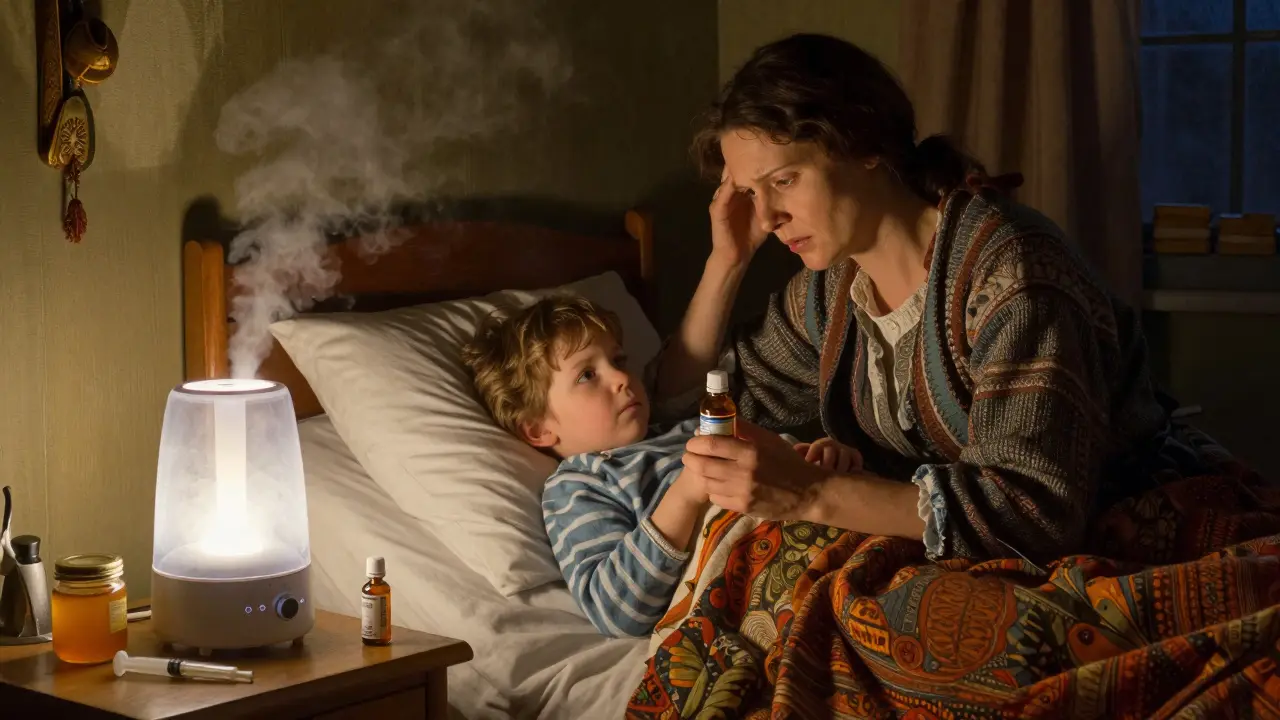

Every parent has been there: your child is coughing, sniffing, and can’t sleep. You reach for the medicine cabinet, grab a bottle labeled "Children’s Cold," and give it to them - just as the label says. But what if that bottle could do more harm than good? For kids under six, over-the-counter cough and cold medicines aren’t just ineffective - they can be dangerous. And yet, many parents still use them, thinking they’re helping. The truth is simpler: cough and cold medicine for young children doesn’t work the way we assume, and the risks are real.
Why These Medicines Don’t Work for Young Kids
It’s easy to believe that if a medicine helps adults, it should help kids too. But children aren’t small adults. Their bodies process drugs differently. For kids under six, the enzymes that break down medications like dextromethorphan (a common cough suppressant) and pseudoephedrine (a decongestant) are still developing. By age two, a child’s liver has only about 23% of the enzyme activity an adult has to safely process these ingredients. That means even a small dose can build up in their system, leading to side effects like rapid heartbeat, drowsiness, or worse.
Studies show these medicines simply don’t work for kids under six. The U.S. Food and Drug Administration (FDA) reviewed decades of data and found no proof that OTC cough and cold products relieve symptoms in young children. Meanwhile, between 1969 and 2006, over 120 deaths were linked to these products in kids under two. Even today, thousands of children under 11 are taken to emergency rooms each year because of accidental overdoses or bad reactions.
The Hidden Danger: Combination Medicines
One of the biggest risks isn’t just using one medicine - it’s using too many at once. Many parents don’t realize that a fever reducer like acetaminophen might already be in their child’s "cough and cold" syrup. If they give both, they’re accidentally doubling the dose. That’s how liver damage happens. A single bottle might contain: an antihistamine, a decongestant, a cough suppressant, and an expectorant - all in one. And if your child is also taking another product for a runny nose or fever? You’re stacking ingredients without knowing it.
Even when parents follow the label, mistakes happen. A 2015 study found that 67% of dosing errors in kids under six came from using kitchen spoons instead of the measuring cup or syringe that came with the medicine. A tablespoon isn’t the same as a teaspoon. A dropper can slip. A syringe that’s not properly cleaned can give the wrong amount. And if you’re tired, stressed, or doing this late at night? It’s easy to get it wrong.
What the Experts Say - And Why It Matters
Major medical groups are united on this: don’t use OTC cough and cold medicines in kids under six. The American Academy of Pediatrics (AAP) has said since 2008 that these drugs aren’t recommended for children under four. The Centers for Disease Control and Prevention (CDC) and the Mayo Clinic agree. The FDA’s stance is even stronger: they advise against use in children under two. Even the Consumer Healthcare Products Association, which represents medicine makers, now requires labels to say "Do not use in children under 4 years."
But here’s the thing - guidelines don’t change how parents feel. If your child is miserable, you want to fix it. That’s why so many still try. A 2022 survey found that 42% of parents of kids under six gave them OTC cold medicine anyway. Why? Because they thought it would help their child feel better faster. But what they don’t realize is that the medicine isn’t helping - and it might be making things worse.

What to Do Instead: Safe, Proven Alternatives
You don’t need medicine to help your child feel better. There are simple, safe, and effective ways to manage cold symptoms in kids under six - and they’re backed by science.
- For babies under 6 months: Use saline nasal drops and a bulb syringe to gently clear their nose. Keep the air moist with a cool-mist humidifier. Offer more breast milk or formula - hydration helps thin mucus.
- For babies 6 months to 2 years: If they have a fever or seem achy, acetaminophen (at 10-15 mg per kg of body weight) is safe. Always use the dosing tool that comes with the bottle. Never use ibuprofen under six months.
- For kids 1 year and older: Honey is one of the best cough remedies we have. Give ½ to 1 teaspoon before bed. It’s as effective as some OTC cough syrups - and far safer. (Never give honey to babies under 1 year - it can cause botulism.)
- For all ages: Keep the air humid, offer fluids often, and elevate the head of the crib slightly to help with breathing. A warm bath or steam from a shower can loosen congestion without any drugs.
And skip the nasal sprays. Oxymetazoline (like Afrin) can cause rebound congestion and is not safe for kids under six. Avoid menthol rubs on the chest - they can irritate young lungs. And never, ever give adult medicine to a child. Even half a tablet can be too much.
Why Do So Many Parents Still Use These Medicines?
It’s not that parents are careless. It’s that the system is confusing. Shelves in pharmacies are packed with colorful bottles labeled "For Children," "Fast Relief," "Nighttime Cough." Marketing makes it seem like these are necessary. Even some doctors, under pressure from parents, might give a prescription - not because it works, but because they want to help.
And then there’s the guilt. You watch your child struggle. You want to fix it. You feel like you’re failing if you don’t do something. But the truth is, colds are viral. They run their course. Most last 7-10 days. The best thing you can do is comfort your child - not medicate them.
Parents who skip the medicine often report better outcomes. One parent on a parenting forum shared: "I gave my 3-year-old Children’s Dimetapp as directed. He became hyperactive, couldn’t sleep for 12 hours. Next time, I tried honey and saline. Within 48 hours, he was fine." Another wrote: "I used to reach for the medicine cabinet. Now I use a humidifier, warm drinks, and patience. My kids get sick less often, and when they do, they’re calmer."
What About the Future?
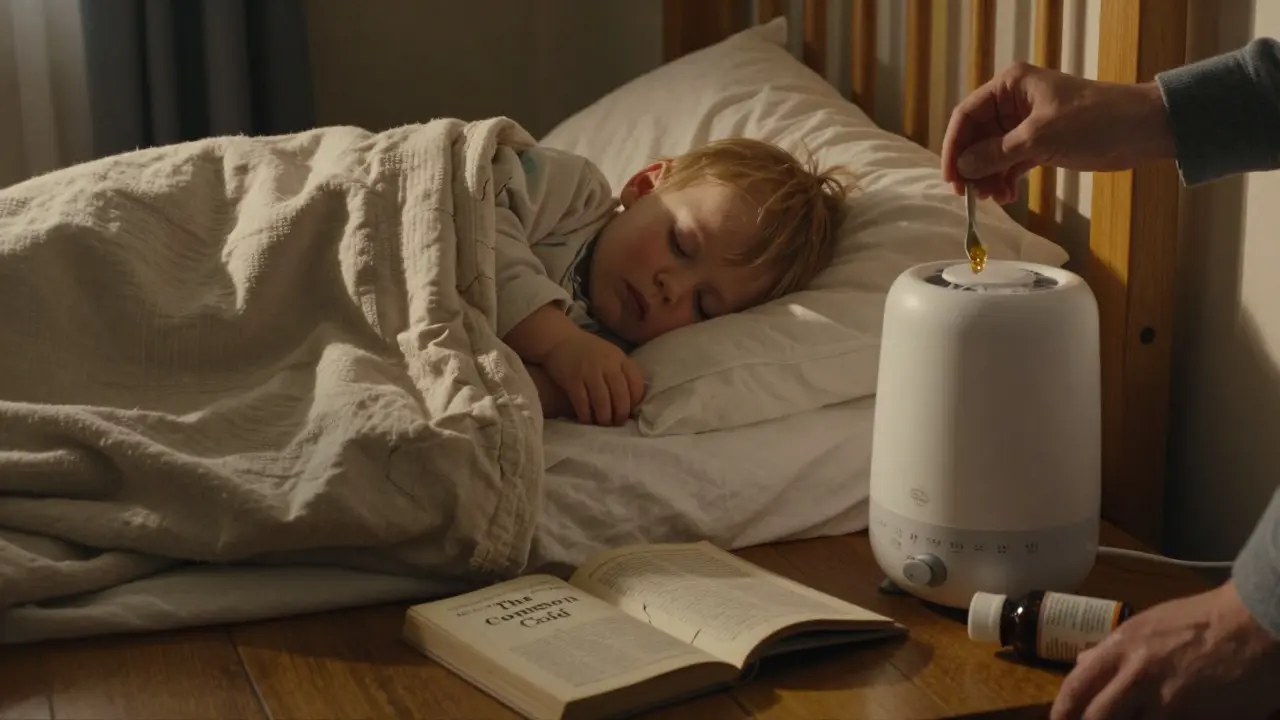
There’s growing pressure to reformulate these products - to make them safer, or to remove them entirely for young kids. The FDA’s 2023 advisory committee reaffirmed that "the risks outweigh any benefits" for children under six. Research is now focused on better ways to educate parents. One 2023 study showed that giving parents a simple one-page guide on safe symptom management cut inappropriate medicine use by 58%.
Pharmacies have started changing too. Some now place OTC children’s cold medicines behind the counter. Others include warning stickers on the shelf. But the real change has to come from us - as parents. We need to trust that our hands, our humidifiers, and our honey are enough.
What to Do If You’ve Already Given Medicine
If you’ve given your child an OTC cold medicine and they seem fine - keep watching. Watch for signs like: unusual drowsiness, trouble breathing, a fast or irregular heartbeat, vomiting, or confusion. If any of these happen, call your doctor or go to the emergency room. Don’t wait. Even if you gave "the right dose," their body might react differently.
If you’re unsure what you gave - check the label. Look for active ingredients. If it says "acetaminophen," "dextromethorphan," or "phenylephrine," write them down. Call Poison Control (1-800-222-1222 in the U.S.) or your local emergency number. They can tell you if it’s dangerous.
Can I give my 3-year-old children’s cough medicine if I use half the dose?
No. Even if you cut the dose in half, the medicine wasn’t designed for young children. Their bodies can’t process the ingredients safely, and side effects like seizures, hallucinations, or breathing problems can still happen. There’s no safe way to use these medicines in kids under six.
Is honey really safe for toddlers with coughs?
Yes - but only for children over 1 year old. Honey helps thin mucus and soothes the throat. Studies show it works as well as some OTC cough syrups, without the risk. Give ½ to 1 teaspoon before bed. Never give honey to babies under 12 months - it can cause infant botulism, a rare but serious illness.
Why can’t I use adult cold medicine if I give less?
Adult medicines are formulated for bodies that process drugs differently. Even a small amount can be too much for a child. Many adult cold medicines contain higher doses of ingredients like pseudoephedrine or dextromethorphan - which can cause dangerous side effects in kids. Always use products made specifically for children - and even then, avoid them under age six.
What should I do if my child has a fever and cough?
For fever or discomfort, use acetaminophen (if your child is over 2 months) at the right dose - 10-15 mg per kg of body weight. For cough, use honey (if over 1 year) and keep the air moist. Use saline drops and a bulb syringe for nasal congestion. If the fever lasts more than 3 days, or your child is breathing fast, not drinking, or seems very sleepy, call your doctor.
Are humidifiers safe for babies?
Yes - but only cool-mist humidifiers. Warm-mist humidifiers can cause burns or worsen nasal swelling. Clean the humidifier daily with vinegar and water to prevent mold. Place it where your child can’t reach it. A clean, cool mist helps loosen congestion without any medicine.
Final Thought: You Don’t Need Medicine to Be a Good Parent
There’s no shame in not giving medicine. In fact, choosing not to use it - especially when the science says it’s risky - is one of the smartest things you can do. Colds are uncomfortable, but they’re not emergencies. Your child will get better with rest, fluids, and comfort. You’re not failing if you don’t reach for the bottle. You’re protecting them.
Scott Smith
March 12, 2026 AT 17:56It’s wild how many parents still believe OTC cold meds work for kids under six. The science has been clear for over a decade. I’ve worked in pediatrics for 15 years, and every time I see a child admitted for an overdose of dextromethorphan, I think: this was preventable. No amount of marketing can override biology. The liver doesn’t care how much you paid for the bottle.
Parents aren’t stupid-they’re exhausted. And when your kid can’t breathe at 2 a.m., you’re not thinking about enzyme activity. You’re thinking: ‘I have to do something.’ That’s why education needs to be proactive, not reactive. Pediatricians should hand out one-pagers at well-child visits. Pharmacies should have warning labels bigger than the product name.
And honey? Yes. It’s not magic, but it’s science-backed, safe, and actually works. One teaspoon before bed for kids over 1? Better than any syrup on the shelf. Why isn’t that on every box?
Sally Lloyd
March 13, 2026 AT 16:51Did you know the FDA didn’t ban these products because they’re dangerous-they banned them because they don’t work? But the real story is that the pharmaceutical industry lobbied hard to keep them on shelves. There’s a reason why the same companies that make these syrups also fund ‘parent education’ campaigns. They profit from fear. And fear sells bottles.
I’ve seen the internal memos. ‘Position OTC cold meds as essential parenting tools.’ That’s not science. That’s marketing. The fact that 42% of parents still use them? That’s not ignorance. That’s manipulation.
And don’t get me started on honey. Why is a natural, centuries-old remedy treated like a fringe alternative? Because Big Pharma can’t patent it. That’s the real story.
Emma Deasy
March 15, 2026 AT 05:38Oh. My. Gosh. I just read this entire post, and I’m not even a parent-and I’m in tears. This is one of the most important public health messages I’ve ever encountered. The fact that we’ve been allowing our children to be guinea pigs for profit-driven pharmaceuticals? It’s unconscionable.
I mean, think about it: we’ve got bottles with five different active ingredients, labeled ‘For Children,’ while the fine print says ‘Do Not Use Under Four.’ How is this legal? How is this not a crime? And then parents-exhausted, loving, desperate parents-are told they’re ‘bad’ if they don’t medicate? That’s not parenting. That’s gaslighting.
And honey? Honey is the hero we didn’t know we needed. One teaspoon. Before bed. No side effects. No ER visits. Just… quiet. Just… sleep. Why isn’t this on every pediatrician’s website? Why isn’t this on billboards?
I’m sharing this with every mom group I’m in. This isn’t advice. This is survival.
tamilan Nadar
March 16, 2026 AT 17:48Adam M
March 17, 2026 AT 16:13Rosemary Chude-Sokei
March 18, 2026 AT 20:05I appreciate the thoroughness of this post. It’s rare to see such a well-researched, evidence-based breakdown of a common parental dilemma. I’ve spent the last two years navigating pediatric care with my twins, and this aligns precisely with what our pediatrician has reiterated: less is more.
What struck me most was the statistic about dosing errors from kitchen utensils. That’s not negligence-it’s systemic. No parent should have to rely on a syringe that’s easily lost or misread in the dark. This is a design failure, not a parenting failure.
I’ve started keeping a labeled dosing chart taped to the fridge. It’s simple: weight, dose, time. No guesswork. And honey? It’s now a staple. I keep a small jar next to the thermometer. It’s become part of our routine. Calm. Safe. Effective.
Thank you for normalizing the idea that comfort, not chemistry, is sometimes the best medicine.
Noluthando Devour Mamabolo
March 19, 2026 AT 03:03OMG YES. As a pediatric nurse in Cape Town, I’ve seen too many cases of iatrogenic toxicity from OTC combos. The term ‘polypharmacy cascade’ is real-parents think they’re helping, but they’re triggering a pharmacokinetic snowball effect. The liver’s CYP450 system in kids under 6 is like a toddler trying to run a nuclear reactor.
Honey? Yes. But let’s not romanticize it. It’s a mucolytic and antitussive agent with a glycemic load-so don’t overdo it. But compared to dextromethorphan’s half-life in a 15kg child? Honey’s a no-brainer. Also, saline + suction > nasal sprays. Always. Rebound congestion is a real thing.
And humidifiers? Cool-mist only. Warm-mist = burn risk + fungal spore dispersal. Clean daily. Vinegar rinse. No bleach. Mold is worse than the cold.
PS: If you’re using a kitchen spoon? You’re already in the danger zone. Get a syringe. It’s $2 at CVS.
Leah Dobbin
March 19, 2026 AT 22:07How is it possible that we still allow this? I mean, really. The FDA has known for years. The AAP has known for decades. And yet, the shelves are still lined with these brightly colored bottles, marketed with cartoon animals and ‘fast relief’ promises. It’s not just negligent-it’s predatory.
And let’s be honest: the fact that parents are still using these because they feel guilty? That’s emotional manipulation at its finest. You’re not a bad parent if you don’t medicate. You’re a good parent if you read the science.
Also, honey? Please. It’s not a ‘natural remedy.’ It’s a scientifically validated antitussive. But we’ve been conditioned to distrust anything that doesn’t come in a pill bottle. Pathetic.
Ali Hughey
March 21, 2026 AT 15:12THIS IS A COVER-UP. I’ve dug into the FDA’s 2023 advisory meeting transcripts. They didn’t ban these products because of safety-they banned them because they’re ineffective. But here’s the twist: the same companies that make these syrups also fund the CDC’s ‘parent education’ materials. Coincidence? I think not.
And don’t get me started on honey. Why is honey allowed? Because it’s cheap? Because it can’t be patented? The FDA allows honey because it’s not profitable. But they’ll still sell you a $12 bottle of ‘Nighttime Cough Relief’ with 3 active ingredients and zero efficacy.
They’re playing us. All of us. And they’re using our love for our kids as leverage.
Wake up. This isn’t about medicine. It’s about control.
Alex MC
March 21, 2026 AT 17:06I just want to say-thank you. This post made me feel less alone. I’ve been the parent who didn’t give the medicine, and I got judged. ‘You’re being reckless.’ ‘Your kid’s suffering.’ ‘Why not just try one dose?’
But I did the research. I used honey. I used the humidifier. I held my kid while he coughed. And you know what? He slept. He drank. He got better.
It’s not glamorous. It’s not fast. But it’s safe. And that’s enough.
For anyone else out there feeling guilty-you’re doing great. You’re not failing. You’re protecting.
rakesh sabharwal
March 21, 2026 AT 21:32Let’s be real: this is just another Western overmedicalization trend. In developing nations, we’ve been managing pediatric colds for centuries without syrups. Honey, steam, rest, hydration. That’s it. The West needs a pill for everything-even a runny nose.
And now we’ve created a generation of parents who think medicine = care. It doesn’t. Care = presence. Care = patience. Care = a warm bath and a lullaby.
Also, the fact that we need a 5000-word post to explain why we shouldn’t give kids cough syrup? That’s not progress. That’s collapse.
Aaron Leib
March 23, 2026 AT 21:30One of the best pieces of parenting advice I ever got: ‘Don’t treat the symptom. Treat the child.’
I used to reach for the medicine cabinet every time my daughter sneezed. Now? I check her temperature. I offer water. I turn on the humidifier. I read her a book. Sometimes I just hold her.
And you know what? She’s healthier. She sleeps better. She’s calmer.
You don’t need a bottle to be a good parent. You just need to be there.
Dylan Patrick
March 24, 2026 AT 08:11My 4-year-old had a cough last winter. I didn’t give him anything. Just honey, steam, and cuddles. He slept 8 hours straight for the first time in weeks.
Next morning? He woke up smiling. No medicine. No drama. Just… better.
Turns out, kids heal better when they’re not chemically sedated.
Scott Smith
March 26, 2026 AT 05:53Thank you for sharing your experience, Alex. That’s exactly the kind of story we need more of. I’ve had parents tell me, ‘I tried honey, but it didn’t work.’ And I say: did it make your child more comfortable? Did they sleep? Did you sleep? Because that’s the goal-not a magic cure, but relief.
And Dylan? Your 4-year-old’s story? That’s the new normal. We need to stop measuring success by how fast the medicine works, and start measuring it by how calm the child is.
One more thing: when you stop using medicine, you start noticing the real signs. A child who’s drinking well? That’s good. A child who’s resting? That’s healing. A child who smiles after a hug? That’s recovery.