

- 8
Many people take benzodiazepines for anxiety or sleep, thinking they’re safe because doctors prescribe them. But the truth is, these drugs come with serious, long-lasting risks-especially for memory, balance, and brain function. If you’ve been on them for months or years, you might not realize how much they’re affecting you. The good news? You can get off them safely. It just takes the right plan.
How Benzodiazepines Hurt Your Memory
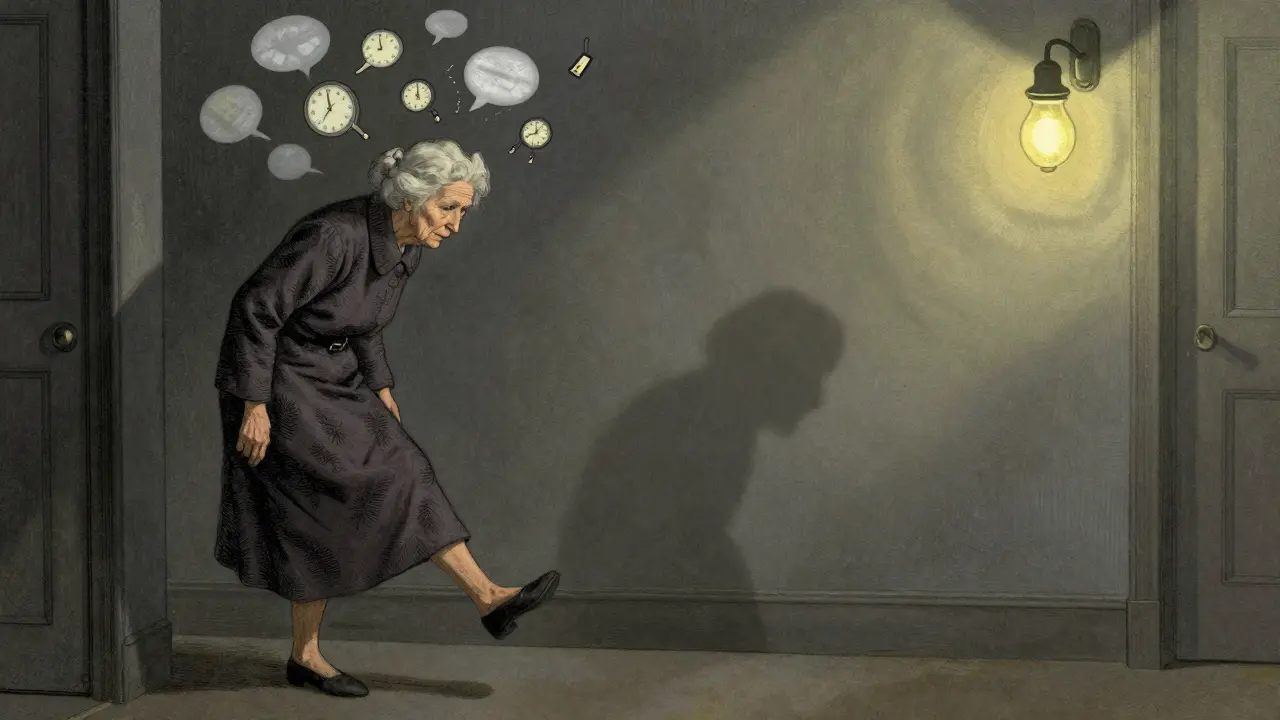
Benzodiazepines don’t just make you sleepy. They interfere with how your brain forms new memories. This is called anterograde amnesia. You might forget what you had for breakfast, why you walked into a room, or a conversation you had five minutes ago. It’s not just being distracted-it’s your brain literally not saving new information. Studies show this effect is strongest with higher doses and longer use. A 2023 review of 19 studies found that long-term users had clear deficits in recent memory, processing speed, and attention. The effect size was as strong as early-stage dementia. People on these drugs for over 10 years showed cognitive decline across multiple areas: working memory, visuospatial skills, and even language expression. What’s worse? These problems don’t vanish when you stop taking the drug. One study followed people for 10 months after quitting. Only 45% returned to normal brain function. The rest still struggled with brain fog, slow thinking, and memory gaps. That’s not temporary side effects-that’s lasting damage.Falls Aren’t Just Accidents-They’re a Side Effect
Falls are one of the leading causes of injury in older adults. And benzodiazepines are a major reason why. A 2014 meta-analysis of over a million people found that users had a 50% higher risk of falling and a 70% higher risk of breaking a hip. High-potency drugs like alprazolam and lorazepam were even riskier than older ones like diazepam. Why? These drugs slow down your reaction time by 25-35% and reduce balance control by 30-40%. You don’t feel dizzy-you just don’t catch yourself when you trip. A 72-year-old woman taking lorazepam for anxiety might not think twice about walking to the bathroom at night. But her brain isn’t processing the step down fast enough. That’s when a fall happens. In the U.S. alone, benzodiazepines are linked to 93,000 emergency room visits for falls each year. The American Geriatrics Society has listed them as inappropriate for older adults since 2012. And yet, they’re still prescribed far too often.Why Tapering Is Not Optional
Stopping benzodiazepines cold turkey is dangerous. Rebound anxiety, seizures, hallucinations, and extreme insomnia can happen. That’s why tapering-gradually lowering the dose-is the only safe path. The gold standard is the Ashton Protocol, developed by Professor C. Heather Ashton. It recommends reducing your dose by 5-10% every 1-2 weeks. For long-term users, even slower is better: 2-5% per month. The goal isn’t speed-it’s stability. A 2021 trial with 312 people showed that a 12- to 16-week taper using diazepam (switched from their original drug) led to 68.5% successfully quitting after six months. That’s more than double the success rate of those who didn’t taper. And here’s the hopeful part: cognitive improvements started within four weeks. By eight weeks, people saw a 15% boost in processing speed and nearly 19% better attention. But it’s not easy. About 22% needed to pause the taper for a few weeks because symptoms got too strong. And 8% had to stop completely because it was too overwhelming. That’s why support matters-whether it’s from a doctor, a therapist, or a community like the Benzodiazepine Information Coalition.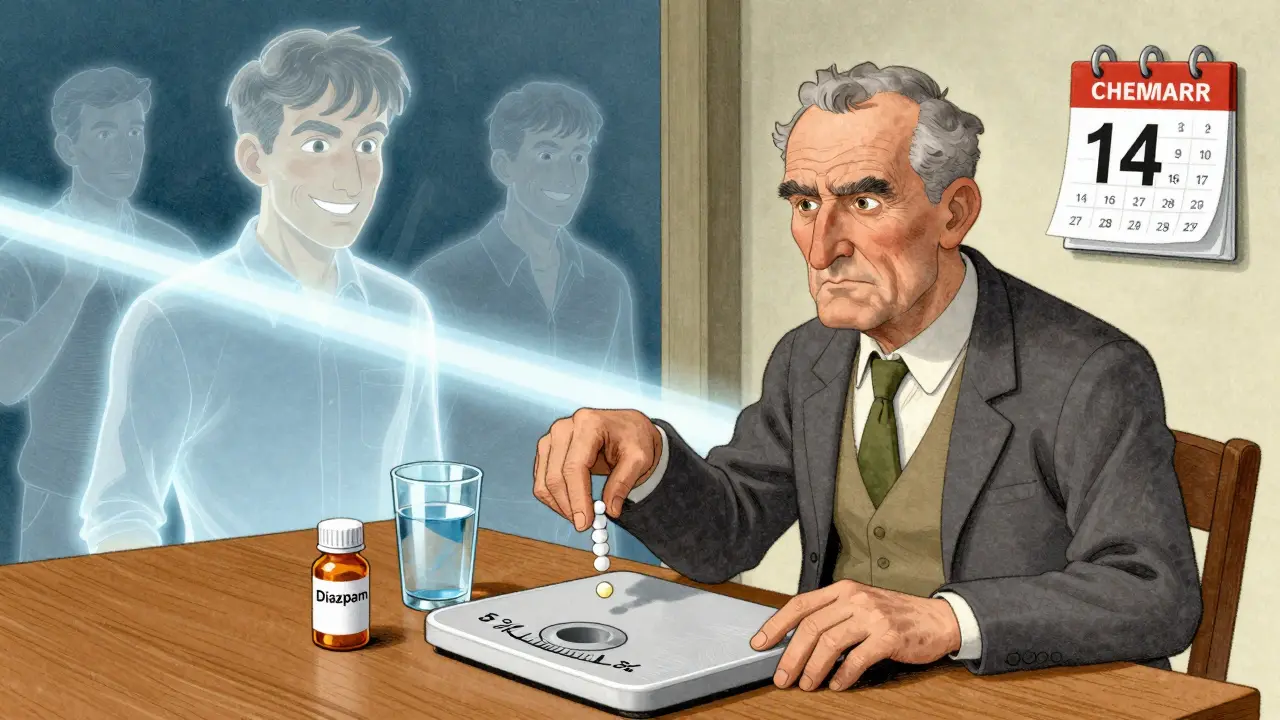
What Works Best for Tapering
Not all benzodiazepines are the same when it comes to quitting. Short-acting ones like alprazolam and lorazepam cause sharper withdrawal symptoms. Switching to diazepam-a long-acting benzodiazepine-smooths out the process. It stays in your system longer, giving your brain more time to adjust. Most successful tapers follow this pattern:- Switch from short-acting to diazepam (under medical supervision)
- Reduce by 5% every two weeks, or 2-3% if you’re older or have been on it for years
- Hold the dose for 1-2 weeks if symptoms appear
- Track your mood, sleep, and memory with simple tools like the BrainBaseline app
- Don’t rush. A 6-month taper is normal. Some take over a year.
When You Should Consider Stopping
Doctors should be screening for cognitive decline in anyone on long-term benzodiazepines. The Mini-Mental State Exam (MMSE) and Montreal Cognitive Assessment (MoCA) are simple, quick tests used in clinics. If your score drops by 2 points on MMSE or 3 on MoCA, it’s a red flag. Current guidelines say:- Don’t use benzodiazepines for more than 4 weeks for anxiety
- Maximum daily dose: 10 mg diazepam equivalent for under 65, 5 mg for over 65
- Discontinue if cognitive decline is detected
Chris Crosson
March 24, 2026 AT 08:09I’ve been on lorazepam for 8 years. Thought it was just aging-turns out my brain was just chemically sedated.
Started tapering last month using the Ashton Protocol. Switched to diazepam. Went from 2mg to 1.5mg. First two weeks were hell-insomnia, anxiety spikes, felt like my skull was full of cotton.
But week 3? I remembered my dog’s name after he barked at the mailman. That’s when I knew-this was real.
My memory’s not back to 20-year-old levels, but I can now follow a TV plot without rewinding. That’s huge.
Don’t let anyone tell you it’s ‘just anxiety.’ This stuff erodes your mind like acid. You don’t notice until you’re halfway out.
Linda Foster
March 24, 2026 AT 22:02Thank you for sharing this comprehensive and clinically grounded overview. The evidence presented regarding cognitive decline and fall risk is both compelling and deeply concerning.
As a healthcare professional, I have observed firsthand the underappreciated prevalence of long-term benzodiazepine use in elderly populations, often perpetuated by inertia in prescribing practices.
The Ashton Protocol remains the gold standard for structured tapering, and its empirical support in peer-reviewed literature is robust.
I would encourage all clinicians to prioritize non-pharmacological interventions for anxiety and insomnia, particularly in patients over the age of 65, and to initiate early discussions regarding deprescribing.
Rama Rish
March 26, 2026 AT 15:26omg this is so true. i was on xanax for 5 yrs and thought i was just ‘stressed out’
then i tapered slow and like 3 months later i remembered my moms birthday. i cried. like for real.
brain fog is real. its not laziness. its drug damage.
go slow. use diazepam. dont rush. u got this 💪
Chris Farley
March 28, 2026 AT 04:41Let’s be real-this is just Big Pharma fearmongering wrapped in a lab coat.
You think stopping benzos is the answer? What about the real problem? Society’s collapse. People are anxious because everything’s falling apart-jobs, housing, democracy.
They’re not ‘brain damaged.’ They’re reacting to a broken world.
And now we’re telling them to quit their only coping mechanism? That’s not healthcare-that’s cruelty.
Next they’ll tell us to stop eating sugar because it ‘slows cognition.’
Wake up. This isn’t science. It’s moral panic with statistics.
James Moreau
March 28, 2026 AT 17:35Chris Crosson’s story hit me hard. I’ve got an aunt who’s been on clonazepam since 2010. She forgot my wedding. Not just the date-the whole event.
She’s now tapering slowly with her neurologist. It’s been 6 months. She’s laughing again. Real laughter.
She says she feels like she’s ‘waking up from a long nap.’
And yeah, some days are rough. But she’s not alone. We’ve got a group chat now. We check in. We celebrate tiny wins.
This isn’t just about drugs. It’s about reclaiming your life.
Thank you for writing this. It’s helping people like me help others.
J. Murphy
March 28, 2026 AT 20:47cool post
but i still take xanax
its fine
who cares if i forget my keys
at least i dont cry in the shower
Jesse Hall
March 30, 2026 AT 16:37Just wanted to say-you’re not alone. I tapered off clonazepam over 18 months. Had panic attacks so bad I thought I was dying. But guess what? I’m alive.
And now? I sleep without pills. I remember names. I read books again.
It’s not perfect. Some days my brain still feels like it’s underwater.
But I’m here. And I’m proud.
You’re doing better than you think. Keep going. 🙌💛
Sean Bechtelheimer
March 31, 2026 AT 17:24Who really controls the Ashton Protocol? Hint: it’s not doctors.
Did you know the original study was funded by a group linked to the WHO’s ‘mental health initiative’? That’s the same group that pushed SSRIs in the 90s.
And now they want us to quit benzos… but not the 5G towers or the fluoride or the vaccines.
Think about it.
They want you dependent on ‘tapering programs’ so you stay in the system.
Meanwhile, real healing? Meditation. Sunlight. Cold showers.
But they’ll never tell you that.
They need you hooked on ‘protocols.’
Stay awake. 🕵️♂️