

- 0
Key Takeaways
- China controls roughly 80% of the global API market, making it the backbone of global generic drug supply.
- Significant quality risks persist, with FDA warnings frequently citing data integrity and laboratory control failures.
- The 2016 Generic Consistency Evaluation (GCE) program aims to fix quality, but only 35% of generics have completed it as of 2024.
- Geopolitical shifts are driving the US and EU to diversify supply chains to reduce reliance on Chinese manufacturing.
The Engine of Global Generics
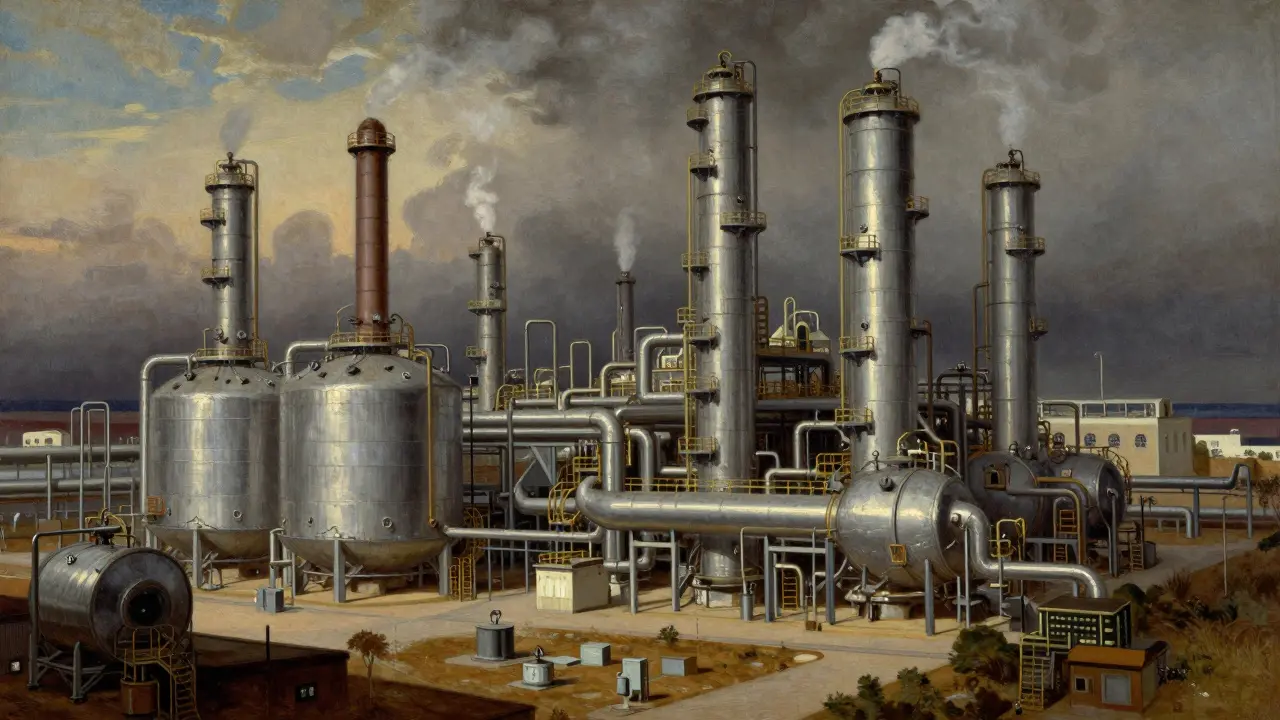
To understand the scale, you have to look at the Active Pharmaceutical Ingredient, or API. This is the actual chemical compound that makes a drug work. China doesn't just make a few of these; they dominate the initial, often hazardous, steps of chemical synthesis. We are talking about massive facilities, like those run by Sinopharm, capable of churning out thousands of metric tons of APIs annually. Because they control 60-70% of the production chain internally-from raw materials to the final powder-they can undercut Western competitors on price by 30-40%.
Why does this matter for the average person? Because if you are taking a common blood pressure medication or an antibiotic, there is a high probability the raw material started in a Chinese plant. This vertical integration creates an efficiency that is hard to beat, but it also means a single failure in a Chinese province can cause a global drug shortage.
The Quality Gap: Why Regulators Are Worried
The biggest concern isn't the intent, but the execution. When the U.S. Food and Drug Administration, or FDA, inspects these plants, they often find the same recurring issues. In recent inspections, nearly 78% of warnings cited inadequate laboratory controls, and over half pointed to data integrity problems. In plain English: the paperwork doesn't always match the science.
There is also a technical lag. While US and European plants are moving toward continuous manufacturing-where the drug is made in a steady, automated flow-about 65% of Chinese production still relies on old-school batch processing. This increases the chance of human error and variance between lots. A 2023 FDA study highlighted this disparity, finding that 12.7% of Chinese API samples failed purity tests, compared to just 1.8% of US samples. When purity fails, you get sub-potent drugs or, worse, contaminants.
| Metric | Chinese API | Western (US/EU) API | Indian API |
|---|---|---|---|
| Average Price (per kg) | $50 - $150 | $200 - $400 | Intermediate |
| Purity Failure Rate | 12.7% | 1.8% - 2.3% | Moderate |
| Manufacturing Method | Mostly Batch | High Continuous Adoption | Mixed |
| Global Market Share | ~80% | ~10% | ~12% |
The Push for Consistency: The GCE Program
China knows it has a perception problem. To fight this, the National Medical Products Administration, or NMPA, launched the Generic Consistency Evaluation (GCE) program in 2016. The goal was simple: prove that a generic drug works exactly the same way as the original brand-name version (bioequivalence).
It sounds straightforward, but the rollout has been slow. By 2024, only about 35% of approved generic drugs had actually finished the evaluation. The GCE has been a brutal filter, though; it's helped eliminate around 4,500 non-compliant manufacturers from the market. This is a massive cleanup operation, shrinking the number of facilities from 7,000 down to 2,500. While this improves the average quality, it also puts more pressure on the remaining players to maintain volume without cutting corners.

Supply Chain Vulnerabilities and National Security
There is a strange paradox in the generic drug world: India is known as the "pharmacy of the world" for finished pills, but India imports about 65% of its APIs from China. This creates a "single point of failure." If trade relations sour or a pandemic shuts down Chinese ports, the world's supply of essential medicines doesn't just dip-it crashes.
Industry experts have warned that the West has outsourced the most dangerous parts of drug synthesis-like fluorination and the use of highly toxic materials-to China because it was cheaper and the regulatory oversight was more relaxed. This has left the US and EU with almost no capacity to produce basic chemical building blocks. For instance, if a company needs to make a specific antibiotic, they likely depend on a Key Starting Material (KSM) that only a few Chinese factories produce at scale.
The Cost of Doing Things Right
If a company wants to build a manufacturing plant in China that actually meets FDA standards, they can't just buy a standard setup. An FDA-compliant API facility costs between $85 million and $120 million, whereas a non-compliant one is significantly cheaper. Then there's the maintenance: keeping a quality system up to international standards costs another $3 million to $5 million every year.
Even for giants like Pfizer, getting a joint venture with a Chinese partner to work for the US market takes years. In one case, it took 36 months of process harmonization and a $22 million investment just to get the quality systems aligned. The challenge isn't just the machinery; it's the documentation. Many companies struggle with the cultural differences in how quality logs are kept and how data is reported, which often leads to those "data integrity" warnings from regulators.
What Happens Next?
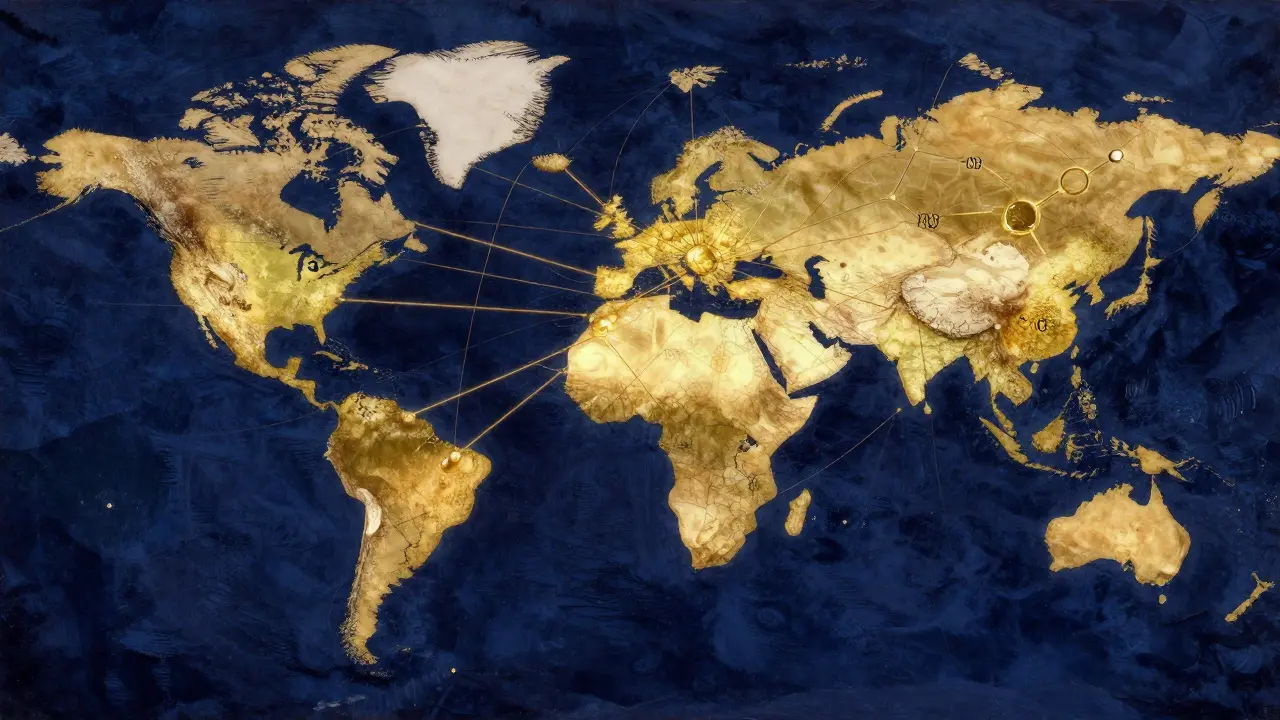
We are seeing a slow shift toward "friend-shoring" and domestic production. The US and EU are pouring millions into bringing API production back home to reduce the 80% dependency. China is responding with the "Pharma 2035" initiative, spending billions to upgrade their tech and move toward continuous manufacturing.
But can they move fast enough? The market is already shifting. India, Vietnam, and Mexico are expanding their capacity. While China will likely remain the dominant force for the next few years, their share of the API market is predicted to slide from 78% down to 65% by 2030. The companies that survive will be the ones that stop chasing the lowest possible price and start prioritizing the highest possible purity.
Why is China so dominant in API production?
China's dominance comes from massive state-backed industrial policies, a highly integrated chemical supply chain, and the ability to handle hazardous chemical synthesis at a scale and cost that Western companies cannot match. They control the majority of the production chain, from raw materials to intermediates.
What is the Generic Consistency Evaluation (GCE) program?
The GCE is a regulatory initiative by the NMPA requiring generic drugs to prove they are bioequivalent to the original reference drug. It is designed to weed out low-quality generics and ensure that domestic drugs are effective and safe.
Are drugs made with Chinese APIs unsafe?
Not necessarily, but there is a higher risk of variance. While most drugs pass, there is a documented higher rate of purity failures and data integrity issues compared to US or European sources, which is why the FDA maintains strict inspection protocols.
How does India fit into this supply chain?
India is a global leader in finishing the drug (turning the powder into pills or injections), but they rely heavily on China for the raw APIs. This creates a dependency where Indian manufacturing is vulnerable to any disruptions in Chinese production.
What are the most common FDA warnings for Chinese plants?
The most common warnings involve inadequate laboratory controls, failure to validate manufacturing processes, and data integrity issues, where the recorded data does not accurately reflect the actual production conditions.
Next Steps for Industry Professionals
If you are sourcing materials or managing a supply chain, the priority is no longer just the price per kilogram. You should move toward a "multi-source" strategy. Relying on a single Chinese supplier for a critical KSM is a high-risk gamble. Audit your suppliers' adherence to ICH Q7 guidelines and request third-party purity verification for every lot, not just the initial sample. For those investing in China, focus on the 18-24 month window required for full compliance and prioritize partners who have already passed the GCE evaluation.