

Counterfeit Medication Checker
Check for Counterfeit Medications
Use this tool to identify potential counterfeit medications based on key indicators from the article. Remember: only licensed pharmacies sell legitimate prescription medications.
Every year, millions of people around the world take pills they think are real medicine - but they’re not. These aren’t mistakes. They’re fake. Deliberately made to look like the real thing, counterfeit medications can contain no active ingredient, the wrong dose, or even toxic chemicals like fentanyl, rat poison, or industrial paint. And they’re easier to find than you might think.
What Exactly Are Counterfeit Medications?
Counterfeit medications aren’t just bad quality. They’re criminal products designed to trick you. The World Health Organization defines them as products that deliberately misrepresent their identity, composition, or source. That means the bottle might say it’s insulin, but inside? It could be sugar, chalk, or worse. Substandard drugs, on the other hand, are made poorly - maybe the factory skipped quality control. But counterfeit ones? They’re made to look perfect so you don’t notice.In 2024, the Pharmaceutical Security Institute recorded over 6,400 incidents of fake drug activity across 136 countries. That’s not a typo. Six thousand four hundred. And that’s just what got reported. The real number is likely much higher. In some regions, more than 30% of medicines on the market are fake. In places like Nigeria and parts of Southeast Asia, it’s common for people to buy medications that won’t work - or worse, will make them sicker.
Where Are These Fakes Coming From?
The internet is the main pipeline. Over 97% of websites selling prescription drugs operate illegally. You might think you’re buying from a Canadian pharmacy because the site says so - but the FDA says 85% of those so-called Canadian pharmacies are actually based elsewhere, often in China or India, shipping directly to your door. Social media ads, Instagram influencers, Telegram groups, and even Google search results can lead you to fake pharmacies that look professional - with real logos, SSL certificates, and even fake customer reviews.Interpol’s Operation Pangea XVI in 2025 shut down 13,000 websites and arrested 769 people. They seized 50.4 million doses of fake drugs - including cancer treatments, antibiotics, and heart medications. But here’s the scary part: the criminals are getting smarter. They’re now copying holograms, tamper-evident seals, and even unique serial numbers that are supposed to prove a drug’s authenticity. Some are using 3D printers to make pill molds that match the exact shape and color of real medications. One Reddit user, a nurse named MedTech_RN, shared how her mother nearly died from counterfeit insulin. The packaging was flawless. The only clue? The vial felt lighter than it should have.
How to Spot a Fake Pill or Package
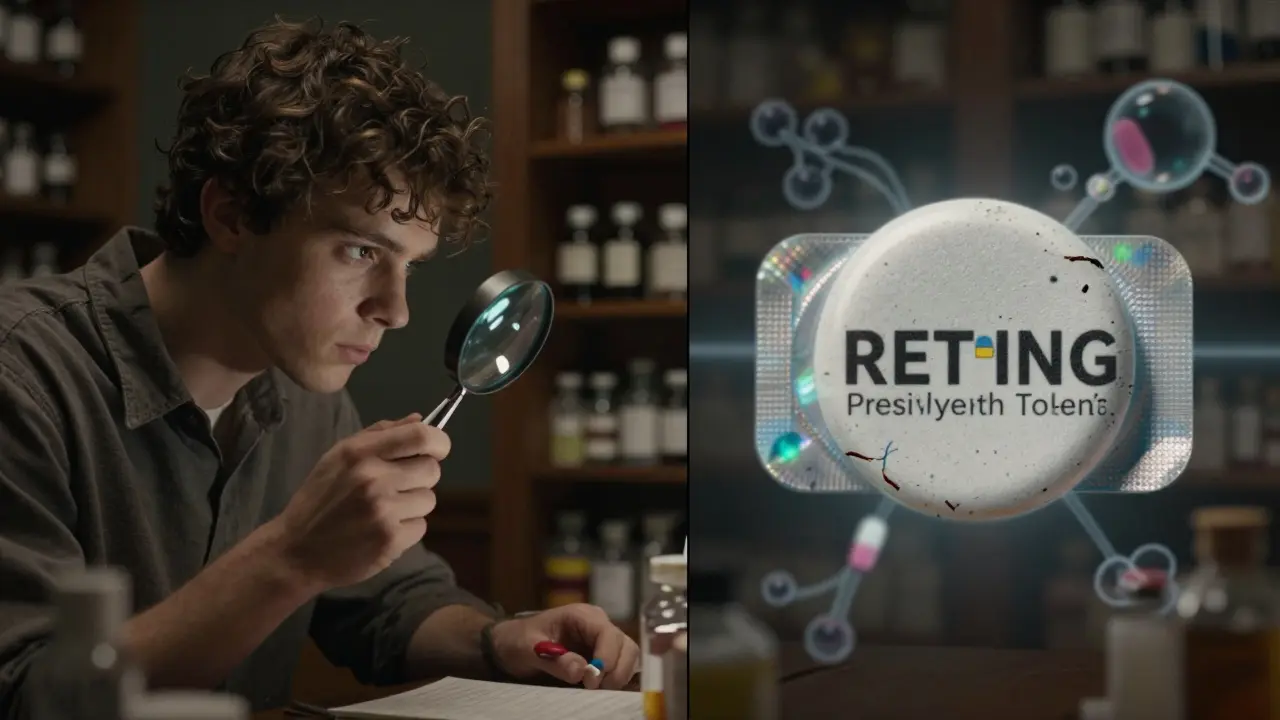
You don’t need a lab to spot a fake. Here’s what to look for:- Packaging errors: Typos, blurry logos, mismatched colors, or fonts that look slightly off. Real drug companies don’t make these mistakes.
- Pill appearance: If the pill is a different color, shape, or size than what you’re used to - even slightly - don’t take it. Compare it to images on the manufacturer’s official website.
- Smell and texture: Fake pills often have a chemical or plastic odor. If the tablet crumbles easily or feels unusually gritty, that’s a red flag.
- Missing safety features: Look for tamper-evident seals, holograms, or scratch-off verification codes. If they’re missing, it’s not legit.
- Price too good to be true: If you’re buying OxyContin for $5 a pill when it normally costs $50, you’re buying a fake.
The National Consumers League found that 78% of negative reviews of online pharmacies mention packaging issues. That’s not coincidence. It’s the most common tell.
The Real Danger: What Happens When You Take a Fake?
Taking a fake medication isn’t just a waste of money. It’s life-threatening.Many counterfeit antibiotics contain no active ingredient at all. That means your infection keeps growing - and could lead to sepsis. Fake malaria drugs have been linked to over 120,000 deaths in Africa each year. And in the U.S., counterfeit pills are now the leading cause of opioid overdoses. The DEA found that 7 out of 10 fake pills seized in 2024 contained a lethal dose of fentanyl - enough to kill an adult in seconds.
Even if the fake drug has some active ingredient, it might be too little. A study in The American Journal of Tropical Medicine and Hygiene found that more than half of all counterfeit medicines in the legal supply chain had insufficient doses. That’s how drug resistance starts. You don’t kill the bacteria - you just train it to survive. And now, the bacteria are stronger than ever.
The U.S. Pharmacopeia recorded 1,247 adverse events linked to suspected counterfeit drugs in 2025 - and 87% of those happened to people who bought online without a prescription.
How to Buy Medications Safely
Here’s how to protect yourself:- Only buy from licensed pharmacies. In the U.S., look for the VIPPS seal from the National Association of Boards of Pharmacy (NABP). That means the pharmacy has been verified as legitimate.
- Never buy without a prescription. If a site sells you Adderall, Viagra, or insulin without asking for a prescription, it’s illegal - and dangerous.
- Use official verification tools. The FDA lets you check National Drug Code (NDC) numbers on their website. Pfizer and other manufacturers also offer tools to verify packaging.
- Check the pharmacy’s location. If the pharmacy is based in a country with weak drug regulations, avoid it. Stick to pharmacies in countries with strict oversight like the U.S., Canada, Australia, or the EU.
- Report suspicious products. Use the WHO’s MedSafety app or report to your country’s health authority. Every report helps track these criminals.
LifeRaft Labs’ 2025 guidelines say: if you found the pharmacy on a Google ad or a Facebook post, walk away. Legitimate pharmacies don’t advertise on social media.
What’s Being Done to Stop This?
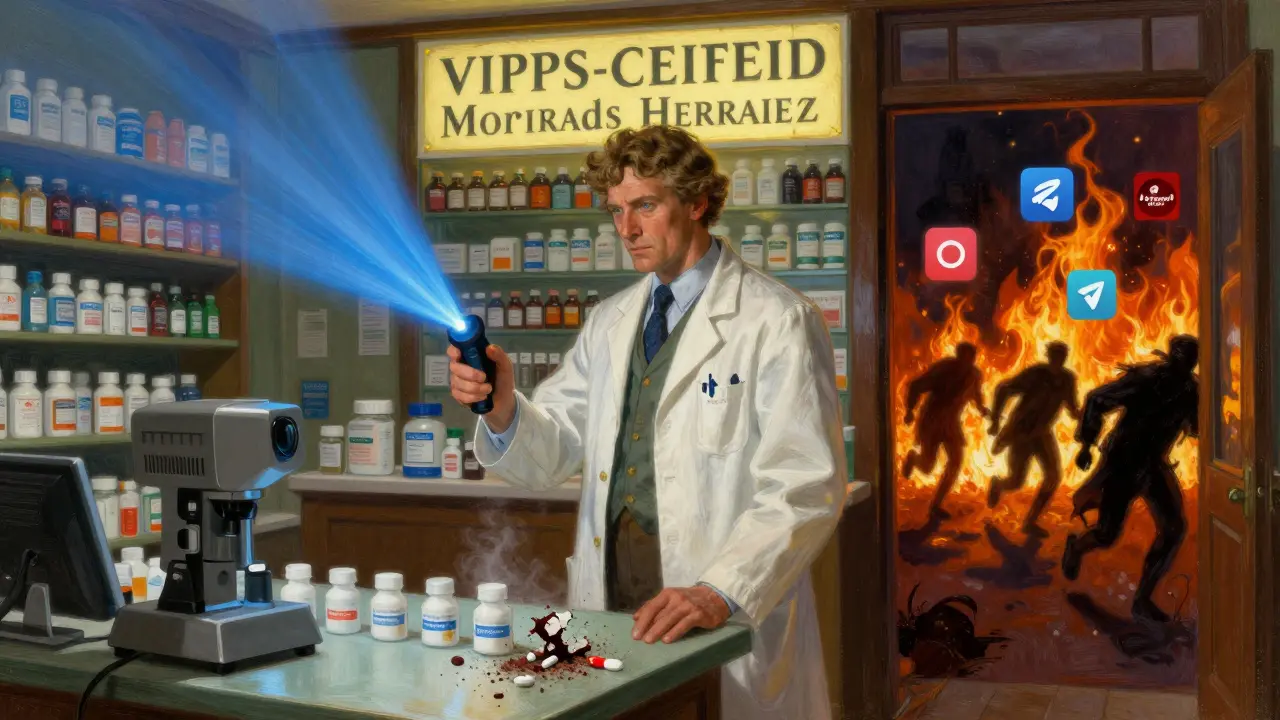
Governments and drugmakers are fighting back. The U.S. Drug Supply Chain Security Act (DSCSA) requires full electronic tracking of every prescription drug by November 2025. That means every bottle will have a digital trail from manufacturer to pharmacy. The European Union’s Falsified Medicines Directive already uses unique identifiers and anti-tampering devices on every package.Technology is helping too. Portable spectroscopy devices - handheld tools that scan a pill’s chemical makeup - are now used by customs agents and pharmacists. The global market for these devices is expected to hit $2.3 billion by 2030. In North America, they’re already common in hospitals. In Asia, adoption is growing fast.
But the criminals adapt. They’re using cryptocurrency to pay for shipments and encrypted apps like Signal to coordinate. They’re targeting high-value drugs - cancer treatments, biologics, and insulin - because the profit margins are huge. And they’re moving production closer to consumers, making it harder to trace.
What You Can Do Right Now
Don’t wait for someone else to fix this. You have power.- When you get a new prescription, compare the pill to the one you took before. If it looks different, ask your pharmacist.
- Take a photo of your medication packaging the first time you get it. That way, you’ll notice if the next refill looks odd.
- Teach your parents or elderly relatives. They’re the most vulnerable - and often the least likely to question a website.
- Don’t be embarrassed to ask your doctor: “Is this medicine safe to buy online?” Most don’t know the risks either.
Counterfeit drugs aren’t a distant problem. They’re in your medicine cabinet. And they’re getting better at hiding. But you can outsmart them - if you know what to look for.
How can I tell if my medication is fake?
Check the packaging for spelling errors, blurry logos, or mismatched colors. Compare the pill’s shape, color, and size to images on the manufacturer’s official website. Look for tamper-evident seals or holograms. If the pill smells like plastic or crumbles easily, don’t take it. Also, verify the National Drug Code (NDC) number using the FDA’s online database.
Can I trust online pharmacies that claim to be Canadian?
No. The U.S. Food and Drug Administration (FDA) says 85% of websites claiming to be Canadian pharmacies are actually based elsewhere - often in countries with lax regulations. Only use pharmacies with the VIPPS seal from the National Association of Boards of Pharmacy (NABP), and ensure they require a valid prescription.
Are fake drugs only a problem in developing countries?
No. While counterfeit drugs are more common in low-income countries, they’re a global threat. In the U.S., over 1,200 adverse events linked to fake medications were reported in 2025 - nearly all from online purchases. Fake pills containing fentanyl are now the leading cause of opioid overdose deaths in North America.
What should I do if I think I’ve taken a fake medication?
Stop taking it immediately. Contact your doctor or pharmacist and report the incident to your country’s health authority. In the U.S., report to the FDA’s MedWatch program. Keep the packaging and any remaining pills - they may be needed for testing. If you feel unwell, seek medical help right away.
Why are counterfeit drugs so dangerous?
They can contain no active ingredient, too little, or toxic substances like fentanyl, rat poison, or industrial chemicals. This can lead to treatment failure, drug resistance, organ damage, or sudden death. Fake antibiotics, for example, don’t cure infections - they let them spread, making future treatments harder.
Can I use a drug testing kit to check if my medicine is real?
Consumer drug testing kits aren’t reliable for prescription medications. They’re designed for recreational drugs, not complex pharmaceuticals. The only accurate way to verify a drug is through lab testing using spectroscopy - tools used by regulators, not the public. Your best defense is buying from verified pharmacies and checking packaging details.
How do counterfeiters make fake drugs look so real?
Criminal networks now use advanced printing, 3D printing for pill molds, and even copy legitimate packaging features like holograms and serial numbers. Some have reverse-engineered the supply chain to replicate tamper-evident seals. They study real product images online and hire designers to replicate labels. This makes detection harder - which is why you must check multiple details, not just one.
Final Thoughts
Your health isn’t something to gamble with. Fake medications are a silent epidemic - and they’re getting smarter. But so can you. By learning how to spot the signs, buying only from verified sources, and speaking up when something feels off, you’re not just protecting yourself. You’re helping to shut down these criminal networks.Don’t assume it can’t happen to you. It already has - to millions. Stay alert. Stay informed. And never buy from a website that doesn’t ask for your prescription.
Cassie Widders
January 11, 2026 AT 08:49I bought some antibiotics online last year because they were cheap. Turned out they were just lactose pills. Got sick for weeks. Never again.
Konika Choudhury
January 13, 2026 AT 05:33India makes 70 percent of the world's generic meds and now you guys blame us for fakes? Go check your own pharmacies first
Darryl Perry
January 14, 2026 AT 21:32This article is accurate but lacks structural rigor. The WHO definition should have been cited with the exact document number.
Windie Wilson
January 16, 2026 AT 20:06So let me get this straight - we’re supposed to trust a pharmacy that looks like it was designed by a 12-year-old with Canva and a dream? 😂
Daniel Pate
January 18, 2026 AT 12:32If counterfeit drugs are so rampant, why hasn’t the supply chain been fully digitized yet? The technology exists. The will doesn’t. It’s not about safety - it’s about profit margins.
Amanda Eichstaedt
January 18, 2026 AT 18:05My grandma took fake blood pressure meds last winter. She ended up in the ER. We reported it. No one cared. This isn’t just about pills - it’s about who gets ignored by the system.
Jose Mecanico
January 19, 2026 AT 09:32I’ve seen the holograms on fake insulin bottles. They’re scary good. I wouldn’t have caught it either.
Alex Fortwengler
January 19, 2026 AT 19:37Of course the government says it’s fakes. They’re in on it. The FDA, the DEA - all of them. They need you scared so you’ll keep buying their overpriced brand names. Fentanyl pills? That’s a controlled supply. Wake up.
jordan shiyangeni
January 21, 2026 AT 11:07It is both tragic and morally indefensible that individuals in the United States - a nation with the highest per capita healthcare expenditure on earth - are compelled to purchase life-sustaining pharmaceuticals from unregulated, unverified, and often criminally operated online entities. The systemic failure here is not merely logistical; it is existential. When your insulin comes from a Telegram bot, you are not just risking your health - you are surrendering your dignity to a predatory, unaccountable oligarchy masquerading as a free market.
Abner San Diego
January 22, 2026 AT 10:53They say fake meds are a global problem. But guess what? The real problem is America letting Big Pharma jack up prices so high that people are forced to buy from sketchy websites. Blame the greed, not the desperate.
Eileen Reilly
January 23, 2026 AT 08:41OMG I just checked my last prescription and the cap was slightly crooked!! I thought it was just me being paranoid but now I’m shaking. I’m calling my pharmacy right now 😭
Monica Puglia
January 24, 2026 AT 14:22My mom’s diabetes meds looked different last month. I took a pic and called the manufacturer. They confirmed it was fake. She’s alive because I checked. 🙏
Cecelia Alta
January 24, 2026 AT 23:31Let me tell you something - I used to work in a pharmacy. We had a guy come in every month with the same script. Same bottle. Same pill. But every time, the color was just a little off. We’d call the manufacturer, they’d say ‘it’s fine.’ But it wasn’t. We had to quietly swap his meds out of our own supply because we knew if he took that stuff, he’d die. And no one wanted to admit it. So yeah, it’s not just ‘online’ - it’s everywhere. And the system is too broken to fix it.
steve ker
January 26, 2026 AT 05:35Why are you wasting time on this? In Nigeria we just use traditional herbs. Much safer and cheaper. You westerners overthink everything.
George Bridges
January 26, 2026 AT 19:59Thank you for writing this. My sister is a nurse in rural Ohio. She’s seen three patients this year with fake insulin. None of them knew how to check. This needs to be in every doctor’s office.