


Desloratadine vs Loratadine Comparison Tool
Which Medication Is Best for You?
Answer these questions to get a personalized recommendation based on the latest medical research and clinical guidelines.
Key Comparison
| Feature | Desloratadine | Loratadine |
|---|---|---|
| Half-life | 27 hours | 8 hours |
| Adult Dose | 5 mg once daily | 10 mg once daily |
| Minimum Age | 1 year | 2 years |
| Cardiac Safety | No effect on QRS/QTc | Minimal risk |
| Typical Cost (30-day) | $25-$40 | $10-$25 |
| Best For | Moderate-severe allergies, nasal congestion, children under 2 | Mild allergies, cost-sensitive users |
When comparing side effects and dosing between desloratadine and loratadine, it's important to understand their fundamental differences. Desloratadine is a second-generation antihistamine that's actually the active metabolite of loratadine. This means when you take loratadine, your body converts it into desloratadine to work. Desloratadine itself is more potent and has a longer half-life, providing consistent 24-hour relief for allergy symptoms like sneezing, runny nose, and itchy eyes.
Key Differences in How They Work
Loratadine is metabolized in the liver to produce desloratadine. But taking desloratadine directly skips this step, making it more efficient. Research shows desloratadine is significantly more potent-about 10 times stronger at blocking histamine receptors than loratadine. This is why a 5 mg dose of desloratadine works as well as a 10 mg dose of loratadine. Both are non-sedating because they don’t cross the blood-brain barrier much, but desloratadine has extra anti-inflammatory effects. It reduces cell adhesion molecules and inflammatory cytokines, which helps with nasal congestion and skin reactions better than loratadine alone.
Dosing and Timing
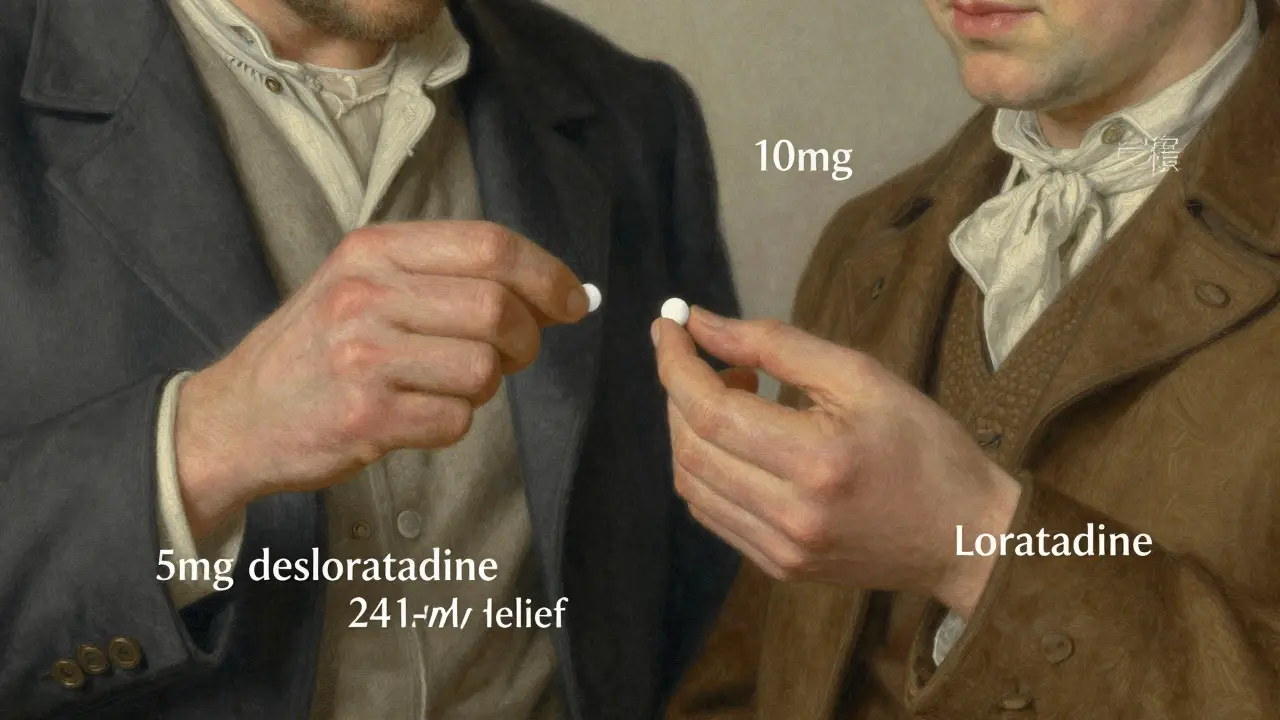
Adults take desloratadine at 5 mg once daily and loratadine at 10 mg once daily. Both work whether you take them with or without food. But their timing differs. Desloratadine reaches peak levels in your blood about 3 hours after taking it, while loratadine peaks in 1-1.5 hours. However, desloratadine’s longer half-life (27 hours vs. loratadine’s 8 hours) means it stays in your system longer. This gives more stable symptom control throughout the day. For kids, desloratadine is approved for ages 1 and up, while loratadine is only for ages 2 and older. Pediatric studies show a 5 mg daily dose of desloratadine in children 2-5 years old gives an average blood concentration of 7.8 ng/mL-higher than the 5.1 ng/mL seen in control groups. This makes desloratadine the go-to for toddlers with allergies.
Side Effects Comparison
Both medications cause dry mouth and headaches, but desloratadine generally has fewer side effects. A University of Virginia study found diarrhea occurred in 6.1% of desloratadine users versus 2.4% in controls. Irritability was reported in 6.9% of desloratadine users compared to 5.6% in controls. Crucially, desloratadine doesn’t affect QRS or QTc intervals on heart monitors, lowering risks of irregular heartbeats. Loratadine has minimal cardiac risks but can cause drowsiness in some people. Real-world data from Drugs.com shows desloratadine has a 7.2/10 rating (63% positive reviews) versus loratadine’s 6.3/10 (54% positive). Reddit’s allergy community reports 68% of users prefer desloratadine for severe symptoms like itchy eyes and nasal congestion, while 32% choose loratadine for mild allergies due to lower cost.
Who Should Take Which?
Choose desloratadine if you have moderate to severe allergies, need longer-lasting relief, or have kids under 2. Its extra anti-inflammatory action helps with nasal congestion and skin reactions. It’s also safer for people with heart conditions since it doesn’t affect cardiac intervals. Opt for loratadine if you have mild allergies, want the cheapest option, or experienced headaches with desloratadine. Both are safe for most adults, but if you’re taking other medications, desloratadine is better. It doesn’t rely on the cytochrome P450 enzyme system, so it has fewer interactions with drugs like ketoconazole or erythromycin. Loratadine can interact with these medications, potentially increasing side effects.
Practical Considerations
Cost matters. Desloratadine usually costs $25-$40 for a 30-day supply, while generic loratadine runs $10-$25. If you’re paying out-of-pocket, loratadine saves money. But if your insurance covers desloratadine, the cost difference shrinks. For bariatric surgery patients, desloratadine dissolves better in the gut post-surgery, making it the safer choice. Doctors often recommend switching to desloratadine if loratadine doesn’t work after 2-4 weeks. The American College of Allergy guidelines support this, noting desloratadine’s superior control for nasal symptoms. Always consult your doctor before switching, especially if you have liver issues or take multiple medications.

Comparison Table
| Aspect | Desloratadine | Loratadine |
|---|---|---|
| Half-life | 27 hours | 8 hours |
| Adult dose | 5 mg once daily | 10 mg once daily |
| Minimum age | 1 year | 2 years |
| Common side effects | Headache, dry mouth | Headache, dry mouth, occasional drowsiness |
| Cardiac risk | No effect on QRS/QTc | Minimal risk |
| Typical cost (30-day supply) | $25-$40 | $10-$25 |
Frequently Asked Questions
Can I take desloratadine if I’m under 2 years old?
Yes. Desloratadine is approved for children as young as 1 year old. Loratadine is only safe for kids 2 and older. For toddlers with allergies, desloratadine is the only option. Always check with your pediatrician for proper dosing based on weight.
Which one causes more drowsiness?
Both are non-sedating, but loratadine has a slightly higher chance of causing mild drowsiness in some people. Studies show less than 10% of users report drowsiness with either drug. Desloratadine’s better safety profile means fewer CNS-related side effects overall, making it ideal for drivers or people who need to stay alert.
Can I take these with other allergy meds?
Yes, but be cautious. Desloratadine has fewer drug interactions because it doesn’t rely on the cytochrome P450 system. Loratadine can interact with ketoconazole, erythromycin, or fluoxetine, increasing side effects. Never combine with other antihistamines unless your doctor says so. For severe allergies, doctors sometimes add a nasal spray like fluticasone to either medication for better results.
Is desloratadine worth the higher cost?
For moderate to severe allergies, yes. Desloratadine provides better symptom control for nasal congestion and itchy eyes, especially in people who don’t respond well to loratadine. If you’re paying out-of-pocket, loratadine saves money for mild allergies. But if your insurance covers desloratadine, the cost difference is small compared to the improved relief. Many patients find the extra cost justified for consistent 24-hour coverage.
Do these medications help with eczema?
Desloratadine has shown benefits for atopic dermatitis (eczema) due to its anti-inflammatory effects beyond histamine blocking. A 2023 study found it inhibits IL-4 and IL-13 cytokines, which drive skin inflammation. Loratadine doesn’t have this effect. If you have eczema with allergies, desloratadine may reduce flare-ups better than loratadine alone.
Rene Krikhaar
February 4, 2026 AT 17:35Desloratadine has been a game changer for my allergies no more constant sneezing fits I used to take loratadine but desloratadine works better for me personally
Lisa Scott
February 6, 2026 AT 09:33This post is a lie Big Pharma hides the truth
Johanna Pan
February 7, 2026 AT 10:47This info is really helpfull I love how it explains the differnces so clearly keep up the good work
lance black
February 8, 2026 AT 11:53Desloratadine is better.
Cole Streeper
February 8, 2026 AT 18:08Big Pharma is in cahoots with the FDA they're covering up the risks everyone should be aware of this is a conspiracy
Sam Salameh
February 9, 2026 AT 08:09US made meds are superior no comparison foreign drugs are inferior
Dina Santorelli
February 11, 2026 AT 03:30I have been researching this for months and the studies are all funded by Big Pharma.
The real side effects of desloratadine include heart palpitations and severe anxiety but they're not reporting it.
The FDA is in cahoots with the drug companies and they're suppressing the truth.
I read a study from 2018 that was buried but it showed a 30% increase in cardiac issues.
Why aren't we talking about this?
The data is there but they're ignoring it.
People are suffering because of this cover-up.
It's outrageous.
We need to demand transparency.
This is a public health crisis.
The government is failing us.
They're putting profits over people.
Wake up people!
This isn't just about allergies; it's about corporate greed.
They don't care about your health.
They only care about the bottom line.
You deserve better.
It's time to take action.
divya shetty
February 12, 2026 AT 19:30This comparison ignores Indian regulations. US data isn't relevant here. We have different standards.
Nancy Maneely
February 13, 2026 AT 19:13This is the worst misinformation ever Big Pharma is lying to us all the side effects are dangerous