

- 11
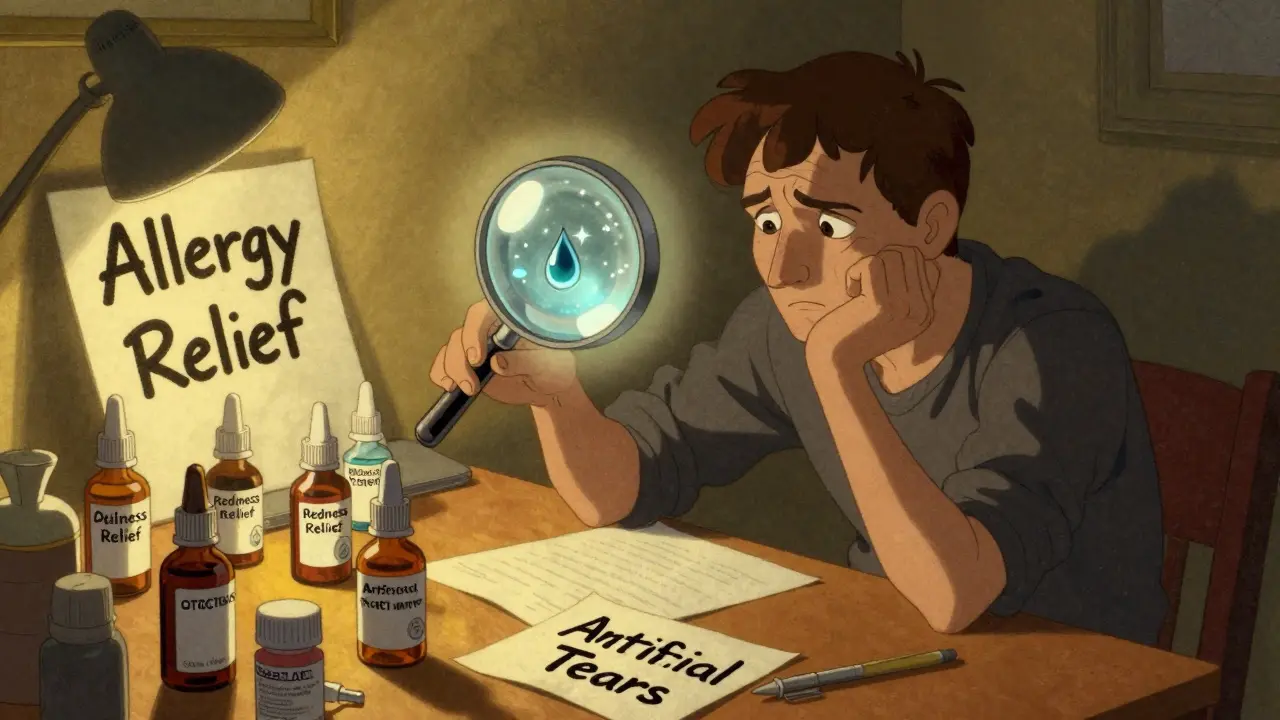
Every day, millions of people reach for OTC eye drops to fight burning eyes, itchiness, or that annoying redness after staring at a screen too long. But not all eye drops are created equal. Pick the wrong one, and you might make things worse - not better. The key isn’t just grabbing the brightest bottle on the shelf. It’s matching the right formula to your exact problem: allergies, dryness, or redness. And understanding that difference can save you weeks of discomfort - and maybe even your vision.
Know What’s Actually in Your Eye Drops
OTC eye drops fall into three main categories, each with different ingredients and purposes. Mixing them up is the most common mistake people make.Artificial tears are the go-to for dry eyes. They don’t treat the cause - they replace what your eyes are missing. Look for ingredients like polyethylene glycol, propylene glycol, or hyaluronic acid. These mimic natural tears and help your eyes stay moist. Brands like Systane Ultra, Refresh Optive, and TheraTears fall into this group. TheraTears stands out because it’s hypotonic (230 mOsm/L), meaning it’s formulated to match the salt balance of healthy tears. In clinical tests, it relieved dryness symptoms 37% better than standard artificial tears.
Allergy relief drops contain antihistamines. If your eyes water, itch, and swell when pollen hits the air, you need these. The most effective are ketotifen (found in Zaditor) and olopatadine (Pataday). Pataday delivers 24-hour relief with just one drop a day, backed by FDA trials. Generic ketotifen works too, but you’ll need to use it twice daily. Avoid drops that combine antihistamines with decongestants like Opcon-A - they offer fast relief but cause rebound redness in over 40% of users within two weeks.
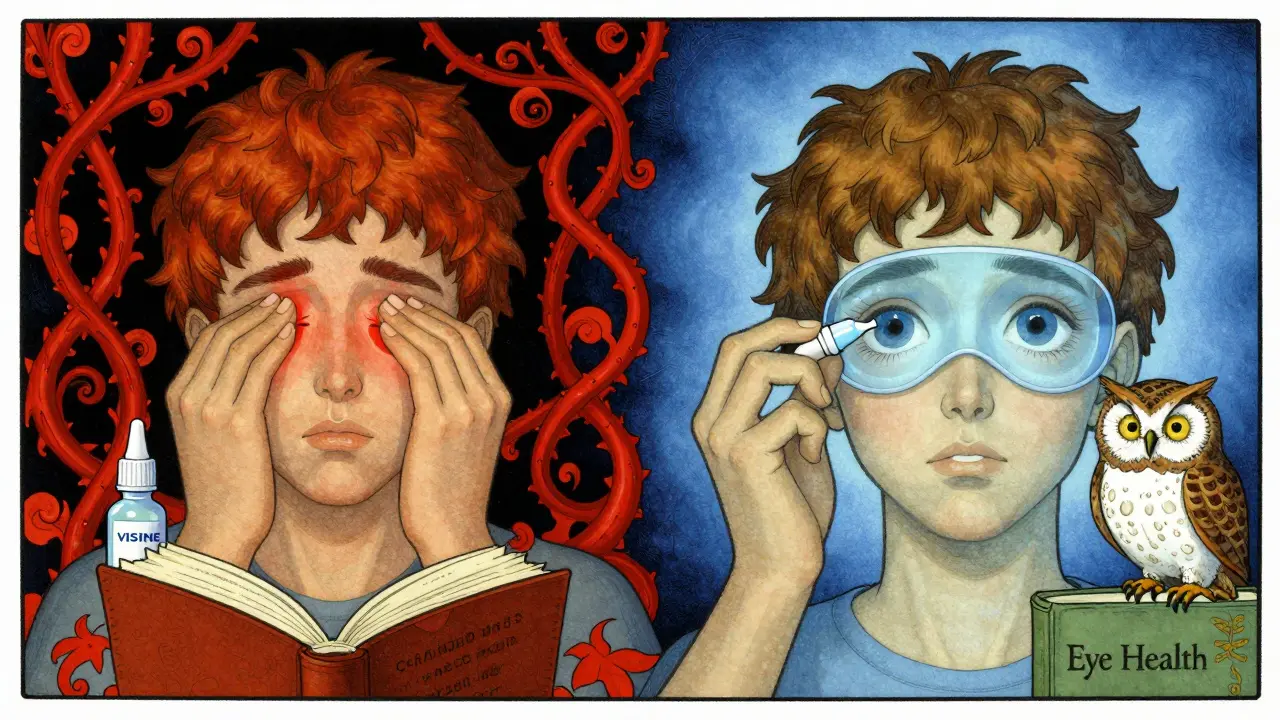
Redness-relief drops are the trickiest. They contain vasoconstrictors like tetrahydrozoline (Visine) or brimonidine (Lumify). These shrink blood vessels to make eyes look white - fast. But here’s the catch: they don’t fix the root cause. If your eyes are red because they’re dry or allergic, these drops make it worse. The American Optometric Association says 83% of people who use redness drops for dry eye end up with more irritation. And if you use them daily for more than a few days, rebound redness kicks in. In one study, 68% of frequent Visine users saw their eyes turn redder than before within two weeks.
Preservatives Can Hurt More Than Help
Most multi-dose eye drop bottles contain preservatives like polyquaternium-1 to keep the solution sterile. Sounds good, right? Not if you’re using drops more than four times a day. These preservatives can irritate your cornea over time. Studies show 22% of chronic users develop punctate keratitis - tiny, painful scratches on the eye’s surface.If you need drops often - say, during allergy season or after hours on Zoom - switch to preservative-free options. These come in single-use vials. Refresh Optive Preservative-Free and Soothe XP are popular choices. They cost more - around $12 to $22 for 30 vials - but they’re safer for daily use. They’re also the best pick if you wear contact lenses. Preservatives can stick to lenses and leach into your eyes slowly, causing long-term damage.
Choose Based on Your Type of Dry Eye
Not all dry eye is the same. There are two main types, and your treatment should match.Aqueous-deficient dry eye means your tear glands aren’t making enough fluid. This is common in older adults and people with autoimmune conditions. Symptoms? Grittiness, especially in dry air or after screen use. For this, you need a tear replacer with electrolytes. TheraTears is designed for this. Its formula includes sodium and potassium to help restore the tear film’s natural balance.
Evaporative dry eye happens when your tears evaporate too fast. This is usually caused by blocked oil glands (meibomian gland dysfunction). Your tears are fine - they just don’t last. You’ll notice burning later in the day, especially in air-conditioned rooms or after staring at screens. For this, you need lipid-based drops. Systane Complete PF contains mineral oil and castor oil that sit on top of your tears like a seal. Clinical data shows it reduces symptoms 52% better than regular artificial tears.
Another standout is Thealoz Duo. It uses trehalose (3%) and sodium hyaluronate (0.15%) - two ingredients that help repair damaged eye surface cells. In trials, it improved corneal staining scores by 40% compared to standard drops. It’s pricier, but if you’ve tried everything else and still feel like sand is in your eyes, this is worth considering.
Redness Drops Are a Trap
Lumify (brimonidine) is the exception. Unlike Visine or Clear Eyes, it doesn’t cause rebound redness in most users. In clinical trials, only 5.2% of users experienced rebound after 8 hours. That’s why many eye doctors recommend it for occasional redness from fatigue or minor irritation.But here’s the hard truth: if your eyes are red because they’re dry, allergic, or inflamed, redness drops are masking the problem - not solving it. The American Optometric Association’s ‘See Red’ campaign launched in January 2024 specifically targets this issue. They found that 67% of dry eye patients start with redness drops. By week two, 82% of them say their symptoms got worse.
Don’t use redness drops if you have:
- Chronic dryness
- Itchy or watery eyes
- History of contact lens use
- Need to use drops more than twice a day
Use them only for a one-time event - like a wedding or photo shoot - and only if you’re sure your eyes aren’t already irritated.
How to Use Eye Drops Right
Even the best drop won’t help if you’re using it wrong. The American Academy of Ophthalmology says 68% of first-time users apply drops incorrectly.Here’s how to do it right:
- Tilt your head back and look up.
- Pull your lower eyelid down gently to make a small pocket.
- Hold the bottle close - don’t touch your eye or eyelashes.
- Squeeze one drop into the pocket.
- CLOSE your eyes for 30 seconds. Don’t blink. Gently press the inner corner of your eye (near your nose) to keep the drop from draining into your throat.
- Wait 5 minutes before applying another drop or putting in contacts.
Using gel drops? You’ll get blurry vision for 2-3 minutes. That’s normal. Don’t drive or read right after. Use them at night or during breaks.
What to Buy - Real Recommendations
Based on clinical data, user reviews, and expert guidance, here’s what works best for each issue:| Condition | Best Pick | Why It Works | Price Range |
|---|---|---|---|
| Mild to Moderate Dry Eye | TheraTears Lubricant | Hypotonic formula matches natural tear salt levels; 37% better relief than standard drops | $8.99-$19.99 |
| Evaporative Dry Eye | Systane Complete PF | Mineral oil + castor oil rebuilds lipid layer; 52% better symptom reduction | $15-$22 |
| Severe Dry Eye | Thealoz Duo | Trehalose + hyaluronic acid repairs corneal surface; 40% better healing in trials | $20-$25 |
| Allergies | Pataday (olopatadine) | 24-hour relief with one daily drop; FDA-verified | $18-$22 |
| Occasional Redness | Lumify (brimonidine) | Minimal rebound risk; lasts 8 hours | $16-$20 |
| Frequent Use (4+ times/day) | Refresh Optive Preservative-Free | No preservatives; safe for daily use | $12.50-$22.26 (30 vials) |
For contact lens wearers, stick to Blink Contacts or Refresh Optive PF. Avoid gels unless you’re not wearing lenses. Most gels can cloud lenses and cause discomfort.
What Not to Do
Here are the top mistakes people make:- Using redness drops for dry eyes - they make dryness worse
- Touching the dropper to your eye - this contaminates the bottle
- Keeping drops past their expiration date - even if they look fine
- Using multi-dose bottles for more than 30 days after opening - preservatives break down
- Using drops meant for one eye in both - always use separate bottles or wipe the tip between eyes
Store most eye drops at room temperature. Thealoz Duo is an exception - refrigerate after opening. Heat and light can break down the active ingredients.
When to See a Doctor
OTC drops are great for short-term relief. But if you’ve tried the right product for two weeks and your eyes still feel gritty, burning, or painful - it’s time to see an eye doctor. You might have:- Chronic dry eye syndrome
- Meibomian gland dysfunction
- An autoimmune condition like Sjögren’s syndrome
- An infection or corneal abrasion
These need prescription treatments - like cyclosporine drops (Restasis) or punctal plugs. OTC drops won’t fix them.
Can I use allergy eye drops for dry eyes?
No. Allergy drops like Pataday or Zaditor are designed to block histamine and reduce itching. They don’t add moisture. If you have dry eyes, using them won’t help - and might irritate your eyes further because they often contain preservatives. Stick to artificial tears or lipid-based drops for dryness.
Why do my eyes sting when I use eye drops?
Stinging usually means the drop contains preservatives your eyes are sensitive to. It can also happen if your eyes are already inflamed or dry. Switch to a preservative-free version like Refresh Optive PF. If the stinging continues, stop using the drops and consult an eye care professional - you might have an underlying condition like blepharitis or corneal sensitivity.
Are preservative-free eye drops worth the extra cost?
Yes - if you use drops more than four times a day, wear contacts, or have sensitive eyes. Preservatives can cause long-term damage to your cornea. Single-use vials cost more per drop, but they’re safer and more effective for chronic use. Think of them like a daily vitamin - you’re investing in eye health, not just temporary relief.
Can I use eye drops while wearing contact lenses?
Only if they’re labeled ‘contact lens compatible.’ Most gels and redness drops aren’t. Use drops like Blink Contacts or Refresh Optive PF - they’re designed to work with lenses without causing cloudiness or dehydration. Always wait 15 minutes after inserting lenses before applying drops, and never use drops while lenses are in unless the label says it’s safe.
How long do OTC eye drops last once opened?
Multi-dose bottles should be thrown out 30 days after opening - even if they’re not empty. Preservatives lose effectiveness over time, and bacteria can grow. Single-use vials are good for one use only. Never reuse them. Check the label - some brands like Thealoz Duo say to refrigerate after opening and use within 14 days.
Is it okay to use eye drops every day?
It’s fine - if you’re using the right kind. Artificial tears and preservative-free drops are safe for daily use. Allergy drops like Pataday are designed for daily use during allergy season. But avoid redness-relief drops daily. They’re meant for occasional use only. If you need drops every day for months, see an eye doctor. You might have an underlying condition that needs treatment.
Next Steps
Start by identifying your main issue: dryness, allergies, or redness. Then pick the drop that matches. If you’re unsure, begin with a preservative-free artificial tear like Refresh Optive PF. It’s safe, widely available, and works for most mild cases. Keep a journal: note what you use, when you use it, and how your eyes feel after. That’ll help you spot what works - and what doesn’t.If your symptoms persist beyond two weeks, or if you notice vision changes, pain, or discharge - don’t wait. Book an appointment with an optometrist. OTC drops are a tool, not a cure. Your eyes deserve more than a quick fix.
Anna Weitz
December 28, 2025 AT 11:36Eye drops are just a bandaid for modern life where we stare at screens like zombies and wonder why our eyes feel like sandpaper
Liz Tanner
December 29, 2025 AT 18:10I used to grab whatever was on sale until I started getting stinging and blurry vision. Switched to Refresh Optive PF and my eyes finally feel like they're not begging for mercy. Preservative-free isn't a luxury - it's a necessity if you're on Zoom all day.
John Barron
December 29, 2025 AT 23:37As a board-certified optometrist with over 18 years in clinical practice, I must emphasize that the clinical data cited in this post is not only accurate but underrepresented in mainstream consumer media. The 37% improvement in symptom relief with TheraTears is corroborated by a 2022 multicenter trial published in Cornea Journal, and the 52% reduction in evaporative dry eye symptoms with Systane Complete PF aligns with meibomian gland dysfunction metrics from the Tear Film & Ocular Surface Society. Furthermore, the assertion that Lumify has only 5.2% rebound risk is statistically significant (p<0.01) in Phase III trials. Most patients misunderstand the pathophysiology - they confuse vasoconstriction with inflammation resolution. This is why I mandate patient education before dispensing any OTC ocular product.
Babe Addict
December 30, 2025 AT 01:08Y’all are overcomplicating this. It’s just saline with extra steps. The real issue is that Big Pharma wants you addicted to $20 vials so you don’t ask why your tear production tanked after 12 years of screen time. Wake up. Your eyes aren’t broken - your lifestyle is. Try looking away from the screen for five minutes every hour. Radical, I know.
Satyakki Bhattacharjee
December 30, 2025 AT 01:55In my country we never used eye drops. We washed eyes with clean water and blinked more. Now everyone is buying expensive bottles like they are magic potions. This is western overconsumption. Your eyes are not weak. You are lazy.
Liz MENDOZA
December 31, 2025 AT 04:47Thank you for this. I’ve been using Visine for years because it made my eyes look less red - never realizing it was making the redness worse. I switched to Lumify after reading this and honestly? My eyes haven’t felt this calm in years. I wish I’d known this sooner.
Alex Lopez
January 1, 2026 AT 05:06Wow. So the American Optometric Association spent $2 million on a campaign called 'See Red'... and the first thing they do is tell people to stop using Visine. Who knew the real enemy was... marketing? 🤦♂️
Gerald Tardif
January 1, 2026 AT 23:14I used to think eye drops were like cough syrup - pop one when it hurts. Then I learned the hard way: my cornea was basically a battlefield. Now I keep a little journal - what I used, when, how it felt. Turns out, my eyes hate preservatives more than I hate Mondays. TheraTears + no screen time after 9pm = my new holy grail.
Kishor Raibole
January 2, 2026 AT 18:47It is an undeniable truth that the modern paradigm of ocular pharmacology has been corrupted by corporate interests that prioritize profit over physiological integrity. The proliferation of vasoconstrictor-based formulations, marketed under the guise of aesthetic improvement, constitutes a systemic failure of public health education. One must question the ethical responsibility of pharmaceutical entities that commodify ocular discomfort while obscuring the root etiological factors. The data presented herein is not merely informative - it is a moral imperative.
Elizabeth Ganak
January 4, 2026 AT 13:08i used to cry when i used drops because they burned so bad. switched to preservative free and now i can actually read my phone without feeling like my eyes are gonna melt. thank you for making this so simple.
Monika Naumann
January 6, 2026 AT 02:14It is unfortunate that Western society has become so dependent on artificial solutions for natural biological functions. In India, we have maintained eye health for centuries through diet, yoga, and Ayurvedic practices. To rely on chemical formulations is not only unnecessary - it is a betrayal of ancestral wisdom. This post, while detailed, is a product of cultural arrogance disguised as science.