

- 0
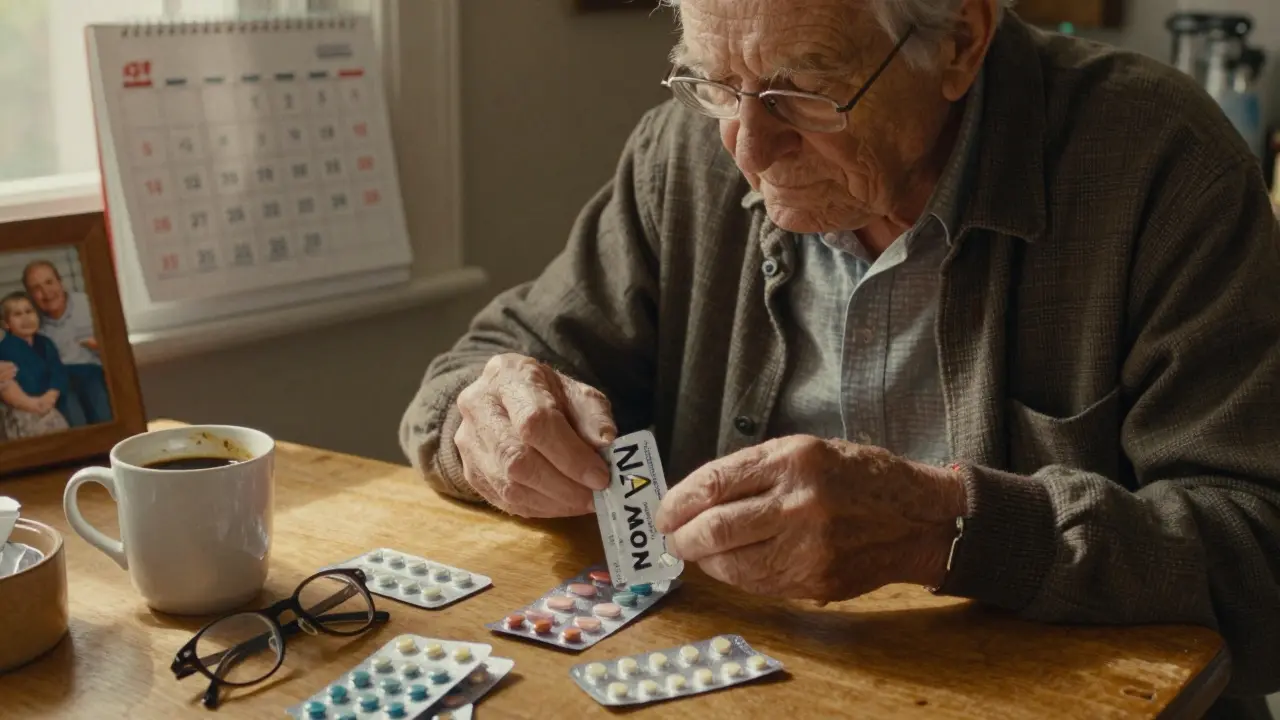
Every year, millions of people accidentally take the wrong pill, double-dose, or skip a medication entirely. For many, especially older adults juggling five or more prescriptions, these mistakes aren’t just inconvenient-they’re dangerous. A single error can lead to hospitalization, organ damage, or even death. The good news? Simple tools like blister packs and pill organizers can cut these risks dramatically. They don’t require fancy tech or expensive gadgets. Just smart design and consistent use.
Why Medication Mistakes Happen
It’s not about forgetting. It’s about complexity. Imagine this: you take blood pressure pills in the morning, a diabetes tablet at lunch, an antibiotic at night, plus a vitamin, a pain reliever, and a heart medication. Some need to be taken with food. Others on an empty stomach. One is red. Another is blue. You’re tired. Your eyesight isn’t what it used to be. Your phone alarm goes off, but you’re not sure if it’s for the blue pill or the red one. This isn’t rare. It’s everyday.
According to a 2022 study in the American Journal of Epidemiology, nearly half of people with chronic illnesses don’t take their meds as prescribed. That’s not laziness-it’s confusion. And the cost? Over $100 billion a year in avoidable hospital stays in the U.S. alone. Blister packs and pill organizers exist to fix that.
What Are Blister Packs?
Blister packs are sealed plastic cards with individual compartments for each dose. Each bubble holds one pill, clearly labeled with the day and time-like "Mon AM," "Wed PM," or "Bedtime." They’re not just boxes with labels. They’re precision tools. The packaging is tamper-evident, so you can tell if a pill was removed or replaced. The material is thick enough to protect pills from moisture and light. And most importantly? You can see exactly what’s missing.
These packs are made by specialty pharmacies, not drugstores. You give them your full list of meds. They sort everything into daily doses. The whole process takes 3-5 days. Once set up, you just peel open the next bubble each time you need to take something. No counting. No guessing. No mixing up pills.
Studies show blister packs improve adherence by 23% compared to standard vials. In one trial with 180 hypertension patients, 87.4% of those using blister packs took their meds correctly-versus just 64.3% using regular bottles. For someone with dementia or mild memory loss, that difference is life-changing.
How Blister Packs Prevent Overdose
Overdose isn’t always intentional. Sometimes, it’s because someone took the same pill twice-thinking they missed it. Or they grabbed the wrong bottle because the labels looked similar. Blister packs stop both.
Each compartment holds exactly one dose. No extras. No leftovers. If you open a bubble and the pill is gone, you took it. If it’s still there, you didn’t. No ambiguity. No second-guessing. A caregiver on Reddit shared that after switching her 82-year-old mother to blister packs, missed doses dropped from 3-4 per week to just 1-2 per month. "She can see which bubbles are empty," they wrote. "No more guessing."
Another study from Pharmcare USA found blister packs reduce medication errors by 67% compared to traditional vials. That’s not a small number. That’s a game-changer. And it’s why 78% of U.S. nursing homes now use them.
What Are Pill Organizers?
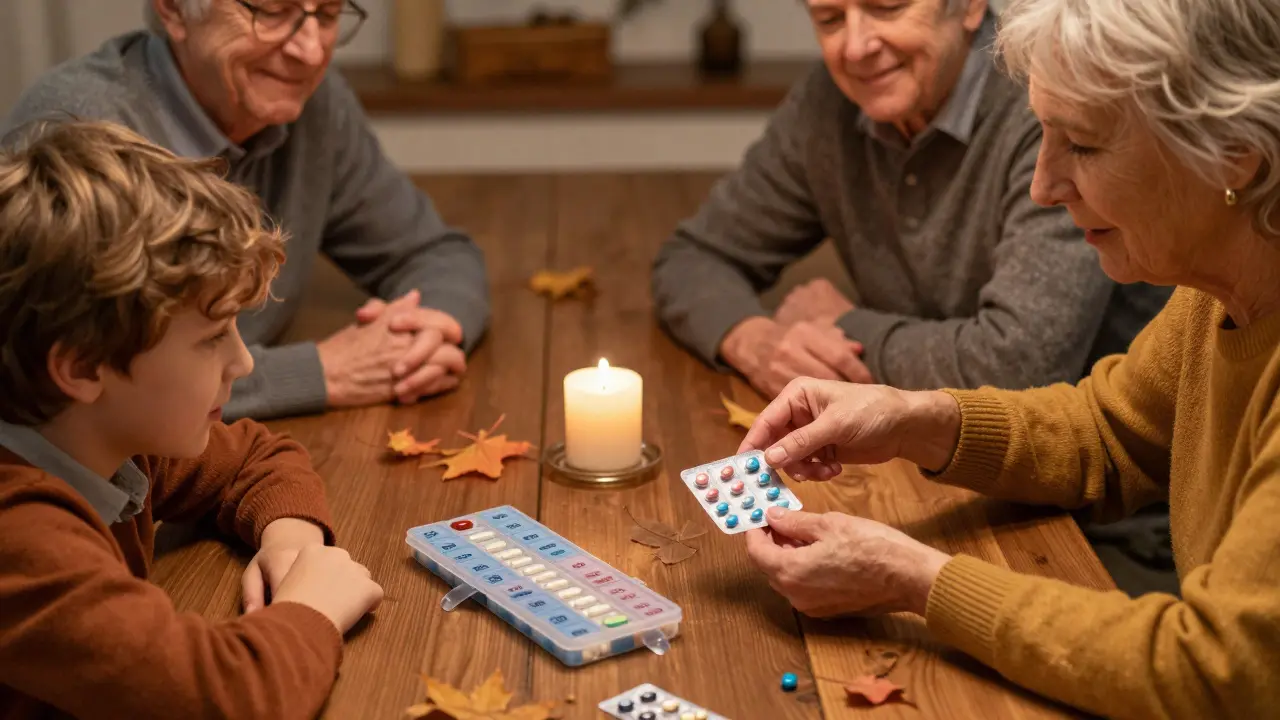
Pill organizers are containers with compartments-usually one for each day of the week. Some have two, three, or four slots per day for morning, afternoon, evening, and bedtime doses. They’re cheap, easy to find, and reusable. You buy them online or at the drugstore for $4-$13.
But here’s the catch: you have to fill them yourself. Every week. That means you’re handling each pill, counting them, sorting them. And if you’re tired, your hands shake, or your vision is blurry? You might miscount. You might drop a pill. You might put the wrong one in the wrong slot.
A 2021 study of arthritis patients found that while 7-day organizers with time slots improved adherence by 18%, they still fell far short of blister packs. Why? Because humans are bad at repetitive tasks. Even if you’re careful, mistakes happen. One in three users admitted to mixing up pills during refills.

Blister Packs vs. Pill Organizers: The Real Difference
Let’s cut through the noise. Blister packs and pill organizers both look similar. But they work very differently.
- Blister packs are pre-filled by a pharmacy. You don’t touch the pills until you take them. They’re sealed. Tamper-proof. Labeled. Accurate.
- Pill organizers are empty containers. You fill them. You count. You sort. You risk error at every step.
Blister packs reduce administration errors by 42% in home care settings, according to Dr. Sarah Johnson at Johns Hopkins. Pill organizers? They help-but only if you’re consistent, careful, and have steady hands. For someone with arthritis, Parkinson’s, or early dementia? That’s a tall order.
And here’s the kicker: blister packs are designed to be opened with one hand. Easy-open versions have perforated edges. Some even come with a little plastic tool. Pill organizers? You have to unscrew lids, lift trays, and line up pills. It’s harder than it looks.
Who Should Use Blister Packs?
You don’t need to be old to benefit. But you do need to be taking multiple meds.
The American Society of Health-System Pharmacists recommends blister packs for anyone taking four or more daily medications. That includes people with:
- High blood pressure and diabetes
- Heart failure or atrial fibrillation
- Depression or anxiety on multiple drugs
- Chronic pain with opioids or NSAIDs
- History of falls or confusion
If you’ve ever said, "I think I already took that," or "I don’t remember what this one is for," you’re a candidate. Even if you’re sharp, the complexity adds up. One study found 32% of blister pack users still didn’t know why they were taking certain pills. That’s why pairing these tools with a pharmacist review is critical.
How to Get Started
Blister packs aren’t sold at your local CVS. You need a specialty pharmacy. Here’s how to get them:
- Ask your doctor for a referral to a medication adherence pharmacy. Many hospitals have partnerships with these services.
- Bring your full list of medications-including vitamins and over-the-counter drugs.
- The pharmacy will review your regimen, check for interactions, and create your custom pack.
- You’ll get your first pack in 3-5 days. They’ll explain how to use it.
- Follow-up calls usually happen at 7 and 30 days to make sure everything’s working.
Cost? Typically $1.50-$3.50 per day. A full month runs $45-$105. But Medicare Advantage plans cover this for 68% of eligible beneficiaries. If you’re on Medicaid or have long-term care insurance, ask if it’s included. Many nursing homes pay for it outright.
What About Pill Organizers? When They Still Make Sense
Blister packs aren’t perfect. They can’t hold refrigerated meds. If your doctor changes your dose mid-month, you have to wait for a whole new pack. That’s why some people use both.
Pill organizers are great for:
- Travel (easy to carry)
- Short-term meds (like antibiotics)
- People who only take 1-2 pills a day
- As a backup when blister packs aren’t available
Look for organizers with:
- Clear, labeled compartments (morning/afternoon/evening/bedtime)
- Locking lids to prevent spills
- Transparent sides so you can see inside
- Large print or color-coded labels
Brands like MedMinder and Hero offer smart organizers with alarms and app alerts. But even the cheapest ones-$5 on Amazon-help if you’re consistent.
Common Problems and How to Solve Them
People love blister packs. But they don’t always work right away.
Problem 1: Can’t open the bubbles. 23% of users with arthritis struggle. Solution? Ask for easy-open packs. They have perforated edges. Or use a pill opener tool-$2 online.
Problem 2: Medication changes. If your doctor adds or drops a pill, you’ll need a new pack. Solution? Keep your pharmacy updated. Some newer systems now update doses automatically via QR codes or AI.
Problem 3: Forgot to take a pill. Blister packs show you what’s missing. But if you’re not looking? You’ll miss it. Solution? Place the pack next to your coffee mug, toothbrush, or TV remote. Make it part of your routine.
Problem 4: Not sure what the pill is for. 32% of users don’t know why they’re taking certain meds. Solution? Ask your pharmacist for a printed list. Many now include QR codes that link to short videos explaining each pill.
The Future Is Smart
Blister packs are getting smarter. In 2023, the FDA approved the first QR code-enabled packs. Scan a bubble with your phone, and it plays a video explaining the pill, its purpose, and possible side effects. AdhereTech launched smart packs with sensors that track when you open them-and send alerts to caregivers if you skip a dose.
By 2025, experts predict 45% of Medicare beneficiaries will use blister packs. Why? Because the data is clear. Fewer hospital visits. Lower costs. Fewer deaths.
It’s not magic. It’s simple. One pill. One time. One bubble. No guessing. No counting. No mistakes.
Final Thought
Medication mistakes aren’t about forgetting. They’re about complexity. Blister packs cut through that. They don’t ask you to remember. They show you what to take. And for someone who’s tired, confused, or scared? That’s not just convenient. It’s lifesaving.
Can blister packs hold all types of medications?
No. Blister packs can’t hold medications that need refrigeration, like insulin or some antibiotics. They also can’t hold liquids, injections, or creams. Always check with your pharmacist before switching. Some complex drugs may need special packaging or remain in original bottles.
Are blister packs covered by insurance?
Many Medicare Advantage plans cover blister packs for eligible patients-especially those taking four or more daily medications. Medicaid and long-term care insurance often cover them too. Ask your pharmacy or insurance provider. You may need a doctor’s note or prior authorization.
How often do I need to get new blister packs?
Most packs cover 7 to 30 days, depending on your regimen. If your medications change, you’ll need a new pack. Some pharmacies offer monthly delivery. Others send new packs every two weeks. Your pharmacy will set up a schedule based on your needs.
Can I use a pill organizer and a blister pack together?
Yes. Many people use blister packs for their main medications and a pill organizer for travel, supplements, or as a backup. Just make sure the pills in the organizer are clearly labeled and don’t overlap with your blister pack schedule. Always check with your pharmacist to avoid duplication.
What should I do if I miss a dose in my blister pack?
Don’t double up. Check your medication instructions or call your pharmacist. Some pills can be taken later in the day. Others shouldn’t be taken at all if you miss them. Blister packs help you see what you missed-but you still need to follow the rules for each medication. Never guess.