

Medication Safety Checker for Older Adults
This tool helps you assess whether current diabetes medications are safe for older adults by identifying high-risk drugs and providing alternative recommendations based on the latest clinical guidelines.
Results will appear here after checking your medication safety.
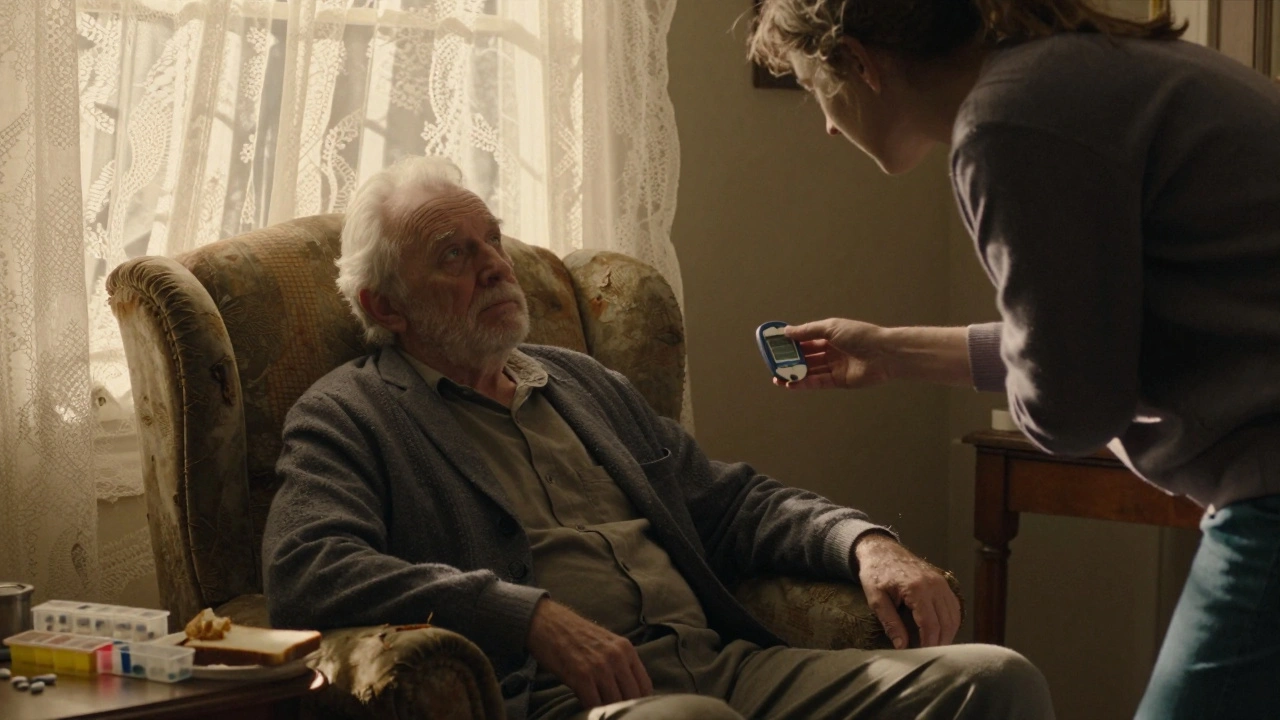
When blood sugar drops below 70 mg/dL, it’s called hypoglycemia. For younger people, that might mean a little shakiness, sweating, or hunger-something a quick snack fixes. But for older adults, especially those with diabetes, low blood sugar isn’t just uncomfortable-it’s dangerous. And it’s far more common than most people realize. In fact, older adults with diabetes experience hypoglycemia 2.3 times more often than younger patients. Many episodes go unnoticed because the symptoms don’t look like the classic signs we’re taught in school. Instead of trembling hands or cold sweats, an 80-year-old might just seem confused, sluggish, or oddly quiet. By the time family members notice something’s wrong, the person may already be in a medical crisis.
Why Older Adults Are at Higher Risk
The body’s ability to protect itself from low blood sugar weakens with age. When glucose drops, healthy people release hormones like glucagon and epinephrine to raise it back up. In older adults, these responses are blunted by 30-50%. That means their bodies don’t fight back as hard-or sometimes at all. This is why many seniors don’t feel the warning signs until their blood sugar is dangerously low, often below 50 mg/dL. Add to that the fact that most older adults with diabetes are also managing other conditions: high blood pressure, heart disease, kidney trouble, or dementia. Many take five or more medications daily. Some of these drugs-like long-acting sulfonylureas (glyburide)-are known to cause low blood sugar. The American Geriatrics Society specifically warns against glyburide in seniors because it increases the risk of severe hypoglycemia by 50% compared to safer alternatives like glipizide. Kidney function also declines with age. When kidneys can’t clear insulin or sulfonylureas properly, the drugs build up in the body, leading to unpredictable drops in blood sugar. One study found that older adults with chronic kidney disease have a 2.7-fold higher risk of severe hypoglycemia than those with normal kidney function.The Hidden Consequences
A single episode of low blood sugar in an older adult can trigger a chain reaction. Each hypoglycemic event increases the risk of falling by 40%. Falls lead to fractures-especially hip fractures-which can end a person’s independence. One in four seniors who break a hip never walk again. Hypoglycemia also raises the risk of heart attacks and strokes by 30%. Even if the person survives, the damage lingers. Long-term, repeated low blood sugar episodes are linked to faster cognitive decline. A two-year study showed seniors with frequent hypoglycemia were 1.8 times more likely to develop new memory problems or confusion. For someone already living with early dementia, a low blood sugar episode can feel like a sudden worsening of their condition-when it’s actually just a metabolic emergency. And here’s the quiet tragedy: many of these episodes happen at home, alone. A senior might wake up confused in the middle of the night, stumble to the kitchen, and fall. Or sit in a chair, zone out, and not respond when called. Caregivers often mistake these signs for aging, not diabetes complications. One caregiver shared that her father with dementia would go silent and stare blankly-until his blood sugar was checked and found to be 38 mg/dL. After that, they kept glucagon on hand.Medication Risks You Can’t Ignore
Not all diabetes medications are created equal when it comes to safety in older adults. Insulin and sulfonylureas are the biggest culprits. Sulfonylureas force the pancreas to pump out insulin, no matter what. That’s fine if meals are regular. But if an older adult skips lunch because they’re not hungry, or eats a small snack because they’re nauseous from another medication, their blood sugar can crash. Insulin doses are often set too high for seniors, especially if they’re less active or have poor appetite. One case from a primary care clinic showed a man reducing his insulin from 40 units to 20 units per day eliminated weekly lows while keeping his A1c at a safe 7.8%. He didn’t need tighter control-he needed safety. Metformin is generally safe and doesn’t cause hypoglycemia on its own. GLP-1 agonists like semaglutide and SGLT2 inhibitors like dapagliflozin are also low-risk options. But if a senior is on insulin or sulfonylureas, their regimen should be reviewed at least every six months. The goal isn’t to hit an A1c of 6.5%. It’s to avoid a trip to the ER.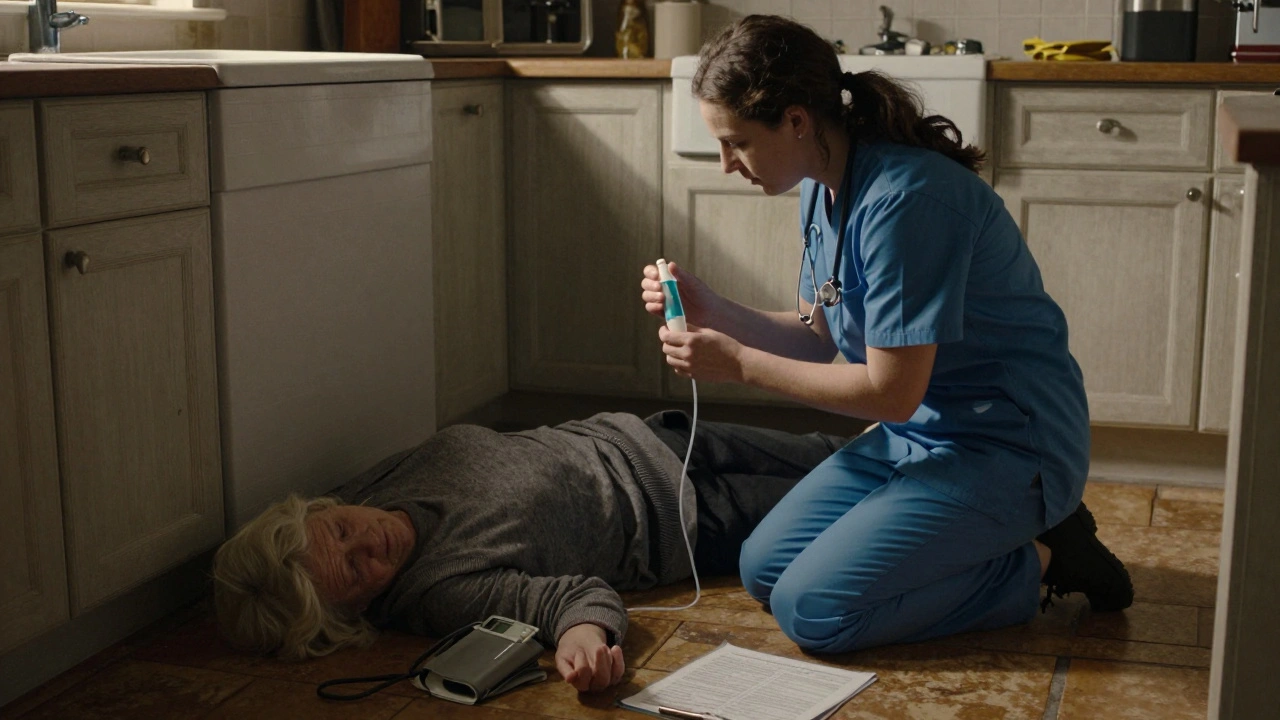
What a Prevention Plan Actually Looks Like
A good prevention plan isn’t just about changing meds. It’s a full system. Here’s what works:- Set realistic blood sugar goals. For healthy seniors, an A1c under 7.0% is fine. For those with multiple illnesses or limited life expectancy, aiming for under 8.5% reduces risk without sacrificing quality of life.
- Use continuous glucose monitoring (CGM). Devices like the Dexcom G7 or FreeStyle Libre 3 give real-time alerts when blood sugar drops. Studies show CGM cuts hypoglycemia by 40%. But Medicare only covers CGM for insulin users-leaving many seniors on sulfonylureas out in the cold. Ask your doctor if a private pay option is worth it.
- Teach caregivers how to respond. Glucagon is no longer just an injection. Nasal glucagon (Baqsimi) is now available-easy to use, even if the person is unconscious. Keep it in the fridge or bedside drawer. Practice with a training kit.
- Check for hypoglycemia unawareness. If someone doesn’t feel their lows coming, they’re at high risk. Ask: “Do you ever wake up confused or find yourself dizzy without knowing why?” If yes, their treatment plan needs adjustment.
- Review all medications. Every pill matters. Blood pressure meds, diuretics, antibiotics-even some antidepressants-can affect blood sugar. Bring a full list to every doctor visit.
Real People, Real Results
A primary care clinic in Pennsylvania ran a six-month program focused on hypoglycemia risk. They reviewed medications, educated patients and families, and adjusted targets. The result? A 46% drop in the number of seniors at high risk for low blood sugar. A1c barely changed-up only 0.3%-but ER visits dropped sharply. Patients reported feeling more confident, less anxious about meals, and more in control. One woman in her late 70s had been on glyburide for 15 years. She’d had three hospital visits for low blood sugar. After switching to glimepiride and reducing her dose, she went six months without a single episode. Her daughter said, “We finally sleep through the night.”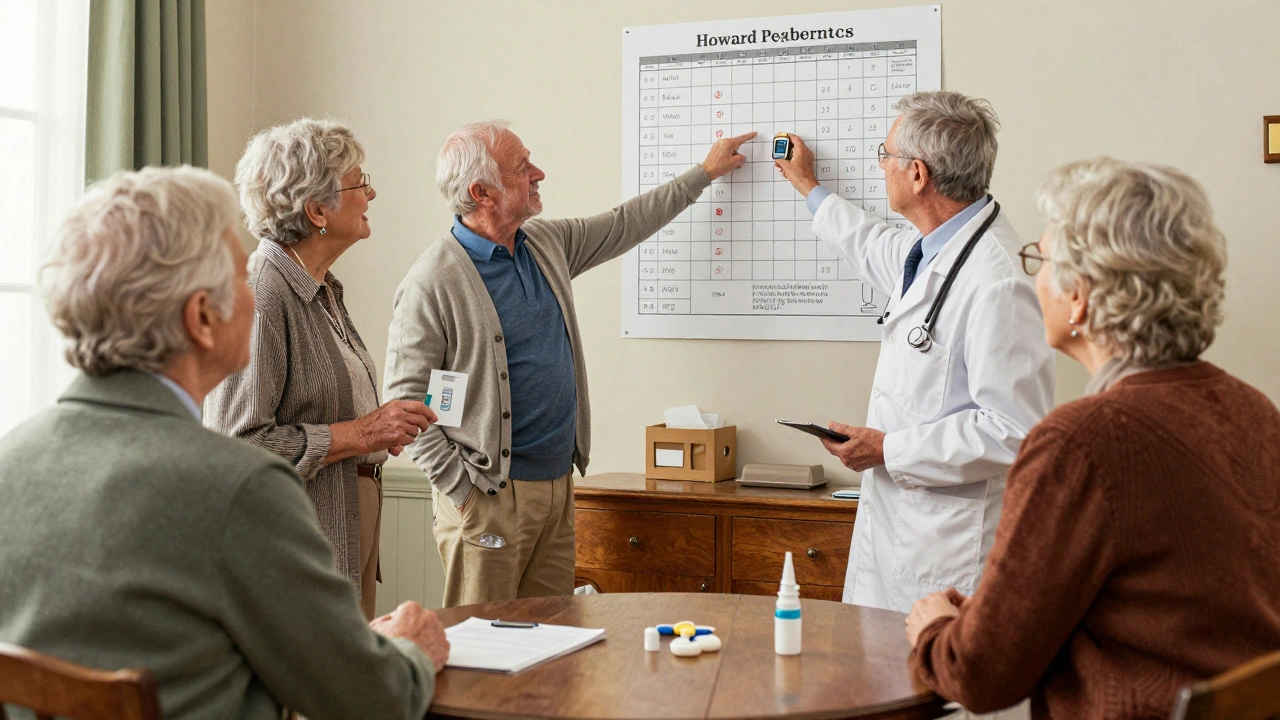
What to Do Now
If you or someone you care for is over 65 and has diabetes, here’s what to do this week:- Check the medication list. Is glyburide on it? Ask about switching to glipizide or another safer option.
- Ask the doctor: “What’s our target for blood sugar? Is safety more important than tight control right now?”
- Keep glucagon (nasal or injectable) at home. Make sure at least one family member knows how to use it.
- Set up a daily check-in. Even a quick text: “How are you feeling? Any dizziness or confusion?” can catch a low before it’s serious.
- Consider a CGM-even if not covered by insurance. The cost is often less than one ER visit.
Hypoglycemia in older adults isn’t a normal part of aging. It’s a medical problem-and it’s preventable. The goal isn’t to chase perfect numbers. It’s to help people live longer, safer, more independent lives.
Can older adults with diabetes stop taking insulin to avoid low blood sugar?
Some older adults can reduce or even stop insulin, but only under medical supervision. The goal isn’t to stop all medication-it’s to use the safest, lowest effective dose. Many seniors can switch to non-insulin drugs like metformin, GLP-1 agonists, or SGLT2 inhibitors that don’t cause hypoglycemia. A doctor can review the full picture-kidney function, diet, activity level, and other meds-before making changes.
Why don’t older adults feel the warning signs of low blood sugar?
Over time, repeated low blood sugar episodes can dull the body’s natural warning signals. This is called hypoglycemia unawareness. In older adults, aging also reduces the release of epinephrine and glucagon, which normally trigger sweating, shaking, and hunger. As a result, they may only notice symptoms like confusion, weakness, or dizziness when blood sugar is already dangerously low-often below 50 mg/dL.
Is it safe for seniors to use continuous glucose monitors (CGMs)?
Yes, CGMs are safe and highly effective for older adults. They provide real-time alerts for low and high blood sugar, which is especially helpful for those with hypoglycemia unawareness. While Medicare only covers CGMs for insulin users, many seniors on sulfonylureas benefit just as much. Out-of-pocket costs range from $200-$400 per month, but that’s often less than the cost of one emergency visit. Talk to your doctor about whether it’s worth it for your situation.
What should I do if an older adult passes out from low blood sugar?
Don’t try to give them food or drink-they could choke. If they’re unconscious, use nasal glucagon (Baqsimi) if available. It’s sprayed into the nose and works quickly. If you don’t have glucagon, call 911 immediately. After the episode, follow up with a doctor to adjust medications and prevent future events. Never assume it was just “a bad day.”
Are there any diabetes medications that are safest for older adults?
Yes. Metformin, GLP-1 agonists (like semaglutide or liraglutide), and SGLT2 inhibitors (like dapagliflozin or empagliflozin) rarely cause hypoglycemia on their own. They’re often preferred for seniors. Sulfonylureas like glyburide should be avoided. If insulin is needed, use long-acting analogs like glargine or detemir, not older types. Always match the drug to the person’s health, not just their A1c number.
Next Steps for Families and Caregivers
If you’re caring for an older adult with diabetes, start with these three actions:- Keep a log: Note any episodes of confusion, falls, or dizziness-even if you think it’s unrelated.
- Have a glucagon kit on hand and practice using it.
- Ask the doctor: “Is our current plan doing more harm than good?”
Low blood sugar doesn’t have to be a silent threat. With the right knowledge and tools, it can be prevented-and lives can be saved.
Tommy Watson
December 13, 2025 AT 05:02Jade Hovet
December 13, 2025 AT 17:39nithin Kuntumadugu
December 13, 2025 AT 22:38Lauren Scrima
December 14, 2025 AT 14:06Willie Onst
December 14, 2025 AT 16:23Harriet Wollaston
December 15, 2025 AT 10:44John Fred
December 15, 2025 AT 17:21sharon soila
December 16, 2025 AT 22:27nina nakamura
December 17, 2025 AT 22:03Jamie Clark
December 17, 2025 AT 23:44Shelby Ume
December 18, 2025 AT 15:50Cole Newman
December 20, 2025 AT 02:55Donna Hammond
December 20, 2025 AT 12:41