


Why We Are Moving Beyond Traditional Tissue Biopsies
For decades, diagnosing and tracking cancer meant going through invasive procedures. A tissue biopsy requires a needle or surgery to extract a physical sample from the tumor itself. This approach has inherent risks, causes discomfort, and often provides only a snapshot of the disease at one specific moment and location. By March 2026, the landscape has shifted significantly. Liquid Biopsy is a minimally invasive diagnostic method that analyzes biomarkers from bodily fluids, primarily blood, for cancer detection and monitoring. Instead of cutting into solid tissue, this technology relies on analyzing circulating tumor DNA (ctDNACirculating Tumor DNA) found in your bloodstream.
The Basics: What Exactly Is Circulating Tumor DNA?
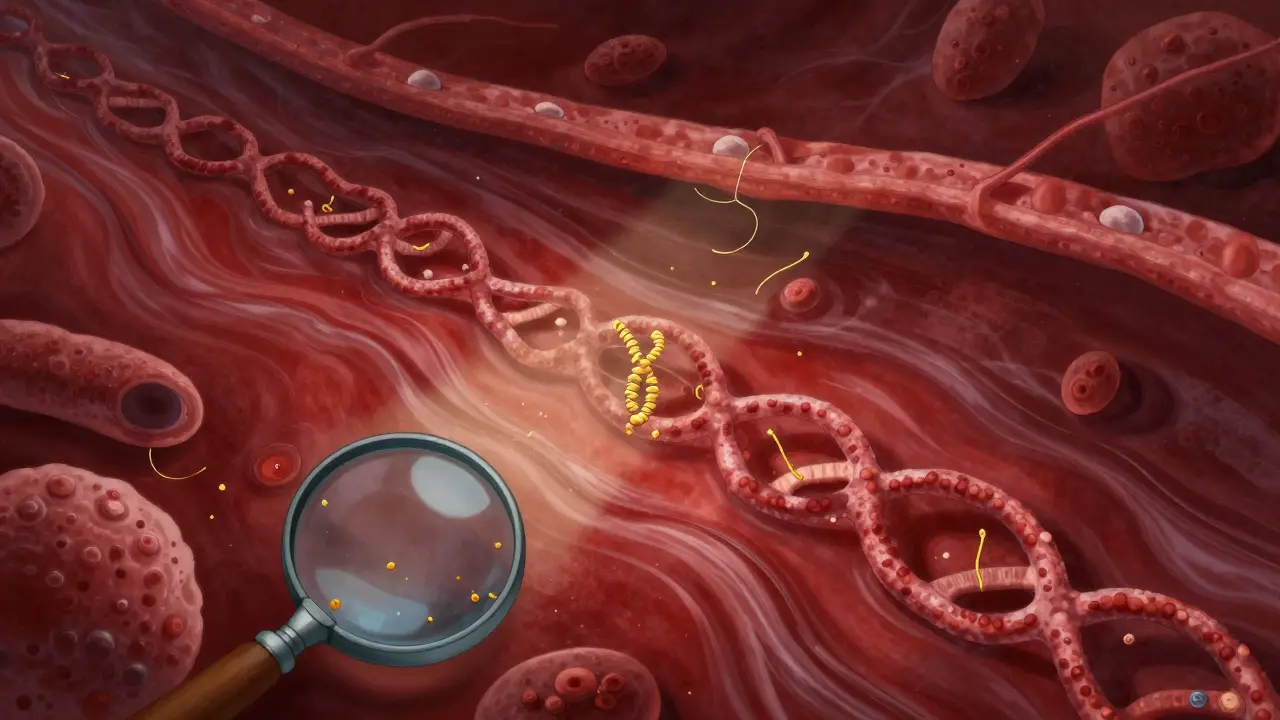
To understand liquid biopsy, you first need to understand what ctDNA actually is. When cancer cells die or divide, they shed fragments of genetic material into the surrounding environment. Some of this genetic debris escapes into the blood vessels and circulates throughout the body. In medical terms, we refer to this as circulating tumor DNA. These fragments contain the same mutations found in the original tumor mass. This means a simple blood draw can reveal critical information about the cancer's biology without ever touching the tumor directly.
The concept gained formal traction around 2019, but researchers have been refining the technique for years. Early iterations focused heavily on circulating tumor cells (CTCs), which are intact cancer cells floating in the blood. However, current methodologies prioritize ctDNA because it is more abundant and provides a clearer picture of the tumor's genetic makeup. According to recent reviews in Oncology Letters, ctDNA has emerged as the biomarker with the most diagnostic and prognostic potential among liquid biopsy components.
How Technology Detects ctDNA in the Bloodstream
You might wonder how doctors find these tiny DNA fragments. Human blood contains a massive amount of background noise. The body releases normal DNA when healthy cells turn over. Distinguishing the rare tumor-derived DNA from this wild-type background is like finding a needle in a haystack. To achieve this, laboratories use highly sensitive technologies. Two methods dominate the field right now:
- Next-Generation Sequencing (NGS): This is the workhorse of modern genomic testing. NGS allows labs to sequence millions of DNA fragments simultaneously. It scans the blood sample for hundreds of known cancer-related mutations at once. Companies like Guardant HealthA biotechnology company specializing in liquid biopsy technologies and companion diagnostics utilize proprietary NGS platforms to identify actionable mutations.
- Digital Droplet PCR (ddPCR): For simpler cases where doctors know exactly which mutation to look for (like checking if a lung cancer patient still has a specific resistance gene), ddPCR offers extreme precision. It can detect one mutant molecule among 10,000 wild-type molecules.
Beyond just sequencing the DNA, newer techniques analyze the size and shape of the DNA fragments. Cancer DNA tends to fragment differently than normal DNA. Techniques involving methylation analysis look at chemical markers attached to the DNA strand. Research published in Frontiers in Oncology suggests that combining ctDNA analysis with informative methylation regions improves detection sensitivity by approximately 20-30% compared to ctDNA analysis alone.
| Feature | Tissue Biopsy | Liquid Biopsy (ctDNA) |
|---|---|---|
| Invasiveness | Invasive (needle/surgery) | Minimally invasive (blood draw) |
| Heterogeneity | Samples one spot only | Captures systemic tumor spread |
| Frequency | Rarely repeated | Can be done frequently |
| Sensitivity in Early Stage | High (if accessible) | Varies (lower in Stage I) |
| Risk Factors | Pain, bleeding, infection | Negligible risk |
The Advantages Over Standard Tissue Sampling
The biggest limitation of traditional tissue biopsies is tumor heterogeneity. Imagine a large tumor with different genetic profiles in its center versus its edge. If you take a needle biopsy from just one area, you might miss up to 30% of the molecular alterations occurring elsewhere in the tumor. This is a major blind spot in treatment planning. Liquid biopsies overcome this by sampling the entire circulation. They capture DNA shed by all active tumor sites in the body, including microscopic metastases that haven't shown up on CT scans yet.
Another significant benefit is safety. While complications from invasive tissue biopsies are rare, they occur in roughly 1-5% of patients depending on the tumor location. Brain tumors, for example, carry much higher risks during surgical sampling. Liquid biopsy eliminates these procedural risks entirely. Furthermore, as noted in clinical reports from ASCO, liquid biopsy reduces the need for repeat tissue biopsies by approximately 25-30% in metastatic cancer cases.
This capability for repeated monitoring is perhaps the most transformative. Treatment changes cancer genetics. Drugs force cancer cells to mutate or die off. With tissue biopsies, clinicians are stuck with historical data-the genetic profile from months ago. With liquid biopsy, doctors can track how the tumor evolves in near real-time. If a new mutation appears indicating drug resistance, therapy can be switched before the patient even feels symptoms of progression.
Clinical Applications and Real-World Monitoring
By 2026, several applications of liquid biopsy have moved from research settings into standard care. Understanding where it applies helps manage expectations regarding your own health journey.
Minimal Residual Disease (MRD) Detection
After surgery to remove a tumor, doctors often face uncertainty: did they get everything? Liquid biopsies are increasingly used to screen for minimal residual disease (MRD). This involves looking for traces of ctDNA in the blood weeks after the procedure. Studies have shown that detecting MRD via liquid biopsy can predict recurrence 6-11 months earlier than standard imaging. In colorectal cancer specifically, postoperative liquid biopsy is now considered a strong indicator for deciding whether to continue adjuvant chemotherapy or switch to surveillance.
Mutational Profiling for Targeted Therapy
Not every patient has enough tissue for genomic testing when first diagnosed. About 20-30% of clinical scenarios involve insufficient tissue samples. In non-small cell lung cancer (NSCLC), guidelines now recommend using liquid biopsy as an alternative for initial biomarker testing. For instance, identifying an EGFR mutation guides the use of tyrosine kinase inhibitors. In 2024, data suggested ctDNA analysis identified targetable EGFR mutations in 92% of cases where tissue was insufficient per Nature Signals Transduction and Targeted Therapy.
Identifying Resistance Mechanisms
When a cancer stops responding to treatment, it usually develops a new mutation that blocks the drug's effect. Liquid biopsy excels here. Doctors can determine if the cancer acquired a secondary mutation, such as the T790M mutation in lung cancer, which dictates the next line of therapy. Dr. Jie-Qun Ma from the Oncology Letters review notes that ctDNA analysis can guide adaptive treatment plans by identifying resistance mutations up to 3-6 months earlier than radiographic evidence of progression.
Understanding Limitations and Challenges
While promising, liquid biopsy is not a silver bullet. It is vital to understand where the technology currently struggles. The most significant challenge is sensitivity in early-stage cancers. In Stage I cancers, the tumor burden is low, meaning very few cells are shedding DNA into the blood. Detection rates range from 50-70% for early-stage cancers, dropping compared to 80-90% for Stage IV advanced disease. This makes it less reliable as a screening tool for the general population compared to its efficacy in monitoring existing cancer.
False positives also occur. Sometimes, the lab detects mutations that aren't coming from the cancer. As people age, clonal hematopoiesis becomes common-age-related blood cell mutations affecting 10-15% of patients over 65. Distinguishing these benign age-related changes from true tumor mutations requires experienced interpretation.
Furthermore, standardization remains a hurdle. Different labs use different collection tubes and processing timeframes. Researchers estimate inter-laboratory variability affects up to 25% of test results in multicenter studies. This means consistency in how the blood sample is collected and shipped is just as important as the sequencing quality itself.

Market Adoption and Guidelines
As we navigate 2026, market adoption continues to accelerate. Regulatory bodies like the FDA have granted numerous approvals for liquid biopsy assays, validating their utility. The American Society of Clinical Oncology (ASCO) updated its 2023 guidelines to include liquid biopsy as an option for initial biomarker testing in advanced non-small cell lung cancer when tissue is insufficient.
Approximately 60-70% of academic medical centers now offer liquid biopsy testing. Community practices are adopting it more slowly due to the complexity of interpretation. Success stories abound, including instances where liquid biopsy detected pseudo-progression-a phenomenon where tumors appear to grow on imaging but are actually responding to immunotherapy. This distinction occurs in 5-10% of immunotherapy cases and can prevent premature discontinuation of effective treatments.
Looking Ahead: The Future of ctDNA
The trajectory points toward multi-analyte approaches. Scientists are combining ctDNA analysis with methylation patterns and fragmentomics to push early-stage detection sensitivity over 95%. MD Anderson Cancer Center reports that integrating liquid biopsy with artificial intelligence for pattern recognition in ctDNA fragmentation represents a major frontier, potentially increasing diagnostic accuracy by 15-20%. Within the next five years, experts believe this could become standard of care, reducing unnecessary imaging by 20-25% and enabling more precise treatment adjustments based on real-time molecular changes.
Is liquid biopsy better than tissue biopsy?
They serve different purposes. Tissue biopsy is generally required for initial diagnosis to examine cellular structure under a microscope. Liquid biopsy complements this by offering genetic insights without the invasiveness of tissue sampling. For monitoring disease progression and finding resistance mutations, liquid biopsy is often superior due to the ability to sample frequently.
How often should I get a liquid biopsy?
Testing frequency depends on your status. During active treatment, clinicians typically test every 4-8 weeks to monitor response. During surveillance periods, testing might shift to every 3-6 months to catch recurrence early. Your oncologist will tailor this schedule based on your specific cancer type.
Can a liquid biopsy detect early-stage cancer?
It is possible but less sensitive. Detection rates for Stage I cancers are around 50-70%, while Stage IV detections reach 80-90%. Current research is focusing on methylation patterns to improve early-stage detection sensitivity.
What happens if the test shows positive ctDNA after surgery?
A positive result indicates minimal residual disease (MRD), suggesting microscopic cancer cells remain. This often triggers recommendations for additional systemic therapy, closer imaging surveillance, or clinical trials targeting high-risk recurrence.
Does insurance cover liquid biopsy testing?
Coverage varies significantly. Many commercial insurers now cover ctDNA testing for guiding treatment decisions in metastatic cancers. Coverage for early detection or screening purposes is still inconsistent and often requires pre-authorization.
Kameron Hacker
March 27, 2026 AT 15:02The distinction drawn here regarding invasiveness is theoretically sound yet practically fraught with systemic implications. We must scrutinize the economic incentives driving this shift toward blood-based diagnostics rather than assuming patient welfare is the primary motivator. There is a concerning trend of medical industrialization that prioritizes frequent testing over substantive treatment strategies. The frequency of liquid biopsies suggested creates a dependency on continuous surveillance infrastructure that may not be universally accessible. Furthermore, the reliance on ctDNA ignores the nuanced cellular morphology that traditional pathology provides. It is imperative we do not discard established methodologies for speculative advancements simply because they appear less intrusive. The philosophy of minimizing patient discomfort should never supersede the fundamental need for diagnostic precision.
Rohan Kumar
March 28, 2026 AT 05:18You sound like a lab tech trying to sell me on their subscription service 😏🧪💊. They always want you to think it is magic when it is just blood vials going to Big Pharma 🏢📉. Who pays for all these expensive tests anyway 🤔. My uncle got the test and his insurance denied everything immediately 💸. They claim sensitivity is high but they miss cancer until it is too late 👻🚫. Why does everyone trust these companies blindly 🙄?
gina macabuhay
March 28, 2026 AT 23:16People are far too concerned with convenience instead of doing what is actually medically necessary for their survival. The pushback against invasive procedures highlights a collective laziness in modern society that borders on negligence. You expect results without enduring the slight pain required for accurate diagnosis. This avoidance of standard care protocols is dangerous and sets a poor precedent for future healthcare standards.
Monique Ball
March 30, 2026 AT 12:38Actually, that statement lacks context regarding why accessibility is improved significantly by liquid biopsy! 🩸✨ Many patients simply cannot undergo surgical sampling due to comorbidities or tumor location constraints. It is vital to understand that minimally invasive options expand the pool of people who receive timely care! 🌟 We are talking about catching resistance mutations months earlier which directly correlates to longer survival outcomes! 😊 The data supports that repeated monitoring allows oncologists to adapt therapies dynamically rather than waiting for visible progression! ⏳ Research indicates that methylation patterns provide additional specificity that helps distinguish age-related clonal changes! 🔬 Insurance coverage is expanding rapidly as clinical utility gets validated by major studies! 📈 Early stage detection is improving with fragmentomics integration! 📊 It is important to stay updated on how these technologies evolve! 🚀 Everyone deserves access to modern diagnostic tools if they qualify! 💕 Your concern about neglect is noted but perhaps overlooks the equity benefits here! 🤗 These tests empower patients with actionable genetic data! 🧬 Proper interpretation prevents unnecessary treatments in low-risk scenarios! 🛡️ The science behind ctDNA is robust and supported by rigorous validation! ✅ We should embrace innovations that reduce suffering for vulnerable populations! ❤️
Austin Oguche
March 30, 2026 AT 16:34This is really helpful info for us
Sophie Hallam
March 31, 2026 AT 04:47I appreciate the concise summary of the core concepts presented here. It balances technical detail with readability quite effectively. The distinction between ctDNA and CTCs is particularly clear.
Eva Maes
March 31, 2026 AT 09:54The author glosses over the staggering failure rates in Stage I detection with alarming casualness. Sensitivity dropping below seventy percent renders the test clinically useless for early screening purposes. It essentially functions as a fishing expedition for genomic noise rather than definitive diagnosis. The conflation of MRD detection with primary screening is intellectually dishonest at best. Fragment size analysis is promising but currently lacks standardized calibration across commercial platforms. One must exercise extreme skepticism regarding the claims of reduced imaging necessity. False positives driven by CHIP are a significant source of iatrogenic anxiety for elderly patients. This narrative feels heavily sanitized for public consumption.
Monique Louise Hill
April 1, 2026 AT 14:36Why would anyone ignore the safety aspect entirely 😒😠. It is selfish to focus only on accuracy when a blood draw saves lives! 🚑🩸 The fear of needles is irrational compared to the risk of missing a recurrence! 🚫❌ Doctors know best when it comes to testing schedules! 🧐 We should trust the experts over internet skeptics! 📉
Devon Riley
April 2, 2026 AT 11:09It is wonderful to see these advancements making cancer management less physically taxing for patients! 🙏 The ability to track disease evolution through simple blood draws offers immense hope for personalized medicine! We truly need these tools to optimize treatment plans dynamically! Staying informed helps everyone navigate the healthcare journey better! 💪