

- 8
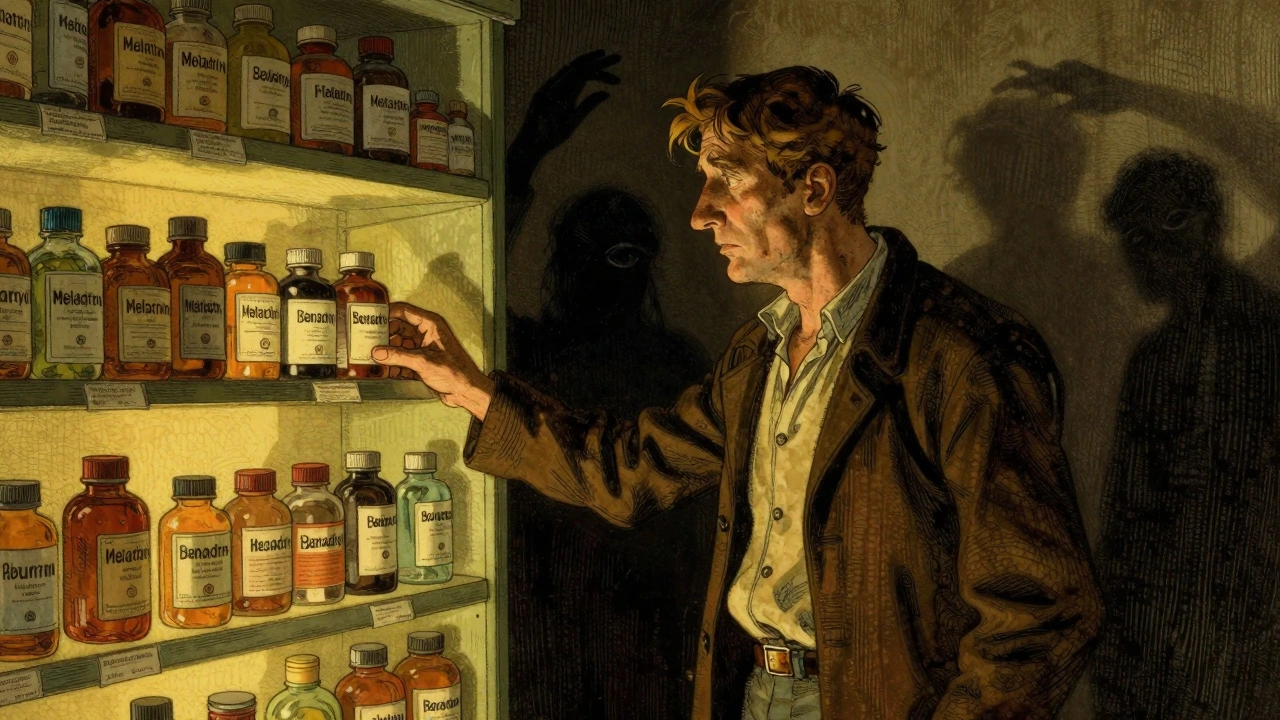
More than 1 in 5 adults in Australia take something over the counter to help them sleep. You’re not alone if you’ve reached for a bottle of melatonin after a bad night-or grabbed a Benadryl because you heard it makes you drowsy. But here’s the truth most labels won’t tell you: OTC sleep aids aren’t harmless nightcaps. They’re powerful chemicals with real risks, especially if you use them too long or too often.
What’s Actually in These Pills?
Most OTC sleep aids fall into two camps: antihistamines and supplements. The first group includes diphenhydramine (Benadryl, Sominex, Nytol) and doxylamine (Unisom SleepTabs). These were never meant to help you sleep. They’re allergy pills that happen to make you sleepy. That’s because they block histamine, a brain chemical that keeps you awake. It’s like turning off a light switch-but the switch doesn’t just control wakefulness. It also affects your memory, balance, and bladder control.
The other group is melatonin and herbal stuff like valerian root or chamomile. Melatonin is a hormone your body makes naturally to signal bedtime. Supplements try to mimic that signal. But here’s the catch: a 2017 study found that 7 out of 10 melatonin bottles didn’t contain what the label said. Some had 83% less than claimed. Others had nearly five times more. You could be taking a dose that’s way too high without even knowing it.
How Much Do They Actually Help?
Let’s cut through the hype. Clinical trials show OTC sleep aids reduce the time it takes to fall asleep by just 3 to 13 minutes. They add 20 to 60 minutes of total sleep-on average. That’s less than an episode of your favorite show. For someone struggling with chronic insomnia, that’s barely a bump in the road.
And here’s the kicker: the benefits fade fast. People who take these nightly for more than two weeks often find they need more to get the same effect. That’s tolerance. And when you stop? About 30% of users get rebound insomnia-sleep worse than before they started. It’s like your brain forgot how to sleep on its own.
The Real Side Effects (Not Just Drowsiness)
Antihistamine-based sleep aids don’t just make you sleepy. They mess with your body in ways you might not notice until it’s too late.
- Dry mouth: Happens in over a third of users. Can lead to tooth decay if you’re not drinking water.
- Blurred vision: Affects nearly 1 in 5 people. Dangerous if you drive or operate machinery the next day.
- Urinary retention: Especially risky for men with prostate issues. Can lead to infections or hospital visits.
- Confusion and memory problems: Common in older adults. One study linked long-term use to a 54% higher risk of dementia.
- Falls: For people over 65, using diphenhydramine increases fall risk by 50%. That’s not a small number-it’s life-changing.
Melatonin seems gentler, but it’s not harmless. A 2022 review found 45% of users feel groggy the next day. One in three gets headaches. And nearly 7 out of 10 report wild, vivid dreams-or nightmares. Higher doses (above 5mg) can cause nausea, dizziness, and even bedwetting in kids. The NHS warns: if you get unexplained pain in your arms or legs, stop taking it. That’s not normal.
Who Should Avoid These Completely?
Some people should never touch OTC sleep aids-not even once.
- People with sleep apnea: These meds relax throat muscles. That can make breathing pauses worse, increasing the risk of heart attack or stroke during sleep.
- Adults over 65: The American Geriatrics Society lists diphenhydramine and doxylamine as “potentially inappropriate” for seniors. The risks far outweigh the tiny benefits.
- Pregnant or breastfeeding women: Melatonin has no proven safety data in pregnancy. Diphenhydramine is Category B-no clear proof of harm, but not enough data to say it’s safe either.
- Anyone with liver or kidney disease: Your body can’t clear these drugs properly. They build up. Side effects get worse.
How Long Is Too Long?
Every FDA-approved OTC sleep aid label says: do not use for more than two weeks. But a 2022 survey found nearly 4 in 10 people ignore that. One in five uses them for over a month straight.
Why does this matter? Because long-term use of antihistamines is linked to brain changes. The same chemicals that help you fall asleep can slowly dull your thinking. Melatonin isn’t any safer long-term-your body may stop making its own, and you become dependent.
The rule is simple: if you need it for more than 7 to 10 nights in a row, talk to a doctor. Don’t wait until you’re taking it every night for months. That’s when the damage starts.
What Should You Do Instead?
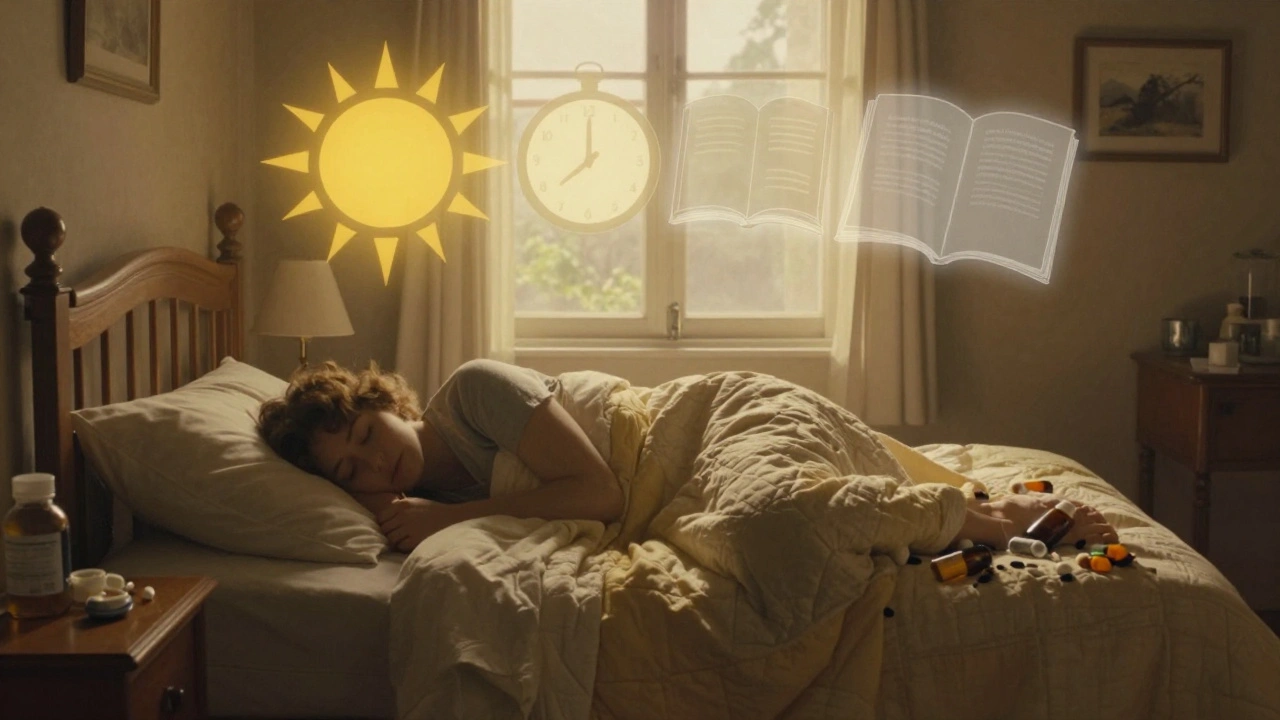
There’s a better way. Cognitive Behavioral Therapy for Insomnia (CBT-I) is the gold standard. It’s not a pill. It’s a structured program that teaches you how to retrain your brain and body for sleep. Studies show it works for 70 to 80% of people-and the results last. Unlike pills, it doesn’t wear off. It doesn’t cause side effects. It doesn’t make you dependent.
And you don’t need a therapist to start. Simple habits make a huge difference:
- Get sunlight in the morning-no screens for 30 minutes after waking.
- Keep your bedroom cool, dark, and quiet. No phones in bed.
- Go to bed and wake up at the same time every day-even on weekends.
- If you can’t sleep after 20 minutes, get up. Do something boring until you feel sleepy.
These aren’t “tips.” They’re science-backed tools that fix the root cause of poor sleep-not just the symptom.
Bottom Line: Use Sparingly, Not Daily
OTC sleep aids can help in a pinch. Jet lag? A tough week? A sudden change in schedule? One or two nights might be okay. But they’re not a solution. They’re a bandage on a broken bone.
Every time you reach for a pill, ask yourself: Am I treating the problem-or just hiding it?
If your sleep problems last longer than two weeks, it’s not just about sleep. It could be stress, anxiety, an undiagnosed medical condition, or a sleep disorder like apnea. Those need real answers-not a bottle from the pharmacy.
The safest sleep aid you own isn’t in a bottle. It’s your routine. Your light habits. Your patience. And your willingness to let your body find its rhythm again-without chemicals.
Can I take melatonin every night?
No. Melatonin isn’t meant for daily, long-term use. Taking it every night can confuse your body’s natural sleep rhythm. Most experts recommend using it only for short periods-like 3 to 5 nights-and at the lowest effective dose (0.5mg to 1mg). Higher doses (5mg or more) increase side effects without improving sleep. If you need it nightly for more than two weeks, see a doctor.
Is diphenhydramine safe for older adults?
No. Diphenhydramine is listed as a potentially inappropriate medication for adults over 65 by the American Geriatrics Society. It increases the risk of confusion, falls, urinary problems, and dementia. Many seniors don’t realize their memory issues or balance problems are linked to an OTC sleep aid they’ve been taking for years. Safer alternatives exist, including non-drug approaches like CBT-I.
Why do I feel groggy the next day after taking OTC sleep aids?
Because these drugs don’t just help you fall asleep-they linger in your system. Antihistamines like diphenhydramine have long half-lives, meaning they’re still active 8 to 12 hours after you take them. That’s why you feel foggy, slow, or uncoordinated the next day. Melatonin can cause daytime drowsiness too, especially at doses above 1mg. This isn’t normal sleep-it’s drug-induced sedation.
Are herbal sleep aids like valerian root safer than pills?
Not necessarily. Herbal supplements aren’t regulated like medicines. That means the amount of active ingredient can vary wildly between brands. Valerian root may help some people, but studies show mixed results. It can also cause headaches, dizziness, or stomach upset. And like melatonin, it’s not proven safe for long-term use. There’s no guarantee they’re safer-just less studied.
What’s the best alternative to OTC sleep aids?
Cognitive Behavioral Therapy for Insomnia (CBT-I) is the most effective, long-lasting solution. It’s backed by decades of research and recommended as the first-line treatment by the American Academy of Sleep Medicine. It teaches you how to break the cycle of anxiety around sleep, fix bad habits, and train your brain to rest naturally. Many online programs and apps now offer CBT-I at a fraction of the cost of in-person therapy. It works better than pills-and has zero side effects.
Can OTC sleep aids cause addiction?
They don’t cause chemical addiction like alcohol or opioids, but they can create psychological dependence. Many people feel they can’t sleep without them after a few weeks. This is called rebound insomnia-your body stops responding naturally, so you think you need the pill to sleep. Stopping can make sleep worse for days or weeks. That’s not addiction in the strict sense, but it’s still a dangerous cycle.
Next Steps: What to Do Today
If you’re using OTC sleep aids regularly:
- Stop taking them tonight if you’ve used them for more than 10 days straight.
- Write down your sleep habits: What time do you go to bed? What do you do in bed? Do you check your phone?
- Try one simple change: Get 15 minutes of morning sunlight, and don’t look at screens for 30 minutes before bed.
- Call your doctor or pharmacist. Ask: “Could my sleep issues be linked to something else?”
- Search for a CBT-I program. Many are covered by health insurance or available as low-cost apps.
Good sleep isn’t something you buy. It’s something you rebuild-one habit at a time.
Jennifer Anderson
December 7, 2025 AT 11:23okay but like… i took melatonin for 3 weeks straight last winter bc my schedule was all over the place and now i can’t fall asleep without it 😭 i thought it was ‘natural’ so it was fine?? turns out my brain just gave up. also why does every bottle say ‘5mg’ but the science says 0.5mg?? i feel so fooled.
Sadie Nastor
December 7, 2025 AT 16:16same. i used to take unisom every friday night to ‘reset’ but now it’s every night. 🥲 i didn’t even realize i was getting dizzy in the morning until my cat started bumping into me and i thought i was drunk. also the nightmares?? bro. i dreamed i was being chased by a giant alarm clock. not even joking.
Nicholas Heer
December 9, 2025 AT 05:13THIS IS A BIG PHARMA COVER-UP. THEY DON’T WANT YOU TO KNOW THAT SLEEP IS A LIBERAL CONSTRUCT DESIGNED TO KEEP YOU WEAK. THE GOVERNMENT AND BIG SLEEP INDUSTRY ARE PAID BY THE SAME CORPORATIONS THAT MAKE THESE PILLS. THEY WANT YOU DEPENDENT SO YOU’LL NEVER QUESTION THE SYSTEM. CBT-I? THAT’S JUST A PSYCHOBABBLE TERM FOR ‘SIT QUIETLY AND ACCEPT YOUR OPPRESSION.’ THE REAL SOLUTION? CUT OFF ALL ELECTRICITY AFTER SUNSET AND SLEEP LIKE OUR ANCESTORS DID. OR JUST TAKE A GUN TO BED. AT LEAST YOU’LL DIE FAST.
Sangram Lavte
December 9, 2025 AT 12:59I have been using valerian root for 6 months now. It helps a little, but I stopped because I didn't want to risk liver damage. My father had liver issues and I don't want to repeat that. I started walking 30 minutes before bed and reading a physical book. It's slow, but I sleep better without pills. No magic, just consistency.
Oliver Damon
December 11, 2025 AT 01:33The real tragedy here isn't the pharmacology-it's the epistemological vacuum in which OTC sleep aids operate. We’ve outsourced our biological regulation to a commodified, unregulated market because we lack the cultural infrastructure to support sleep hygiene. CBT-I isn't just an alternative-it’s a restoration of agency. The fact that insurance won’t cover it, but a 5mg melatonin bottle costs $5, speaks volumes about our healthcare priorities. We’ve normalized pharmaceutical dependency because systemic solutions require patience, and patience is a luxury.
Louis Llaine
December 11, 2025 AT 23:01so you’re telling me the only reason i’m not sleeping is because i didn’t meditate enough? cool. i’ll just add ‘learn to sleep’ to my to-do list next to ‘become a millionaire’ and ‘stop eating cereal for dinner.’
Jane Quitain
December 13, 2025 AT 21:52OMG I JUST REALIZED I’VE BEEN TAKING BENADRYL SINCE 2020 😭 I THOUGHT IT WAS JUST FOR ALLERGIES!! I’M GOING TO TRY THE SUNLIGHT THING TOMORROW!! 🌞✨ YOU’RE A LIFE SAVER!!
Kyle Oksten
December 15, 2025 AT 07:25People treat sleep like a bug to be fixed with a pill. It’s not. It’s a rhythm. A biological dance between light, stress, and time. You don’t fix rhythm with chemicals-you relearn it. The fact that we’ve turned rest into a consumer product says more about our society than our insomnia. CBT-I works because it doesn’t trick your brain-it reminds it how to breathe again.