
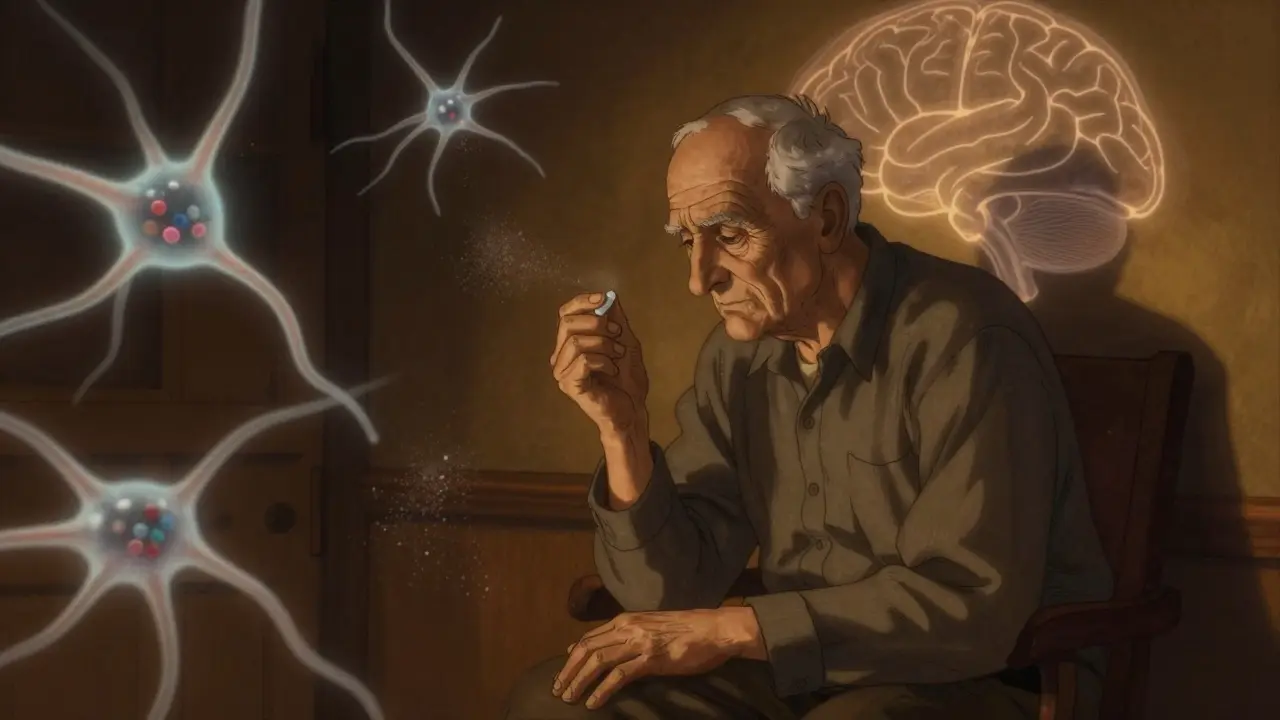

When your hand starts shaking for no reason-especially when you’re at rest-it’s easy to brush it off as nerves or fatigue. But if that tremor sticks around, gets worse, and is joined by stiff muscles, slow movements, or trouble balancing, it might be something deeper. Parkinson’s disease isn’t just about shaking hands. It’s a slow, silent breakdown in the brain’s ability to control movement, and at its core is a missing chemical: dopamine.
What’s Really Happening in the Brain?
Parkinson’s disease attacks a small group of nerve cells in the midbrain called the substantia nigra. These cells make dopamine, a neurotransmitter that acts like a messenger telling your muscles when and how to move. By the time someone notices symptoms like tremors or stiffness, they’ve already lost 60 to 80% of those dopamine-producing cells. That’s not a small loss-it’s like losing most of the traffic lights in a busy city. The result? Movement becomes delayed, jerky, or stuck.This isn’t random aging. It’s a specific degeneration. The brain’s movement control system, centered in the basal ganglia, relies on dopamine to keep the direct and indirect pathways balanced. Without enough dopamine, the brakes get stuck on, and the gas pedal doesn’t respond well. That’s why people with Parkinson’s feel stiff, move slowly, and struggle to start walking or even writing a signature.
The Three Main Signs: Tremor, Stiffness, and Slowness
The classic signs of Parkinson’s are often called the TRIAD: tremor, rigidity, and bradykinesia (slowness). Not everyone has all three at first, but most will develop them over time.Tremor is what most people picture-shaking in the hand, usually at rest. It’s often called a "pill-rolling tremor" because the thumb and forefinger rub together like rolling a pill between them. It’s most noticeable when the hand is relaxed, like when it’s resting in your lap. The moment you reach for a cup or wave hello, it often stops. Stress, fatigue, or strong emotions can make it worse. About 80% of people with Parkinson’s have this type of tremor, and it usually starts on one side of the body.
Rigidity is the stiffness. It’s not just tight muscles-it’s resistance to movement, even when someone else tries to move your arm or leg for you. Doctors describe it as "cogwheel" rigidity (like a gear grinding) or "lead-pipe" rigidity (a constant, smooth resistance). This stiffness can cause pain, cramps, and make simple tasks impossible: buttoning a shirt, turning a key, or even brushing your teeth. By the third year after diagnosis, 73% of people report serious trouble with these daily activities.
Bradykinesia means slowness of movement. It’s not just moving slowly-it’s difficulty starting, reduced arm swing while walking, small handwriting (micrographia), and a blank facial expression (masked face). People often say they feel like their body is wrapped in concrete. This symptom is present in nearly everyone with Parkinson’s and is often the most disabling over time.
Dopamine Replacement: The Main Treatment
Since Parkinson’s is caused by low dopamine, the main treatment is replacing it. But you can’t just take a dopamine pill-it can’t cross the blood-brain barrier. That’s where levodopa (L-DOPA) comes in. Levodopa is a chemical your body converts into dopamine once it reaches the brain.Levodopa is almost always combined with carbidopa. Carbidopa stops levodopa from turning into dopamine in the rest of your body, which reduces side effects like nausea and vomiting. Together, they form the most effective treatment for Parkinson’s symptoms. The standard dose is 25/100 mg (carbidopa/levodopa), taken one to three times a day. Most people feel better within 30 to 60 minutes after taking it.
For the first few years, many people experience what’s called the "honeymoon period." Motor symptoms improve dramatically-up to 70% better than before treatment. Walking becomes easier. Writing becomes legible. Tremors fade. But this doesn’t last forever.
The Downside of Long-Term Use
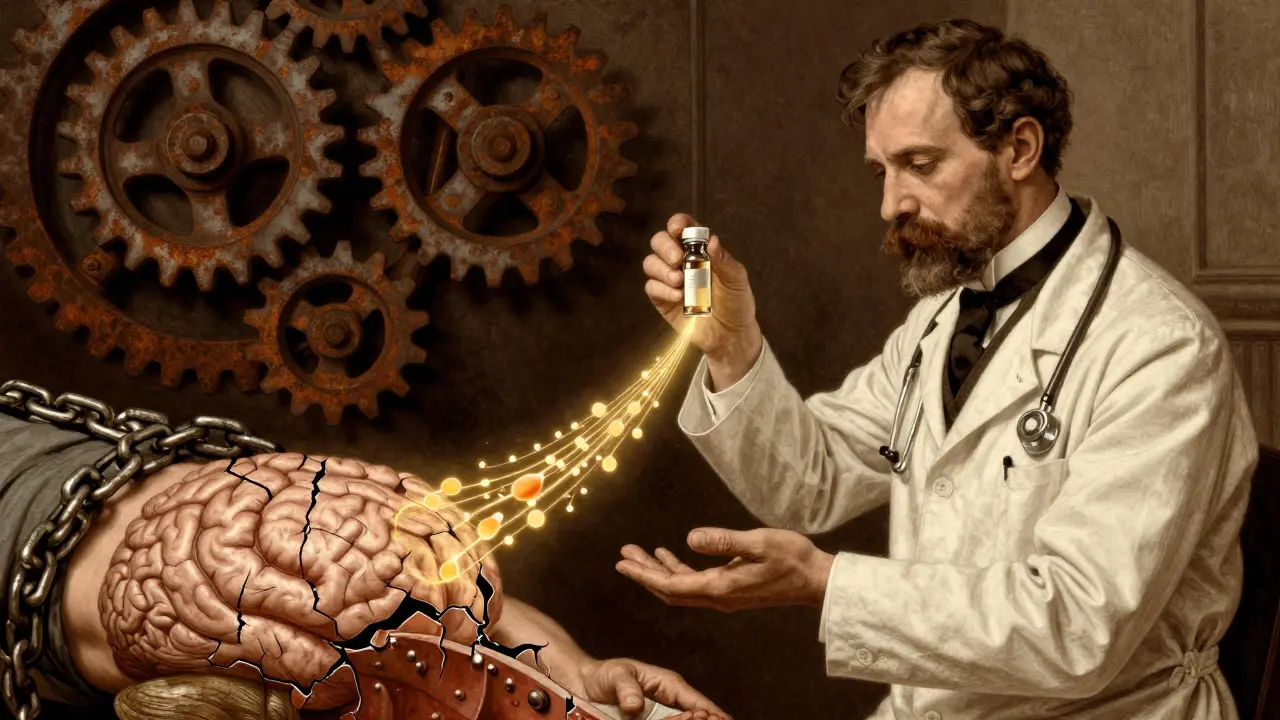
After 5 to 10 years, many people start to notice problems with their medication. The effects don’t last as long. You might feel great right after a dose, then suddenly "go off"-stiff, slow, and stuck-before your next pill. This is called "wearing-off." Some people also get sudden, unpredictable shifts between being "on" and "off," called "on-off fluctuations."Another major issue is dyskinesia-involuntary, dance-like movements. These aren’t the tremor you started with. They’re wild, twisting motions in the arms, legs, or head that happen when levodopa levels are highest. About 40 to 50% of people on long-term levodopa develop dyskinesias. For some, these movements are more disruptive than the original Parkinson’s symptoms.
That’s why doctors now use a "start low, go slow" approach. Instead of jumping to high doses, they begin with small amounts and increase slowly. This helps delay motor complications. A 2023 survey found that 85% of movement disorder specialists now follow this method.
Alternatives to Levodopa
Not everyone starts with levodopa. For younger patients or those with milder symptoms, doctors may begin with dopamine agonists like pramipexole or ropinirole. These drugs mimic dopamine by directly stimulating dopamine receptors in the brain. They’re about 30 to 50% as effective as levodopa for motor symptoms but carry a lower risk of early dyskinesias.However, they come with their own side effects: dizziness, sleepiness, hallucinations, and impulse control problems (like gambling or binge eating). About 60% of people eventually need both levodopa and a dopamine agonist to get good control.
There are also newer forms of levodopa. Rytary is an extended-release capsule that lasts longer, so you might only need to take it twice a day instead of three or four. But it costs around $5,800 a year-nearly ten times more than the generic version. For sudden "off" episodes, Inbrija is an inhaled powder that works in under 10 minutes. It’s useful for emergencies but costs about $3,700 a month.
What Patients Really Experience
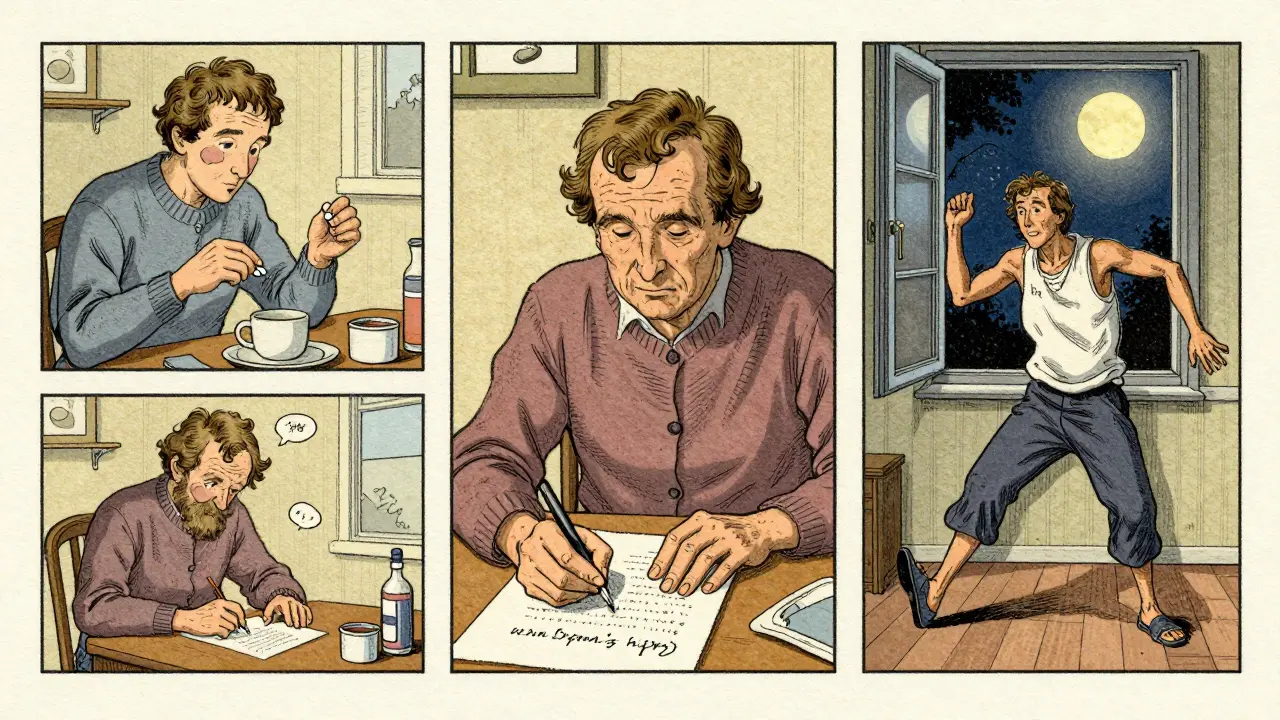
Real people with Parkinson’s don’t just talk about symptoms-they talk about logistics. One user on the Parkinson’s Foundation forum said, "After 8 years, I only get 2-3 hours of good time per dose. The rest is stiffness or shaking or wild movements." Another said, "Starting pramipexole early kept me steady for five years with almost no side effects."Many struggle with the "protein effect." High-protein foods like meat, cheese, or beans can block levodopa from being absorbed in the gut. So people learn to take their pills 30 to 60 minutes before meals or wait an hour after eating. For some, this means planning every meal around their medication schedule.
Managing Parkinson’s meds becomes a full-time job. On average, people spend 15 minutes a day managing their pills early on. By the moderate stage, it’s 45 minutes. And 78% of patients need help from a caregiver to keep track of doses, timing, and side effects.
What’s Next? The Future of Treatment
Research is moving fast. One promising approach is continuous dopamine delivery. The FDA is reviewing new subcutaneous infusion systems like foslevodopa/foscarbidopa, which deliver dopamine directly under the skin through a pump. In a 2022 trial, patients gained 2.5 extra "on" hours per day compared to oral pills.Gene therapy is also being tested-trying to teach brain cells to make dopamine again. Early results are encouraging, but these are still experimental. Another big project, the Parkinson’s Progression Markers Initiative, is looking for biological signs (biomarkers) to predict who will respond best to which drug. For example, some people have genetic variations in the COMT or MAO-B enzymes that affect how quickly their body breaks down dopamine. That could one day let doctors pick the right drug based on your DNA.
The economic cost is heavy. In the U.S., each person with Parkinson’s costs about $22,800 a year-$11,900 in lost work, caregiving, and daily life impact, and $10,900 in medical bills. With global cases expected to double by 2040, these numbers will rise.
Final Thoughts: It’s Not a Cure, But It’s Manageable
There’s no cure for Parkinson’s yet. But dopamine replacement therapy gives people back control-sometimes for years. The goal isn’t to eliminate symptoms completely. It’s to find the right balance: enough medication to move freely, without triggering dyskinesias or crashes.Timing matters. Dosing matters. Diet matters. Support matters. And so does patience. What works today might need adjusting next year. That’s why working with a movement disorder specialist-not just a general neurologist-is critical. Most community doctors don’t follow all the best practices. Only 35% do.
If you or someone you know has Parkinson’s, don’t wait to ask questions. Ask about alternatives. Ask about timing. Ask about side effects. And know this: while the disease progresses, your ability to live well doesn’t have to.
Is Parkinson’s disease the same as essential tremor?
No. Essential tremor is a different condition. It usually affects both hands equally and happens when you’re using them-like holding a cup or writing. Parkinson’s tremor is usually one-sided, happens at rest, and improves with movement. Essential tremor doesn’t cause stiffness, slowness, or balance problems. Medications for essential tremor (like beta-blockers) don’t help Parkinson’s.
Can dopamine replacement stop Parkinson’s from getting worse?
No. Dopamine replacement treats symptoms, but it doesn’t slow or stop the death of brain cells. That’s a common misunderstanding. Early studies worried that levodopa might speed up damage, but modern research confirms it doesn’t. The goal is symptom control, not disease modification.
Why do some people get dyskinesias and others don’t?
It depends on age, dose, duration of treatment, and genetics. Younger patients (under 60) are more likely to develop dyskinesias because their brains are more sensitive to dopamine fluctuations. Higher doses and longer use increase risk. Some people have gene variants that make them break down dopamine faster, which can lead to wild swings in levels and more dyskinesias.
Can I take levodopa with food?
It’s best to take levodopa on an empty stomach, 30 to 60 minutes before meals. High-protein foods (meat, eggs, cheese, beans) compete with levodopa for absorption in the gut. If nausea is a problem, you can take it with a low-protein snack like crackers or applesauce. Avoid large meals right before or after your dose.
What happens if I miss a dose?
Missing one dose might cause stiffness or slowness to return. Missing several can lead to a dangerous condition called neuroleptic malignant syndrome (NMS)-a rare but life-threatening reaction with high fever, muscle rigidity, and confusion. Never stop levodopa suddenly. If you miss a dose, take it as soon as you remember-but don’t double up. Always talk to your doctor about a plan for missed doses.
Are there lifestyle changes that help with dopamine replacement therapy?
Yes. Regular exercise-especially walking, cycling, or tai chi-can improve mobility and may even help the brain use dopamine more efficiently. A balanced diet with moderate protein helps avoid the "protein effect." Staying hydrated and managing stress reduce tremors and stiffness. Sleep quality matters too-poor sleep makes symptoms worse and meds less effective.
saurabh singh
January 4, 2026 AT 20:35Man, I saw my uncle go through this in India - no specialists nearby, just a local doc handing out levodopa like candy. Took him years to figure out the protein thing. Now he eats his rice first, then meat. Small wins, ya know?
Peyton Feuer
January 5, 2026 AT 15:21i was just readin this and thought ‘wait… is this why my grandpa stopped writin’? his handwritin got so tiny i thought he was just gettin old…’
Jay Tejada
January 5, 2026 AT 19:28So let me get this straight… we replace dopamine with a chemical that can’t even get into the brain unless we sneak it in disguised as a different molecule… and then we wonder why the body starts rebelling after five years?
Yeah. Classic medicine.
Allen Ye
January 6, 2026 AT 17:37It’s fascinating how the brain’s dopamine pathways function like a symphony - one section out of tune and the whole piece collapses. Levodopa isn’t a cure, it’s a temporary conductor holding the orchestra together with duct tape and hope. The real tragedy isn’t the disease - it’s that we’ve optimized for symptom management while ignoring the root decay. We’re treating the flickering lights while the building burns down.
And yet, here we are, still debating dosage timing like it’s a matter of taste rather than neurobiology. We need systemic change, not just pharmacological patch jobs.
mark etang
January 8, 2026 AT 03:51It is imperative that individuals diagnosed with Parkinson’s Disease adhere strictly to prescribed medication regimens and consult with certified movement disorder specialists to optimize therapeutic outcomes and mitigate potential adverse effects associated with prolonged dopaminergic therapy.
josh plum
January 9, 2026 AT 08:13They’re hiding the truth. Dopamine isn’t the problem - it’s the vaccines. The CDC knows. Big Pharma knows. That’s why they push levodopa - keeps you dependent, keeps the cash flowing. And don’t get me started on those ‘inhalers’ - nano-tech surveillance in your lungs. Wake up, sheeple.
John Ross
January 10, 2026 AT 04:22Levodopa’s pharmacokinetics are heavily influenced by gastric emptying time and intestinal peptide transporters - specifically, the L-type amino acid transporter 1 (LAT1). Protein competition at the blood-brain barrier is a well-documented phenomenon, yet primary care providers still fail to educate patients on meal-timing protocols. This isn’t just suboptimal care - it’s negligence.
Brendan F. Cochran
January 12, 2026 AT 02:22My cousin’s wife got diagnosed last year. She’s on the generic stuff, takes it like clockwork, no drama. Meanwhile, these rich folks in Cali are shelling out $5k for fancy pills like it’s a Tesla upgrade. America’s broken. Why should a man with Parkinson’s have to choose between his meds and his kid’s college fund?
Mandy Kowitz
January 13, 2026 AT 06:02So… we’re paying $3,700 a month for a puff of powder that works in 10 minutes… and the solution to the protein problem is… eat crackers? I’m shocked. Truly. Groundbreaking stuff.
Justin Lowans
January 14, 2026 AT 11:43There is a quiet dignity in the way individuals adapt - the choreographed dance between pill and plate, the silent endurance of tremors during dinner, the way a hand steadies itself before turning a key. These are not symptoms. These are acts of resilience.
Michael Rudge
January 15, 2026 AT 08:34Of course you’re taking it before meals. Everyone knows that. If you didn’t, you’re either clueless or just lazy. And why are you still on carbidopa/levodopa? Have you considered deep brain stimulation? You’re clearly not trying hard enough to ‘beat’ this.
Ethan Purser
January 16, 2026 AT 00:28I used to be a concert pianist. Now I can’t hold a spoon without my hand doing the cha-cha. I’ve cried in grocery stores because I couldn’t open a jar. They say dopamine replacement helps. But what helps when you realize the version of yourself that could play Chopin… is already gone? And they’re selling you a pill that just makes you dance differently?
Stephen Craig
January 17, 2026 AT 22:27Protein interference is real. Plan meals. Timing matters.
bob bob
January 19, 2026 AT 13:50My dad’s been on this stuff for 12 years. He walks every morning now - rain or shine. Says the movement helps the pills work better. I don’t know the science, but I know he’s happier. That’s enough for me.