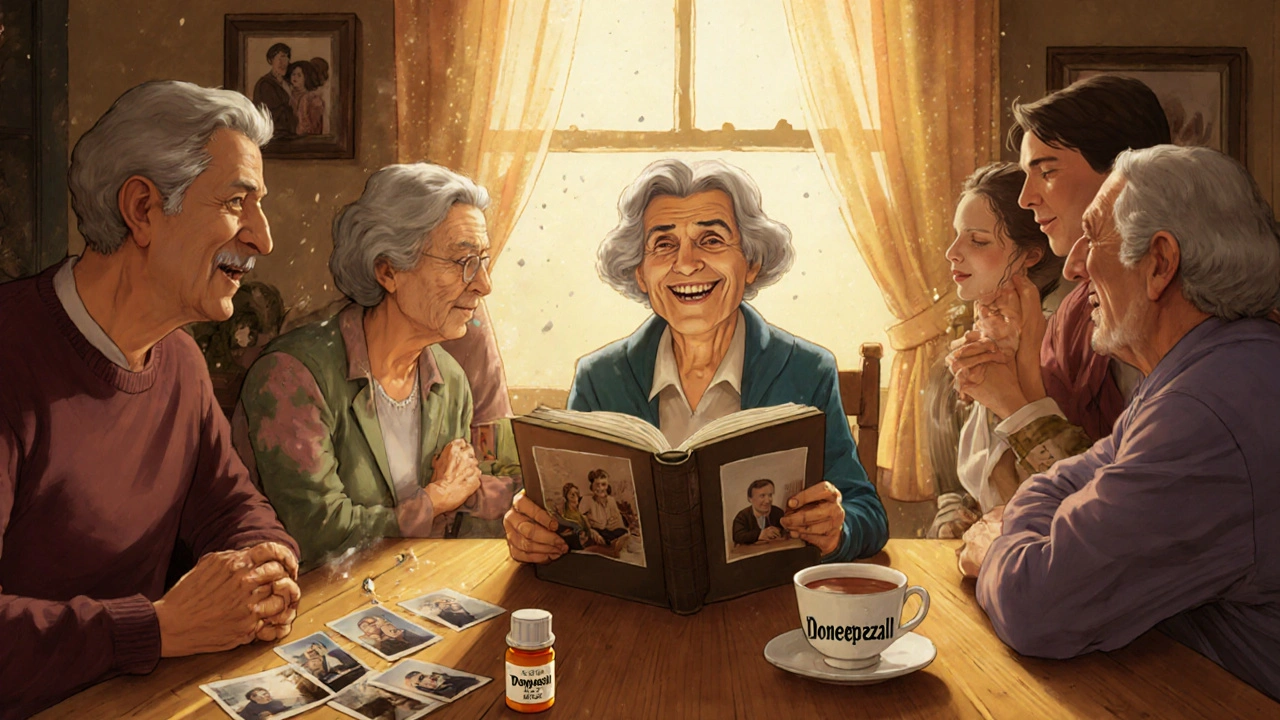
Alzheimer's Therapy: What Works, What Doesn't, and Why It Matters
When we talk about Alzheimer's therapy, a set of medical and supportive approaches designed to slow cognitive decline and manage symptoms in people with Alzheimer's disease. Also known as dementia treatment, it's not about curing the disease — yet — but about helping people live better for as long as possible. Unlike a broken bone that heals, Alzheimer's slowly rewires the brain. The goal of therapy isn't to reverse damage, but to delay it, ease daily struggles, and give families more time together.
Most current cholinesterase inhibitors, a class of drugs that boost brain chemicals involved in memory and thinking. Also known as AChE inhibitors, they include donepezil, rivastigmine, and galantamine — the most commonly prescribed options for early to mid-stage Alzheimer's. These don't fix the underlying plaques and tangles, but they help neurons communicate better. Then there's memantine, a medication that regulates glutamate, a brain chemical that can become toxic in Alzheimer's. Also known as NMDA receptor antagonist, it's often used in moderate to late stages, sometimes combined with cholinesterase inhibitors. These aren't magic pills. They work for some, not others. Side effects like nausea or dizziness can be tough. But for many, even a small delay in losing independence means more mornings with grandkids, more conversations, more dignity.
Therapy isn't just pills. It’s routines. It’s structured activities that keep the mind engaged — puzzles, music, walking. It’s caregivers learning how to respond to confusion without arguing. It’s managing other conditions like high blood pressure or diabetes, because what hurts the heart often hurts the brain too. And yes, it’s also about cutting through the noise: supplements marketed as "brain boosters," unproven stem cell clinics, or diets promised to reverse dementia. None of those have solid evidence. But real therapy? It’s grounded in clinical trials, doctor visits, and daily care.
You’ll find posts here that dig into the real-world side of this — how drug pricing affects access, how interactions between common meds can make things worse, and why some treatments that seem promising on paper fall short in practice. There’s no hype here. Just facts about what’s actually used, what’s being studied, and what matters most when someone you love is facing Alzheimer’s. What you’ll read isn’t theory. It’s what happens in clinics, pharmacies, and homes every day.