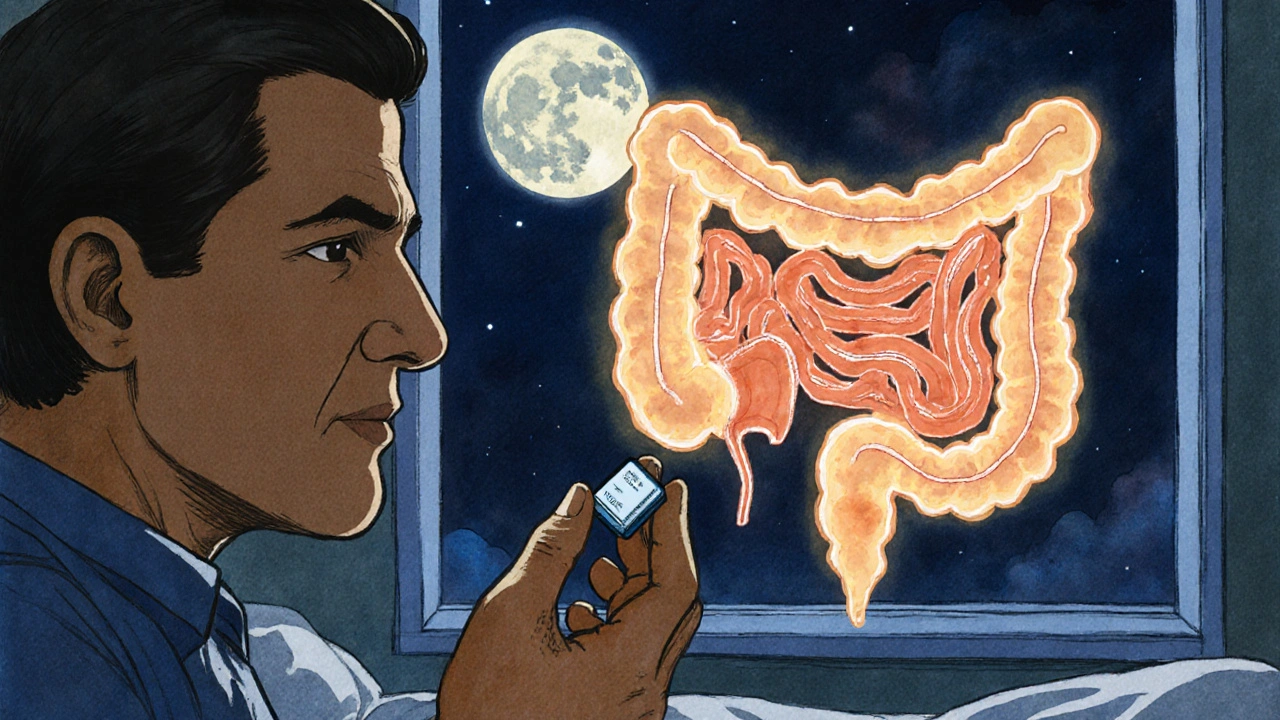
Bisacodyl Dosage: How Much to Take and What You Need to Know
When you're stuck with constipation, bisacodyl, a stimulant laxative used to trigger bowel movements. Also known as Dulcolax, it's one of the most common over-the-counter options for quick relief. But taking too much—or too little—can make things worse. The right bisacodyl dosage depends on your age, why you’re using it, and whether you’re taking tablets or suppositories. It’s not just about getting results; it’s about avoiding cramps, dependency, or worse.
Bisacodyl works by irritating the lining of your colon, which pushes stool out. That’s why it usually kicks in within 6 to 12 hours if you take it as a tablet, or as fast as 15 to 60 minutes with a suppository. Most adults start with 5 to 15 mg once daily. For suppositories, one 10 mg dose is standard. Kids over 6 usually get half that. But here’s the catch: if you take it every day for weeks, your body starts to rely on it. That’s not just ineffective—it’s risky. Studies show long-term stimulant laxative use can damage nerve cells in the colon, making natural bowel movements harder. That’s why doctors recommend it only for short-term use, like after surgery, during travel, or when other methods fail.
People often mix up bisacodyl with other laxatives like polyethylene glycol or magnesium hydroxide. Those are osmotic laxatives—they pull water into the gut. Bisacodyl is different. It’s a direct trigger. That’s why it’s faster but harsher. If you have IBS, Crohn’s, or a bowel obstruction, bisacodyl can be dangerous. And if you’re on other meds—like diuretics or heart drugs—it might mess with your electrolytes. Always check with a pharmacist before combining it with anything else.
There’s no one-size-fits-all dose. Someone recovering from surgery needs a different approach than someone with chronic constipation from inactivity. And if you’re over 60, your body processes drugs slower. That’s why many older adults start with just 5 mg. Too much can cause nausea, dizziness, or even heart rhythm issues. The goal isn’t to empty your bowels completely—it’s to restore normal rhythm. That’s why many people do better with lifestyle changes: more water, fiber, walking, and timing your meals. Bisacodyl should be a tool, not a crutch.
What you’ll find below are real-world guides from pharmacists and patients who’ve been there. You’ll see how bisacodyl stacks up against other options, what doses actually work for different groups, how to avoid the most common mistakes, and when to stop and see a doctor. No fluff. No marketing. Just what you need to use it safely and effectively.