

Side Effect Comparison Tool
Find the Best Antidepressant For You
This tool helps you compare bupropion and SSRIs based on your specific needs and medical history.
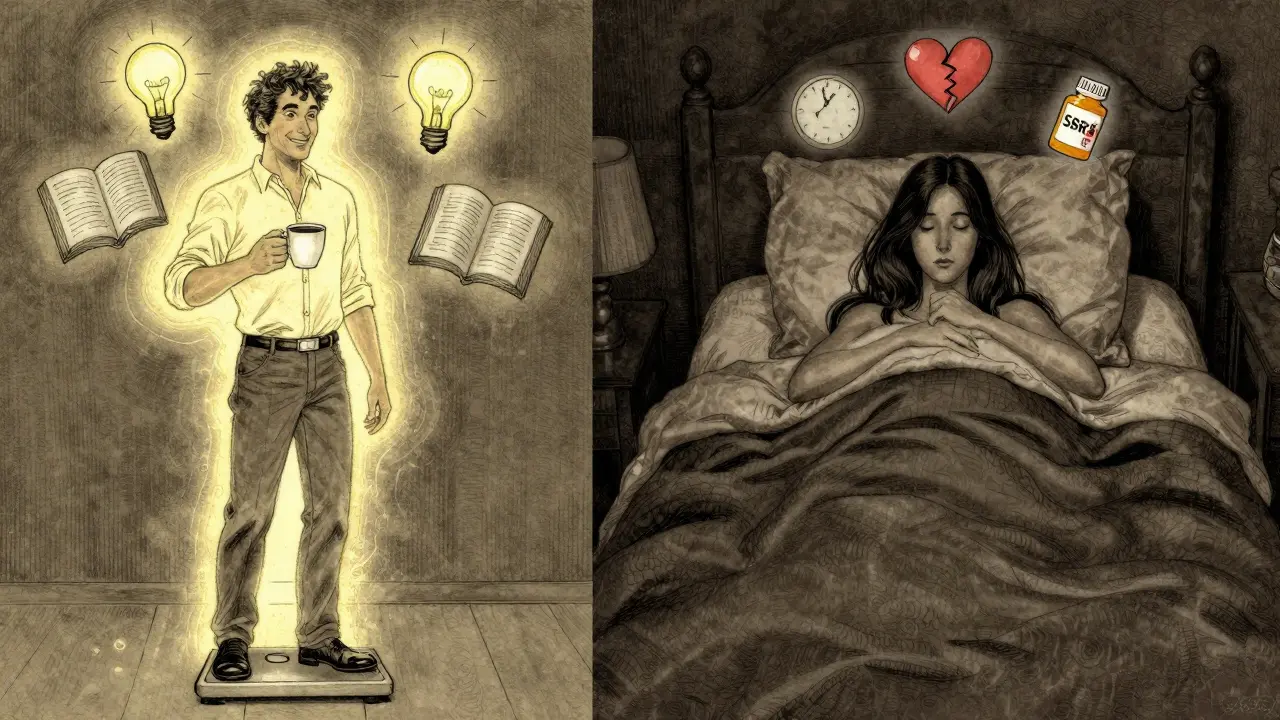
Choosing an antidepressant isn’t just about whether it works-it’s about whether you can live with how it makes you feel. Two of the most common options, bupropion and SSRIs, work in completely different ways and come with very different side effects. If you’ve struggled with weight gain, low libido, or constant fatigue on an SSRI, you’re not alone. And if you’ve had anxiety flare-ups or seizures on bupropion, you know how quickly the benefits can vanish. This isn’t theoretical-it’s what real people experience every day.
How Bupropion and SSRIs Work Differently
Bupropion, sold under brand names like Wellbutrin and Zyban, doesn’t touch serotonin at all. Instead, it blocks the reuptake of norepinephrine and dopamine. That’s why people often say it feels more "awake"-it boosts energy and focus. It’s the only antidepressant that doesn’t cause sexual side effects in most people, and it’s even used off-label to help quit smoking because of how it affects dopamine.
SSRIs-like fluoxetine (Prozac), sertraline (Zoloft), and escitalopram (Lexapro)-do one thing: increase serotonin. That helps mood, but it also affects digestion, sleep, and sex. Serotonin isn’t just a "happiness chemical." It’s involved in almost every bodily function. That’s why side effects like nausea, drowsiness, and sexual dysfunction are so common.
These aren’t minor differences. They’re the reason one person thrives on bupropion while another can’t tolerate it at all.
Sexual Side Effects: The Biggest Divide
If you’ve taken an SSRI and noticed your sex drive disappeared, you’re in the majority. Studies show 30% to 70% of people on SSRIs experience sexual side effects. For paroxetine, the rate can be as high as 76%. That means loss of desire, trouble getting aroused, or inability to climax. Many people stop taking their meds because of this-not because they’re not working, but because they feel broken.
Bupropion? The numbers are starkly different. Around 13% to 15% of users report sexual issues-close to placebo levels. A 2015 study in the Journal of Sexual Medicine found that 67% of people who switched from an SSRI to bupropion saw their libido return. Another 48% improved when bupropion was added to their SSRI regimen.
Real-world feedback backs this up. On Drugs.com, 47% of negative reviews for Lexapro mention sexual dysfunction. For bupropion, it’s only 8%. One user wrote: "Switched from Lexapro to Wellbutrin after 2 years of zero sex drive-within 3 weeks, I felt like myself again."
Weight Changes: Lose or Gain?
Weight gain is one of the most frustrating side effects of SSRIs. Studies show people on paroxetine or sertraline gain an average of 2.5 to 3.5 kilograms over 6 to 12 months. Some gain more. A Reddit user shared: "Gained 25 pounds in one year on Zoloft. I didn’t eat more-I just felt sluggish and stopped moving."
Bupropion does the opposite. Most people lose a little weight-or at least don’t gain it. A 2009 study in Obesity found that people taking bupropion XL 400 mg daily lost an average of 7.2% of their body weight over 24 weeks. Even at standard antidepressant doses (150-300 mg), users report losing 0.8 to 1.2 kg over the same period.
This isn’t just about appearance. For people with diabetes, metabolic syndrome, or body image issues, weight neutrality-or loss-is a major reason to choose bupropion.
Sleep and Energy: Awake vs. Zoned Out
SSRIs like paroxetine and fluoxetine often cause drowsiness. Many people take them at night to manage this. But that doesn’t mean they’re sleeping better-it means they’re just too tired to stay awake. One user said: "Zoloft made me feel like a zombie. I could barely get out of bed."
Bupropion doesn’t have that problem. It’s actually used to treat fatigue in people with chronic illness. Studies show it causes somnolence (sleepiness) 73% less often than SSRIs. People report feeling more alert, focused, and motivated. That’s why it’s often chosen for professionals, students, or anyone who needs mental clarity.
But here’s the catch: that same energy boost can cause insomnia. About 20% of bupropion users have trouble sleeping. If you’re already anxious or have trouble turning off your mind at night, this can make things worse.

Anxiety and Restlessness: A Hidden Risk
Here’s where bupropion can backfire. Because it increases norepinephrine and dopamine, it can trigger or worsen anxiety. A 2017 study found that 28% of people with anxiety disorders stopped taking bupropion because of increased nervousness, jitteriness, or panic attacks. That’s nearly double the rate of SSRI discontinuation for anxiety.
SSRIs, on the other hand, are often prescribed for anxiety disorders like GAD, OCD, and PTSD. They’re not perfect, but they’re more predictable. If you have high anxiety, bupropion might make you feel worse before it makes you better-or never make you better at all.
Seizure Risk: The Dealbreaker
Bupropion carries a small but serious risk: seizures. At 300 mg per day, the risk is about 0.1%. At 400 mg, it jumps to 0.4%. That’s why doctors never prescribe it to people with epilepsy, a history of seizures, or eating disorders like bulimia or anorexia. It’s also dangerous if you’re drinking alcohol heavily or taking other medications that lower the seizure threshold.
SSRIs? Their seizure risk is about 0.02% to 0.04%. Almost negligible. For most people, it’s not a concern. But for those with a history of seizures-even one as a child-bupropion is off the table.
Blood Pressure and Heart Health
Bupropion can raise systolic blood pressure by 3 to 5 mmHg on average. That’s not huge, but it matters if you already have hypertension. Doctors recommend checking blood pressure every 2 to 4 weeks when starting bupropion.
SSRIs usually have no effect-or even slightly lower blood pressure. For people with heart conditions or high blood pressure, this makes SSRIs a safer starting point.
What Happens When You Switch?
If you’re switching from an SSRI to bupropion, timing matters. For fluoxetine (Prozac), you need a 2-week gap because it stays in your system for days. For sertraline or escitalopram, a 1-week washout is enough. Jumping too fast can cause serotonin syndrome-a rare but dangerous condition with symptoms like confusion, rapid heart rate, and muscle rigidity.
Some doctors combine bupropion with an SSRI to boost mood while reducing sexual side effects. This works for many, but it increases seizure risk slightly. One case report in Cureus documented a seizure in someone taking both bupropion and escitalopram, even though they had no prior history.

Who Should Take What?
Choose bupropion if:
- You’ve had sexual side effects on SSRIs
- You want to avoid weight gain-or lose weight
- You feel sluggish or tired on other meds
- You don’t have anxiety, seizures, or high blood pressure
Choose an SSRI if:
- You have anxiety, OCD, or PTSD
- You have a history of seizures or eating disorders
- You’re concerned about blood pressure
- You need something with a long safety record for long-term use
Real People, Real Choices
On Drugs.com, bupropion has a 7.4/10 rating from over 1,800 reviews. The most common praise: "No weight gain," "I finally feel awake," and "My sex drive came back." The most common complaints: "I got too anxious," "I couldn’t sleep," and "I had ringing in my ears."
SSRIs like Lexapro have a 6.8/10 rating from over 3,200 reviews. The most common complaints: "Lost all interest in sex," "Gained 20 pounds," and "I felt like a zombie." But many also say: "It calmed my panic attacks," and "I finally feel like I can breathe."
A 2021 survey found that 63% of patients preferred bupropion for its lack of sexual side effects. But 71% of patients with anxiety disorders preferred SSRIs. Neither is "better." It’s about fit.
What’s New in 2026?
Pharmacogenetic testing is becoming more common. Some labs can now test your genes to predict whether you’re likely to have bad side effects from SSRIs. If you’re a poor metabolizer of serotonin drugs, you might be steered toward bupropion automatically. The 2023 GUIDED trial showed this approach improved remission rates by 14.2%.
New extended-release bupropion formulations like Aplenzin are now available with once-daily dosing. That’s easier for people who struggle with adherence.
But the biggest change? Doctors are listening more. Instead of prescribing SSRIs as the default, they’re asking: "What side effects matter most to you?" That’s progress.
Does bupropion cause weight gain?
No-bupropion is one of the few antidepressants that doesn’t cause weight gain. Most people experience no change or a small weight loss of 0.8 to 1.2 kg over 6 months. Some lose more, especially at higher doses. This makes it a top choice for people who’ve gained weight on SSRIs or are concerned about metabolic health.
Can bupropion help with SSRI-induced sexual dysfunction?
Yes. Studies show that switching from an SSRI to bupropion improves sexual function in about 67% of cases. Adding bupropion to an existing SSRI (augmentation) helps about 70-80% of people in open-label trials. While double-blind data is limited, real-world results are strong enough that many psychiatrists now consider this a standard approach.
Is bupropion better than SSRIs for anxiety?
Generally, no. SSRIs are first-line for anxiety disorders like GAD, panic disorder, and OCD. Bupropion can make anxiety worse because it stimulates norepinephrine and dopamine. About 28% of people with anxiety stop bupropion due to increased nervousness or panic. If anxiety is your main symptom, SSRIs are usually the safer choice.
Why is bupropion not prescribed as often as SSRIs?
SSRIs are prescribed more often because they work for a wider range of conditions-especially anxiety-and have fewer serious risks. Bupropion has important contraindications: seizures, eating disorders, and high blood pressure. It’s also not FDA-approved for anxiety, so doctors default to SSRIs unless there’s a clear reason to choose otherwise. Still, bupropion is the fourth most prescribed antidepressant in the U.S., showing it’s widely used when appropriate.
How long does it take for bupropion to start working?
Like most antidepressants, bupropion takes 2 to 6 weeks to show full effects. But some people notice improved energy and focus within the first week. Sexual side effects often improve faster than mood-some report changes in libido within 10-14 days. That’s quicker than SSRIs, where sexual side effects can take months to develop and even longer to reverse.
Can I take bupropion with an SSRI?
Yes, but with caution. Combining bupropion with an SSRI is sometimes done to reduce sexual side effects or boost mood. However, this increases the risk of seizures and serotonin syndrome. Your doctor will monitor you closely, start with low doses, and avoid this combo if you have a seizure history, liver problems, or are taking other medications that lower the seizure threshold.
What are the long-term risks of bupropion?
Long-term use of bupropion is generally safe for people without contraindications. There’s no evidence of organ damage or dependency. The main risks remain seizure (dose-dependent), elevated blood pressure, and insomnia. Regular blood pressure checks and avoiding alcohol or stimulants help manage these. For most people, the benefits outweigh the risks over years of use.
Final Thoughts: It’s About Fit, Not Fairness
There’s no "best" antidepressant. Only the one that works for you-with side effects you can live with. Bupropion isn’t a magic bullet-it won’t help your anxiety, and it could trigger a seizure if you’re not screened properly. SSRIs aren’t perfect-they can kill your sex life and pack on the pounds.
The goal isn’t to pick the drug with the fewest side effects. It’s to pick the one with the fewest side effects that matter to you. If sexual health and energy are your top priorities, bupropion might be your best shot. If anxiety and safety are more important, SSRIs still hold the edge.
Ask your doctor: "What side effects should I expect? What would happen if I don’t like them?" That’s the real question-and the one most people never ask.
Joni O
January 18, 2026 AT 09:54Switched from Lexapro to Wellbutrin last year and my sex drive came back like I was 22 again. Also lost 12 lbs without trying. I used to feel like a zombie after work-now I actually want to go for walks. No more crying in the shower. Just... me.
Also, the insomnia? Real. I had to take it before noon or I’d be staring at the ceiling at 2am. But worth it.
Max Sinclair
January 18, 2026 AT 19:45This is one of the most balanced, evidence-based breakdowns I’ve read on this topic. The stats on sexual side effects alone should be mandatory reading for every prescriber. SSRIs aren’t bad-they’re just not universal. The key is matching the drug to the person, not the other way around. Thanks for writing this.
christian Espinola
January 20, 2026 AT 19:00Big Pharma doesn’t want you to know bupropion is cheaper than SSRIs and doesn’t need patent extensions. That’s why they push SSRIs like candy. They’re also the same companies that hid the suicide risk in kids for years. You think this is science? It’s profit. Wake up.
Selina Warren
January 22, 2026 AT 18:35Let’s be real-SSRIs are a cultural trap. We’ve been sold this lie that ‘chemical imbalance’ means you need to be drugged for life. Bupropion isn’t just better-it’s liberation. If your therapist pushes SSRIs without asking what side effects you can’t tolerate, they’re not helping you, they’re managing compliance. Stop letting doctors decide what your body can handle. You’re not broken. The meds are the problem.
Jake Moore
January 23, 2026 AT 18:42For anyone considering switching: go slow. I tried jumping from sertraline to bupropion after reading Reddit and ended up in the ER with serotonin syndrome. Took 3 weeks to stabilize. Your doc should have you taper the SSRI over 2-3 weeks, especially if it’s fluoxetine. Don’t be like me.
Nishant Sonuley
January 24, 2026 AT 11:05Look, I get it-bupropion sounds great if you’re tired of being a zombie or having no libido. But let’s not pretend it’s some magical cure-all. I’m from India, and here, SSRIs are still the default because they’re cheaper, more accessible, and doctors are trained to avoid anything with seizure risk. Also, the whole ‘bupropion = energy boost’ thing? Try taking it when you’re already burned out from 14-hour workdays. All it does is make you jittery and then crash harder. It’s not magic. It’s chemistry. And chemistry doesn’t care how hard you’re trying.
Emma #########
January 24, 2026 AT 19:19I’ve been on bupropion for 5 years. The insomnia is real, but I learned to manage it with magnesium and no screens after 8pm. The best part? I can finally hug my partner without feeling like a robot. My mom said I ‘came back to life.’ I didn’t know I was gone until I wasn’t.
Aysha Siera
January 25, 2026 AT 05:52They’re hiding the truth. Bupropion is linked to brain inflammation. The ringing in the ears? That’s not side effect, that’s warning. The FDA knows. The studies are buried. They don’t want you to know how many people get tinnitus and are told it’s ‘just anxiety.’ I’ve seen 3 people go deaf after switching. Don’t trust the numbers. Trust your gut.
rachel bellet
January 26, 2026 AT 11:34The data is statistically significant, but the clinical relevance is questionable. While bupropion demonstrates lower incidence of sexual dysfunction (p<0.001), the effect size (Cohen’s d = 0.82) must be contextualized against its elevated seizure risk (NNT = 1,000 for harm vs. NNT = 15 for benefit). Furthermore, the weight loss observed is largely attributable to reduced appetite-neurochemical suppression, not metabolic enhancement. This is not a therapeutic triumph; it’s a risk-benefit tradeoff masquerading as empowerment.
Pat Dean
January 28, 2026 AT 00:12Why do Americans think they can just swap meds like trading cards? We used to have discipline. We took what the doctor gave us and didn’t whine about sex or weight. Now it’s all ‘I need to feel like myself’-like feelings are a right, not a privilege. You want energy? Go for a run. You want sex? Talk to your partner. Stop blaming the pills and start taking responsibility.
Jay Clarke
January 28, 2026 AT 22:55Okay but like… imagine if your antidepressant made you feel like a human again, but then gave you panic attacks and made you hate your own reflection? That’s bupropion for me. I felt alive for 3 weeks. Then I couldn’t sleep, my heart raced, and I started crying over cereal. SSRIs made me numb-but at least I didn’t feel like I was dying inside every time I looked in the mirror. It’s not about which drug is better. It’s about which one lets you survive without losing yourself.
Robert Davis
January 30, 2026 AT 03:12Interesting how everyone here talks about side effects like they’re optional. Have you considered that maybe the real issue isn’t the drug-it’s that we’ve turned depression into a consumer product? You don’t ‘fix’ depression by swapping pills. You fix it by fixing your life. But that’s too hard, right? So we keep chasing the next magic pill. Meanwhile, your therapist’s waiting for you to pay for another session.
Eric Gebeke
January 31, 2026 AT 05:02Just want to say I’ve been on bupropion for 8 years. No weight gain, no sex problems, no zombies. I do get anxious sometimes, but I’ve learned to breathe through it. The real tragedy? So many people never even try it because their doctor assumes they’re ‘too anxious’-even if their anxiety was caused by SSRIs in the first place. It’s a cycle. And it’s broken.