

Idiosyncratic Reaction Symptom Checker
What is an idiosyncratic drug reaction?
A rare, unpredictable reaction to medication that's not dose-dependent and usually appears 1-8 weeks after starting the drug. Unlike common side effects, these reactions affect only certain people due to unique biological factors like genetics or immune response.
Check Your Symptoms
Select any symptoms you're experiencing that started 1-8 weeks after starting a new medication:
Results
What to do immediately:
- Stop taking the suspected medication immediately
- Contact your doctor or seek emergency care
- Bring your medication list with you
- Report the reaction to FDA MedWatch
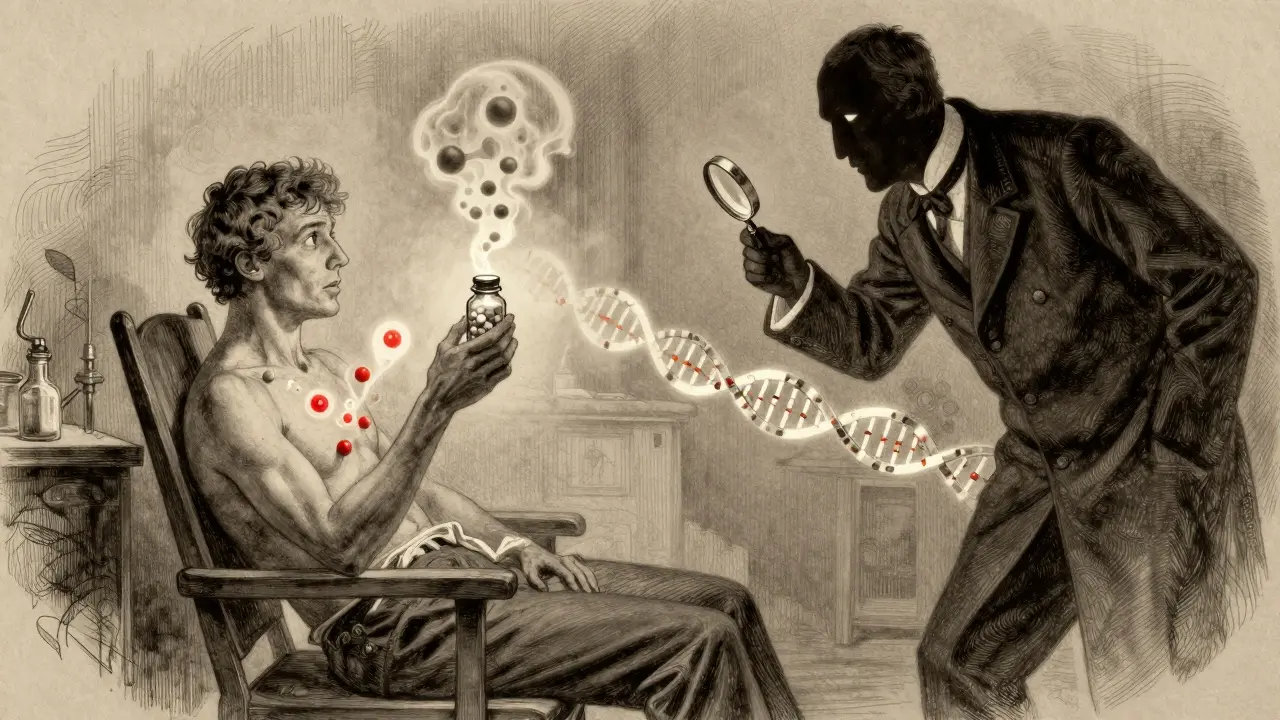
Most people expect side effects from medications - nausea, dizziness, maybe a rash. But what if your body reacts to a drug in a way no one predicted? Not because you took too much, not because the drug is poorly made, but because your body, for reasons no one fully understands, sees it as a threat? That’s an idiosyncratic drug reaction - a rare, unpredictable, and sometimes deadly response that catches doctors off guard and can turn a routine prescription into a medical emergency.
What Makes a Drug Reaction ‘Idiosyncratic’?
Not all bad reactions to drugs are the same. About 80 to 85% of adverse drug reactions are predictable. These are called Type A reactions. They happen because the drug’s known effect is just too strong - like taking too much blood pressure medicine and dropping your pressure too low. These are dose-dependent, common, and usually not surprising.
Idiosyncratic drug reactions (IDRs), or Type B reactions, are the opposite. They’re rare - affecting maybe 1 in 10,000 to 1 in 100,000 people. They’re not tied to the dose. You could take the standard amount, and your body might go into overdrive. Someone else takes the same pill, same dose, same day - and feels fine. The difference? Your biology.
These reactions don’t show up in clinical trials. They’re too rare to be caught in studies with a few thousand participants. That’s why they often only become visible after a drug hits the market and thousands, even millions, of people start using it. Between 1950 and 2023, the FDA pulled 38 drugs off the market because of these unpredictable reactions. Drugs like troglitazone (for diabetes) and bromfenac (a painkiller) were taken off because they caused sudden, fatal liver damage in a tiny fraction of users.
When and How Do These Reactions Show Up?
One of the most confusing things about IDRs is the delay. You don’t get sick the day you start the drug. It usually takes 1 to 8 weeks. That’s why patients and even doctors often miss the connection. You might think your fever and rash are from a virus, your fatigue from stress, your yellow skin from a bad diet.
The most common type of IDR is idiosyncratic drug-induced liver injury (IDILI). It makes up nearly half of all severe drug-related liver damage. It can look like hepatitis - fatigue, nausea, dark urine, jaundice. In about 60-65% of cases, it’s hepatocellular, meaning liver cells are being destroyed. In 30-35%, it’s cholestatic - bile flow is blocked. Rarely, it’s a mix.
Another major category is severe cutaneous adverse reactions (SCARs). These include:
- Stevens-Johnson syndrome (SJS)
- Toxic epidermal necrolysis (TEN)
- Drug reaction with eosinophilia and systemic symptoms (DRESS)
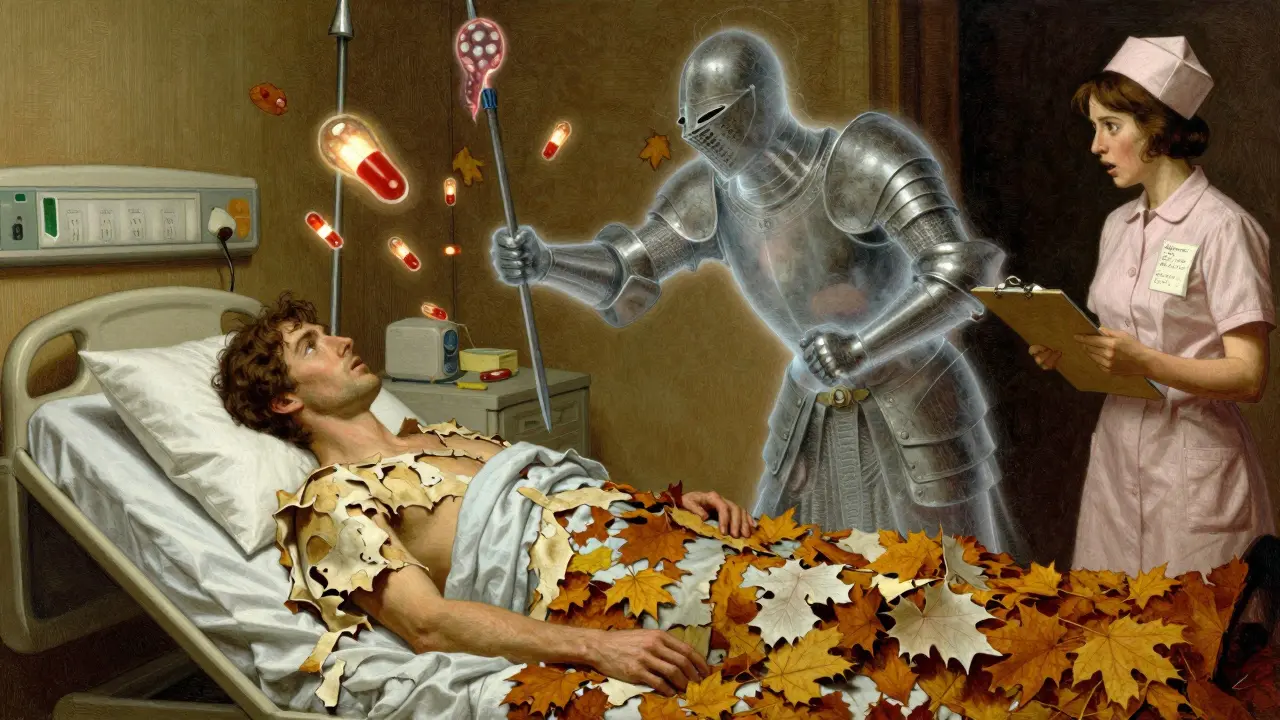
These aren’t just rashes. TEN can cause your skin to peel off in sheets. DRESS can trigger organ failure - liver, kidneys, lungs - along with fever and swollen lymph nodes. Mortality for TEN can be as high as 35%. For severe IDILI, it’s 5-10%.
Why Do Only Some People React?
Here’s where things get personal. It’s not random. It’s biology. Your genes matter. Your immune system’s history matters. Even your gut bacteria might play a role.
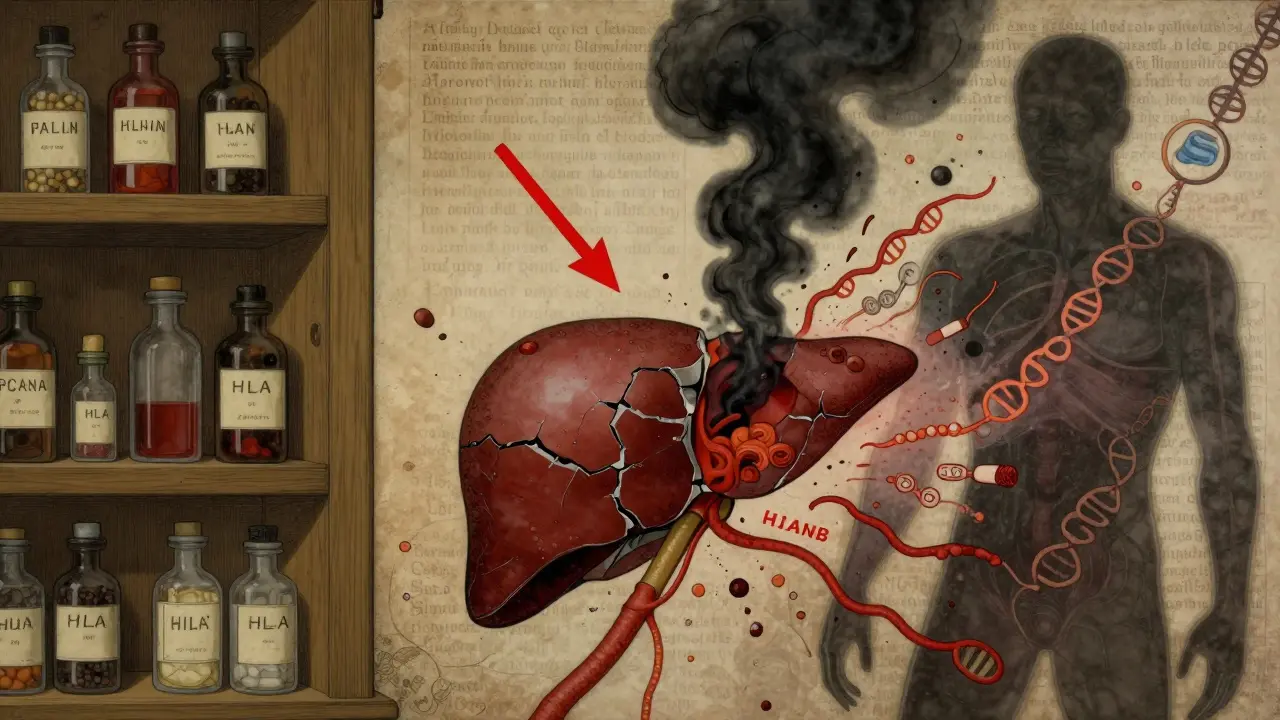
The leading theory is the hapten hypothesis. Some drugs get broken down in the liver into reactive fragments. These fragments stick to your body’s own proteins - like glue. Suddenly, your immune system sees a protein it’s never seen before. It thinks it’s an invader. It attacks. That’s when the damage starts.
Some people have genetic markers that make this more likely. The most famous example is HLA-B*57:01. If you carry this gene and take abacavir (an HIV drug), you have a very high risk of a severe allergic reaction. Testing for this gene before prescribing abacavir is now standard. It’s one of the few times we can predict an IDR - and it’s saved lives.
Another is HLA-B*15:02. People of Southeast Asian descent with this gene are at high risk of SJS or TEN if they take carbamazepine (used for seizures and nerve pain). Testing for this gene is recommended before prescribing carbamazepine in those populations.
But here’s the hard truth: for over 90% of drugs that cause IDRs, we don’t have a genetic test. We can’t screen. We can’t predict. We only know after the fact.
How Do Doctors Diagnose These Reactions?
Diagnosing an IDR is like solving a mystery with missing clues. There’s no single blood test. No scan. No quick answer.
Doctors use tools like the RUCAM scale for liver injury. It looks at timing, dose, other causes, and whether symptoms improved after stopping the drug (called a dechallenge). A score above 8 means the drug is ‘highly probable’ as the cause.
For skin reactions, the ALDEN score helps. It weighs the drug’s association with SJS/TEN, timing, and other factors.
Rechallenge - giving the drug back to see if the reaction returns - is the gold standard. But it’s rarely done. Why? Because it’s dangerous. If you had TEN once, giving you the drug again could kill you.
Some labs offer lymphocyte transformation tests - checking if your immune cells react to the drug in a dish. But these aren’t widely available, and they’re only about 60-70% accurate.
Most of the time, diagnosis comes down to elimination: no other cause fits, symptoms appeared after starting the drug, and they improved after stopping it.
What Happens When You’re Diagnosed?
Step one: stop the drug. Immediately. No exceptions.
Step two: supportive care. For liver injury, that might mean IV fluids, monitoring liver enzymes, and sometimes steroids. For DRESS or SJS, you’re often admitted to a burn unit or intensive care. Skin care, infection prevention, fluid balance - it’s complex.
Some patients recover fully. Others don’t. About 28% of people with severe IDILI develop chronic liver problems. DRESS can leave lasting damage to organs. And the emotional toll? Huge. Patients report being dismissed by doctors, misdiagnosed for weeks, and feeling like they’re alone in a system that didn’t see it coming.
One patient on a support forum described it: ‘I had a fever, rash, and couldn’t breathe. My doctor thought it was the flu. It took a week before my HIV specialist said, ‘Did you start abacavir?’ That’s when everything clicked.’
Why Is This Such a Big Problem for Drug Companies?
IDRs cost the pharmaceutical industry billions. The Tufts Center estimates $12.4 billion a year - from failed drugs, lawsuits, recalls, and lost sales. A drug can pass all clinical trials, get approved, sell for years - and then, out of nowhere, a few people die. The company has to pull it. The public loses trust. The stock drops.
That’s why companies now screen for reactive metabolites in early development. Back in 2005, only 35% of drug makers did this. Today, it’s 92%. Pfizer, for example, won’t let a drug move forward if its reactive metabolites exceed 50 pmol/mg of protein.
Regulators are catching up too. The FDA now requires detailed metabolite studies for drugs with high systemic exposure. The EMA requires immune monitoring for new cancer drugs called kinase inhibitors. And the NIH just invested $47.5 million into a new network to study how these reactions happen at the molecular level.
AI tools are being built to predict risk. Companies like ArisGlobal and Oracle Health Sciences are training algorithms on millions of patient records. But so far, none have reached 70% accuracy. We’re not there yet.
What’s Next?
The future is in precision. We’re moving toward a time where your genetic profile, immune history, and even your microbiome will help determine which drugs are safe for you.
The FDA is launching a new IDR Biomarker Qualification Program in 2024. The European Commission’s ADRomics project is using multi-omics - genomics, proteomics, metabolomics - to find hidden patterns. Early results are promising. In 2023, researchers found 17 new gene-drug links, including one for phenytoin and SJS.
But experts warn: we’ll never eliminate IDRs completely. The human immune system is too complex. Too variable. Too personal.
What we can do is reduce them. Better screening. Faster diagnosis. More awareness. And for patients - knowing that if you develop a strange, persistent reaction weeks after starting a new drug, it might not be ‘just a virus.’ It might be your body fighting back. And that’s when you need to act.
What Should You Do?
- If you start a new medication and develop a rash, fever, yellow skin, or unusual fatigue after 1-8 weeks - don’t ignore it. Talk to your doctor. Mention the drug.
- Keep a list of all your medications, including doses and start dates. This helps doctors connect the dots.
- If you’ve had an IDR once, never take that drug again - even if you were told it was ‘just a reaction.’ The risk of recurrence is high, and the second time can be worse.
- Ask if genetic testing is available for your medication. It’s standard for abacavir, carbamazepine, and a few others. It might be for others soon.
- Report side effects to the FDA’s MedWatch program. Your report could help prevent another person’s tragedy.
Idiosyncratic reactions are rare. But when they happen, they change lives. Understanding them isn’t just for doctors. It’s for anyone who takes medicine. Because sometimes, the most dangerous side effect isn’t the one you’re warned about - it’s the one no one saw coming.
What is the difference between idiosyncratic and predictable drug reactions?
Predictable reactions (Type A) happen because of a drug’s known effects - like too much blood pressure medicine causing low pressure. They’re dose-dependent and common. Idiosyncratic reactions (Type B) are rare, unpredictable, and not tied to dose. They occur in certain people due to unique biological factors like genetics or immune response, and they’re often severe.
Can you test for idiosyncratic drug reactions before taking a drug?
Only for a few drugs. For abacavir (HIV treatment), testing for the HLA-B*57:01 gene is standard and prevents severe reactions. For carbamazepine (used for seizures), HLA-B*15:02 testing is recommended in Southeast Asian populations. For almost all other drugs, no reliable pre-treatment test exists.
How long after starting a drug can an idiosyncratic reaction occur?
Most idiosyncratic reactions appear 1 to 8 weeks after starting the drug. This delay is why they’re often mistaken for infections or other illnesses. The immune system needs time to react to the drug metabolites that trigger the response.
Are idiosyncratic reactions always serious?
Not always. Some cause mild rashes or temporary liver enzyme changes that resolve on their own. But the most dangerous ones - like drug-induced liver injury, Stevens-Johnson syndrome, or DRESS - can be life-threatening. About 30-40% of drugs pulled from the market were withdrawn because of these severe reactions.
What should I do if I think I’m having an idiosyncratic reaction?
Stop taking the drug immediately and contact your doctor. Don’t wait to see if it gets better. Bring your medication list and note when symptoms started. Early recognition is critical - delays in diagnosis can lead to organ failure or death. Report the reaction to the FDA’s MedWatch system to help others.
Can you get an idiosyncratic reaction again if you take the same drug?
Yes. If you’ve had one, the risk of a second reaction is very high - and often more severe. Once you’ve had an idiosyncratic reaction to a drug, you should avoid it for life. Re-exposure can trigger a faster, stronger, and potentially fatal response.
Janette Martens
December 30, 2025 AT 02:21also why is everyone so calm about this? we’re literally playing russian roulette with prescriptions.
Marie-Pierre Gonzalez
December 30, 2025 AT 09:43As a healthcare advocate, I implore all individuals to maintain meticulous medication logs and to report even the most subtle of post-prescription anomalies to MedWatch. Your vigilance may save a life.
🙏
Louis Paré
December 31, 2025 AT 23:01They run trials on 5,000 people, miss the 1 in 100k reaction, then act shocked when someone dies. Meanwhile, they’re already developing the next drug with the same damn metabolites.
It’s not biology’s fault. It’s corporate negligence dressed up as science.
Celia McTighe
January 1, 2026 AT 13:59Now I carry a medical alert card. I tell every doctor I meet. I don’t care if they roll their eyes. I’ve seen what happens when you’re ignored.
❤️ if this saved one person’s life, it was worth typing.
Ryan Touhill
January 3, 2026 AT 02:54Did you know the FDA approved over 1,200 new drugs in the last decade? And yet, we still have zero reliable way to predict which one will turn your immune system into a war criminal?
Meanwhile, the Chinese government is using AI to map immune responses across 200 million people. We’re still relying on doctors guessing based on ‘timing.’
It’s not a medical crisis. It’s a failure of will.
Teresa Marzo Lostalé
January 3, 2026 AT 14:46It’s humbling. And kind of beautiful, in a terrifying way. Our bodies are these wild, ancient machines - we think we understand them, but we’re still just poking them with sticks and hoping for the best.
Maybe the real drug is trust. And we’re running out.
ANA MARIE VALENZUELA
January 4, 2026 AT 20:23Every time a drug gets fast-tracked because it’s ‘for cancer’ or ‘for depression,’ they skip the long-term immune studies.
And then when people die, they say ‘it’s rare.’ Rare doesn’t mean harmless. It means someone’s kid, someone’s mom, someone’s brother - gone.
Stop romanticizing biology. This is corporate murder with a white coat.
Bradly Draper
January 4, 2026 AT 23:09Just listen to your body. It knows.
Gran Badshah
January 5, 2026 AT 02:32no one checks genes here. no one cares.
we just hope we dont die.
Ellen-Cathryn Nash
January 5, 2026 AT 03:56Maybe it’s not just genetics. Maybe it’s grief. Maybe it’s stress. Maybe your body is screaming, ‘I’ve had enough.’
And we’re treating it like a software bug.
Samantha Hobbs
January 6, 2026 AT 12:56also i took ibuprofen once and got a rash. i didn’t tell anyone. i just stopped taking it. why is this such a big deal?
Nicole Beasley
January 7, 2026 AT 09:56Wait. No. I haven’t. I’ve never been on HIV meds.
So... am I just a walking time bomb? Or did I inherit this from my dad?
Need to talk to my doctor. This is wild.
sonam gupta
January 9, 2026 AT 02:44Julius Hader
January 10, 2026 AT 07:13Why do we rely so heavily on synthetic molecules to fix complex biological systems?
Maybe the real solution isn’t better testing - it’s less intervention. Less pills. More sleep. More food. More connection.
Just a thought.