

Immunocompromised Infection Risk Checker
Identify Your Infection Risk
This tool helps you assess potential infection risks based on your current medications and symptoms. Remember: for immunocompromised patients, infections often present with atypical signs.
When your immune system is weakened-whether from disease, transplant, or long-term medication-you don’t just get sick more often. You get sicker. And sometimes, the very drugs meant to help you can turn dangerous. For immunocompromised patients, medication reactions aren’t just side effects. They’re life-altering events that demand careful planning, constant monitoring, and a deep understanding of hidden risks.
What Does It Mean to Be Immunocompromised?
Being immunocompromised means your body’s defense system isn’t working like it should. You might not fight off colds the way others do. A simple flu could land you in the hospital. A minor cut might become infected. This isn’t about being "weak"-it’s about biology. Your immune system is either damaged by illness (like HIV, leukemia, or lupus) or intentionally suppressed by medication (like after a kidney transplant or for rheumatoid arthritis). The most common causes today are autoimmune diseases and transplant treatments. Around 24 million Americans-nearly 7.6% of the population-have an autoimmune condition that often requires immunosuppressants. These drugs stop your immune system from attacking your own body. But in doing so, they also leave you exposed to threats you’d normally shrug off.How Immunosuppressants Work-and Why They’re Risky
Not all immunosuppressants are the same. Each class works differently, and each carries its own set of dangers. Corticosteroids like prednisone are among the most widely used. They reduce inflammation by calming immune cells. But at doses higher than 20mg per day-or when taken for more than two weeks-they significantly weaken your defenses. A 2012 study of over 4,000 patients showed corticosteroid users had a 60% higher chance of developing serious infections than those not taking them. And here’s the tricky part: these drugs can hide the signs of infection. You might not run a fever. You might not feel achy. That’s because steroids suppress the very symptoms doctors rely on to spot trouble. Conventional DMARDs like methotrexate and leflunomide are often first-line treatments for arthritis. Methotrexate helps about 70% of patients control their disease. But nearly half of them stop taking it within a year because of side effects: nausea, fatigue, mouth sores, liver stress. Monthly blood tests are required to catch liver or bone marrow damage early. Leflunomide carries similar risks, with about 1 in 7 patients experiencing hair loss or severe nausea. Azathioprine cuts down on the number of key immune cells-T and B lymphocytes. That’s good for preventing organ rejection. But it also opens the door to rare but deadly infections like Pneumocystis pneumonia, JC virus (which can cause PML, a brain-damaging condition), and reactivated hepatitis B. Leukopenia (low white blood cell count) is the biggest red flag. If your counts drop, your infection risk skyrockets. Biologics like Humira, Enbrel, and Remicade target specific parts of the immune system. They’re powerful. They work well. But they also carry the highest infection risk of any class. Studies show they’re significantly more likely to cause serious infections than older drugs like methotrexate. Patients on these drugs report cases of herpes zoster (shingles), tuberculosis reactivation, and fungal lung infections. One Reddit user in an autoimmune support group shared how a simple skin rash turned into a hospital stay after starting a TNF inhibitor. Calcineurin inhibitors like cyclosporine and tacrolimus are common after transplants. They’re effective but come with a high risk of viral complications-Epstein-Barr, cytomegalovirus, and polyomavirus. These viruses usually stay quiet in healthy people. In immunocompromised patients, they can explode.The Hidden Danger: Atypical Infections
In healthy people, infections show up with clear signs: fever, chills, redness, swelling. In immunocompromised patients? Not so much. A 2005 study by Dr. Francisco Aberra and Dr. David Lichtenstein found that corticosteroids blunt the body’s natural alarm signals. Someone with pneumonia might have no fever. Someone with a urinary tract infection might just feel tired. That’s why many patients don’t realize they’re sick until it’s too late. That’s also why doctors stress vigilance. A small cut that won’t heal. A persistent cough. Unexplained fatigue. A rash that doesn’t go away. These aren’t just annoyances-they’re warning signs.Combining Drugs = Higher Risk
Taking more than one immunosuppressant multiplies the danger. A steroid plus methotrexate? Higher infection risk. A biologic plus azathioprine? Even higher. The risk isn’t just added-it’s compounded. One patient in a transplant forum described how switching from a single drug to a triple regimen after her liver transplant led to three hospitalizations in 18 months. Each time, it was a different infection: CMV, then a fungal sinus infection, then a bacterial pneumonia. She said her doctors didn’t warn her how quickly things could spiral.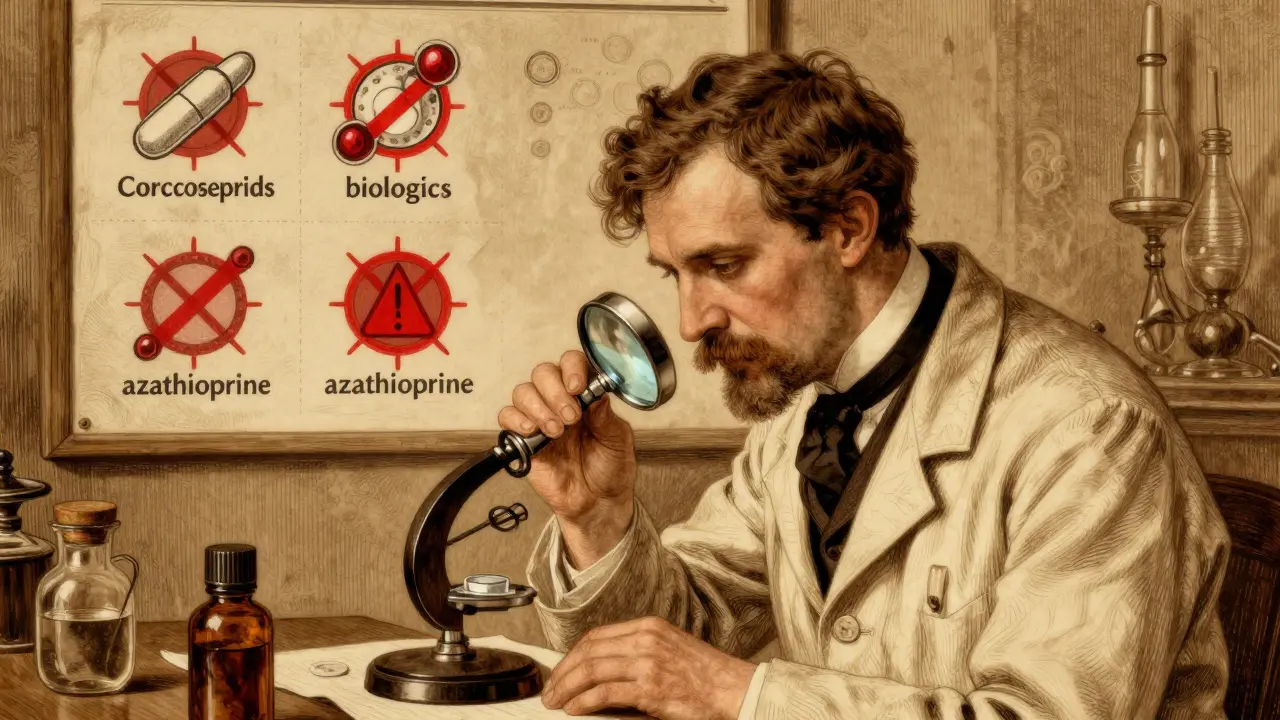
Vaccines: A Double-Edged Sword
Vaccines are essential-but timing matters. You should get them before starting immunosuppressants, if possible. Once you’re on them, your body may not respond well. The flu shot? Safe. The nasal spray flu vaccine? Absolutely not-it contains live virus and can cause illness. The CDC recommends pneumococcal, hepatitis B, and tetanus shots for most immunocompromised patients. But vaccines like MMR, varicella, and shingles (Zostavax) are off-limits because they’re live vaccines. Even the newer Shingrix vaccine, while non-live, may not work as well if your immune system is too suppressed. And here’s something many don’t realize: immunocompromised patients are at higher risk from mosquito- and tick-borne diseases like West Nile, Lyme, and Zika. A bite that wouldn’t bother most people can lead to severe neurological damage in someone on immunosuppressants.COVID-19 and the Surprising Twist
Early in the pandemic, everyone assumed immunocompromised people would fare worst. But a 2021 Johns Hopkins study found something unexpected: patients on immunosuppressants didn’t have worse COVID-19 outcomes than those not on them. Some even had milder cases. Why? Researchers think suppressing the immune system might have prevented the dangerous "cytokine storm"-an overreaction that kills more people than the virus itself. This doesn’t mean immunosuppressants are safe during infection. It means the story is more complex than we thought. Each patient’s risk must be assessed individually.What You Can Do: Practical Steps
If you’re immunocompromised, here’s what actually helps:- Wash your hands for at least 20 seconds-don’t skip your nails or between fingers. Use hand sanitizer when soap isn’t available.
- Wear a mask in crowded places, especially during flu season or outbreaks.
- Keep wounds clean and covered. Even a small blister can become infected.
- Get blood tests regularly. CBC, liver, and kidney function tests are non-negotiable if you’re on methotrexate, azathioprine, or similar drugs.
- Know your symptoms. If you feel off-really off-don’t wait. Call your doctor immediately. Don’t assume it’s just fatigue from the meds.
- Discuss vaccines with your specialist before starting any new treatment.
- Avoid raw foods. Undercooked meat, unpasteurized cheese, and raw sprouts can carry dangerous bacteria like Listeria.
The Emotional Weight
It’s not just physical. Living with this reality is exhausting. One patient described it as "walking through life with a target on your back." You cancel plans because you’re afraid of germs. You feel guilty when you get sick, even though it’s not your fault. You watch your friends live normally while you count every sneeze. But there’s hope. Many patients report life-changing improvements. One kidney transplant recipient on Reddit called tacrolimus "life-changing," even with the constant monitoring. Another said methotrexate let her play with her grandchildren again after years of pain. The key is balance. The goal isn’t to avoid all risk-it’s to manage it. To know the signs. To ask questions. To partner with your care team.What’s Next for Treatment?
Doctors are moving toward more targeted therapies. JAK inhibitors like Xeljanz offer more precision than broad immune suppression. Researchers are exploring pharmacogenomics-using your genes to predict how you’ll respond to a drug. The hope is to find the lowest effective dose for each person, reducing side effects without losing protection. But the biggest threat looming over all of this? Antibiotic resistance. The World Health Organization warns that by 2050, drug-resistant infections could kill 10 million people a year. Immunocompromised patients will be hit hardest. If common antibiotics stop working, even minor infections could become untreatable.Final Thought: You’re Not Alone
Immunocompromised patients face unique challenges. But you’re not invisible. There are protocols, resources, and communities built to support you. The most powerful tool you have? Knowledge. Know your meds. Know your risks. Know your body. And don’t be afraid to speak up-if something feels wrong, it probably is.Can immunosuppressants cause cancer?
Yes, long-term use of some immunosuppressants increases cancer risk, especially skin cancer and lymphoma. This is why regular skin checks and avoiding excessive sun exposure are critical. The FDA requires black box warnings on many of these drugs for this reason. The risk is higher with prolonged use, especially in transplant patients on multiple drugs.
Is it safe to travel if I’m immunocompromised?
Travel is possible but requires planning. Avoid areas with poor sanitation or outbreaks of diseases like dengue or cholera. Get travel-specific vaccines before starting immunosuppressants. Carry a letter from your doctor listing your medications and condition. Always have access to clean water and avoid street food. Consider travel insurance that covers medical evacuation.
What should I do if I develop a fever while on immunosuppressants?
Call your doctor immediately-even if the fever is low-grade. Do not wait. Fever in an immunocompromised person is a medical emergency. You may need urgent blood tests, imaging, or antibiotics. Never take over-the-counter fever reducers without checking with your provider first-they can mask symptoms and delay diagnosis.
Can I still get the flu shot if I’m on immunosuppressants?
Yes, the inactivated flu shot is safe and recommended. Avoid the nasal spray version-it contains live virus and can cause infection. Even though your immune response may be weaker, the shot still offers some protection and reduces the chance of severe illness.
How often should I get blood tests while on methotrexate?
Monthly blood tests are standard during the first 6 months of treatment, then every 8-12 weeks if stable. These tests check your white blood cell count, liver enzymes, and kidney function. Skipping them can lead to undetected liver damage or bone marrow suppression, which can be life-threatening.
Are there natural ways to boost immunity while on immunosuppressants?
No. There are no supplements, diets, or herbs proven to safely boost immunity while you’re on immunosuppressants. Some-like echinacea, garlic, or high-dose vitamin C-can interfere with your meds or trigger rejection in transplant patients. Focus on proven strategies: handwashing, vaccines, avoiding crowds, and following your doctor’s monitoring plan.
Dave Alponvyr
December 15, 2025 AT 21:17So let me get this straight - taking a pill to stop my body from attacking itself also makes me a walking target for every germ in the world? Cool. Thanks, medicine.
Also, no nasal spray flu shot? That’s the only one that doesn’t make me feel like I got hit by a truck. Guess I’m just out of luck.
Kim Hines
December 16, 2025 AT 03:55I’ve been on methotrexate for three years. Monthly blood tests are my new weekly ritual. I don’t even flinch anymore when the phlebotomist walks in.
Still, I cry every time I have to cancel plans because I’m too tired to leave the house. Not because I’m weak. Just because my body’s been reprogrammed.
Cassandra Collins
December 16, 2025 AT 09:16EVERYONE KNOWS immunosuppressants are just a front for Big Pharma to sell more antibiotics and hospital stays. They don’t want you healthy - they want you dependent. Look at the stats: 7.6% of Americans? That’s not an epidemic, that’s a manufactured crisis.
And why are they banning natural immunity boosters? Because garlic and turmeric don’t have patents. Wake up.
Also, I heard the CDC is secretly using your blood tests to track your movements. That’s why they need monthly CBCs. They’re building a database. I’m not paranoid - I’m prepared.
Billy Poling
December 16, 2025 AT 09:45It is imperative to underscore the clinical significance of pharmacodynamic interactions among immunosuppressive regimens, particularly in the context of polypharmacy. The compounding effect of corticosteroids in tandem with calcineurin inhibitors, for instance, has been empirically demonstrated to elevate the incidence of opportunistic fungal infections by as much as 300% in transplant cohorts, per the 2018 JAMA Internal Medicine meta-analysis.
Furthermore, the underreporting of atypical presentations of infection - particularly in elderly populations - constitutes a critical gap in clinical vigilance. Physicians must be educated to recognize subtle biomarkers such as leukopenia without fever, or fatigue without localized inflammation, as early indicators of systemic compromise. Delayed intervention remains the leading cause of preventable mortality in this cohort.
Andrew Sychev
December 18, 2025 AT 00:21My cousin died from a fungal infection after her transplant. They told her it was "just a rash."
She was 29.
Now I see people on Reddit saying "just wash your hands" like that’s gonna fix a system designed to break you. You think your flu shot is gonna save you? It’s not about hand sanitizer. It’s about the fact that your body is being turned into a petri dish for Big Pharma’s profit.
I’m not mad. I’m just disappointed.
And I’m not alone.
Dylan Smith
December 19, 2025 AT 10:59So if I’m on azathioprine and I get a cut that won’t heal, I should just call my doctor immediately even if I feel fine? What if I’m in a rural area and my doctor doesn’t answer for three days? Who do I call then? And why is no one talking about how insurance denies the tests they say are "non-negotiable"?
I’ve been waiting 8 months for a specialist appointment and my white count dropped 30% last month. My PCP said "just keep taking the meds". Like that’s helpful.
Also, I read somewhere that the FDA doesn’t require long-term cancer tracking for biologics. Is that true? Because if it is, that’s insane.
Mike Smith
December 20, 2025 AT 23:44First off - you are not alone. I’ve been on tacrolimus for 12 years post-kidney transplant. There are days I feel like a ghost in my own life. But here’s what I’ve learned: the more you know, the more power you have.
Wear your mask. Get your vaccines. Track your labs. Ask your pharmacist about drug interactions. Keep a symptom journal. You don’t have to be scared - you just have to be smart.
And if someone tells you to "just be positive"? That’s not support. That’s dismissal. You deserve better than that.
Keep going. You’re stronger than you think.
Arun ana
December 22, 2025 AT 21:36India has one of the highest rates of autoimmune disease now - but almost no access to regular blood tests or biologics. Most people here just stop taking meds because they cost more than a month’s rent.
I’m lucky - my brother works in a hospital and gets me the pills. But I know so many who just… disappear. No one talks about this outside the US.
Also, I use hand sanitizer like it’s oxygen. Even at temple. People stare. I don’t care. I’ve seen what happens when you get sick here. No ICU. No antibiotics. Just prayers.
Thank you for writing this. It’s the first time I’ve seen our struggle named.
Ron Williams
December 24, 2025 AT 15:19As someone who’s lived in 7 countries and managed lupus through it all - I’ve learned this: the rules change, but the fear doesn’t.
In Japan, they give you a personal health coach. In Brazil, you rely on community networks. In the US, you fight insurance. But no matter where you are, the silence around this is the same.
One thing I always tell new patients: your body isn’t broken. It’s just working differently. And that’s okay.
Don’t let anyone make you feel less because you need help. You’re not a burden. You’re a warrior.
And if you’re reading this? You’re already doing better than you think.