
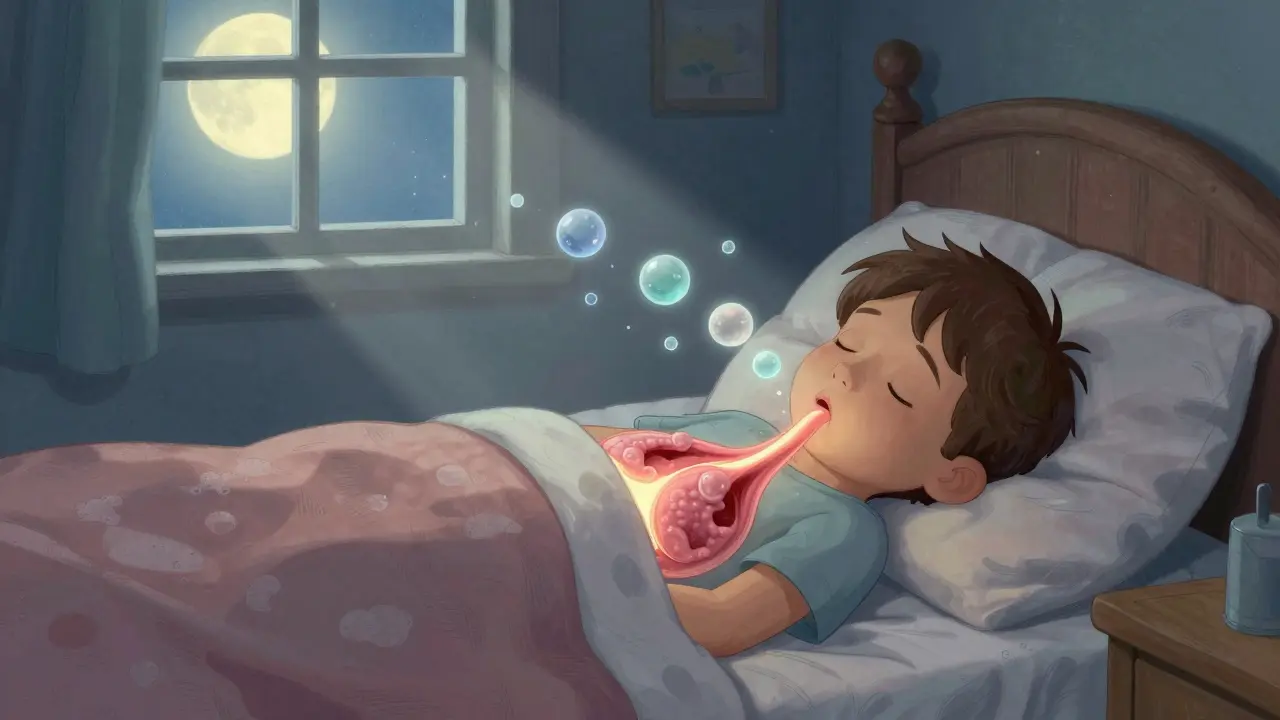

When a child snores loudly every night, stops breathing for a few seconds, or wakes up gasping for air, it’s not just noisy sleep-it’s a red flag. Pediatric obstructive sleep apnea (OSA) affects 1 to 5% of children, with the highest rates between ages 2 and 6. At this age, their tonsils and adenoids are naturally large compared to their small airways, and when they swell, they can block breathing during sleep. Left untreated, this isn’t just about tired kids-it can lead to learning problems, behavioral issues, slowed growth, and even heart strain. The good news? We know exactly what causes it, and we have clear, proven ways to fix it.
Why Tonsils and Adenoids Are the Main Culprits
Most cases of pediatric sleep apnea aren’t caused by obesity, allergies, or neurological issues-they’re caused by physical blockage. Enlarged tonsils and adenoids are responsible in 70 to 80% of cases. These are lymph tissues at the back of the throat and nose. When they grow too big, they crush the airway shut during sleep, especially when muscles relax. A child might snore, breathe through their mouth, or even pause breathing for 10 to 20 seconds at a time. Some kids wake up dozens of times a night without fully realizing it.
Doctors don’t just guess-there’s a test. A sleep study, called polysomnography, monitors brain waves, heart rhythm, oxygen levels, airflow, and chest movement. It shows exactly how many times breathing stops or slows. In severe cases, a child might have 15 to 30 interruptions per hour. That’s like being woken up every 2 to 3 minutes all night long.
What’s surprising is that even if only one tissue looks big, both tonsils and adenoids usually need to be removed. Research from the University of Chicago shows that removing just one leaves a high chance of the problem coming back. Why? Because OSA isn’t just about size-it’s about how the whole airway collapses. Removing both opens up the space as much as possible.
Adenotonsillectomy: The First-Line Treatment
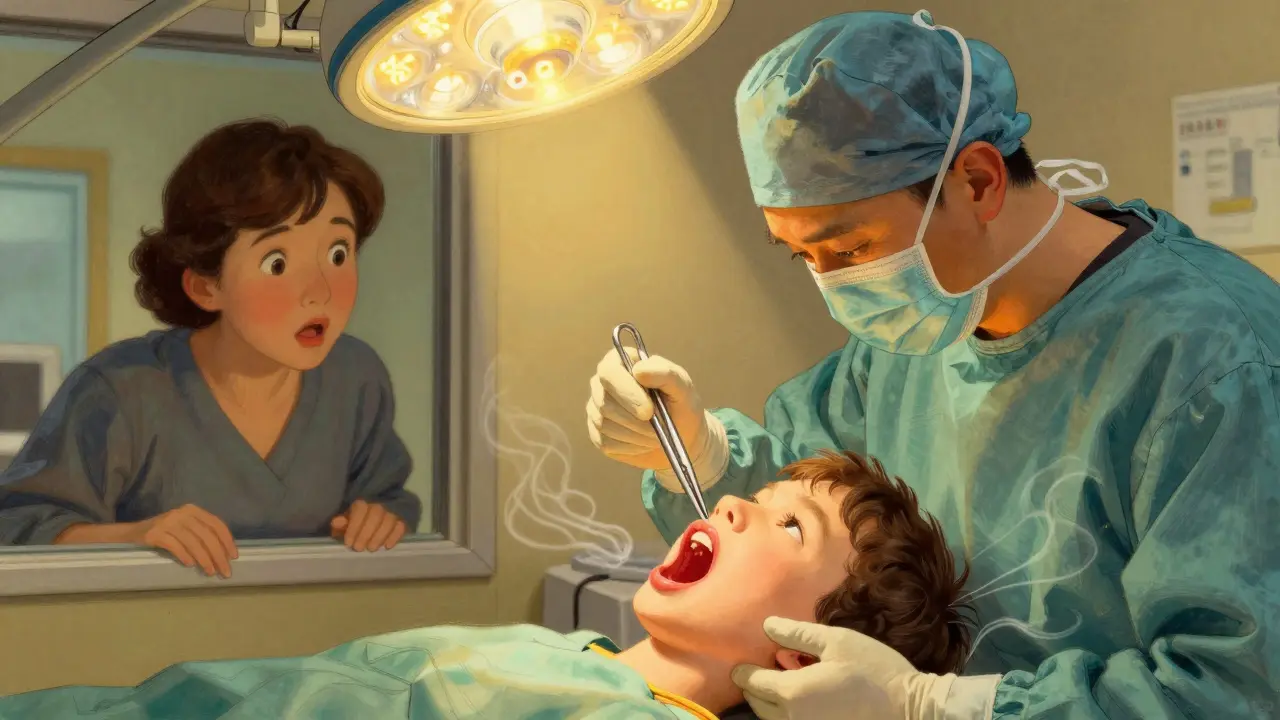
The American Academy of Pediatrics says the first step for most kids with moderate to severe OSA is surgery-removing both tonsils and adenoids. This is called adenotonsillectomy. It’s one of the most common pediatric surgeries in the U.S. and Australia, with over 85% of diagnosed children starting here.
The success rate? Between 70% and 80% for kids who are otherwise healthy and have no other conditions like obesity or craniofacial differences. For these children, the surgery often cures the problem overnight. Snoring stops. Breathing improves. Energy levels rise. School performance gets better.
But it’s not without risks. About 1 to 3% of children have bleeding after surgery, and 0.5 to 1% need intensive care for breathing problems. Recovery takes 7 to 14 days. Kids need soft foods, lots of fluids, and rest. Pain is common, but there’s a newer option: partial tonsillectomy. Instead of removing the whole tonsil, surgeons take out just the part blocking the airway. This reduces pain by 30 to 40% and cuts bleeding risk by half. It’s not offered everywhere yet, but places like Yale Medicine have been using it successfully for years.
Still, surgery doesn’t always work. In 17 to 73% of cases-depending on other health factors-the apnea comes back. Why? Maybe the child has obesity, a small jaw, or muscle weakness. Or maybe the adenoids regrew. That’s when doctors look at the next option: CPAP.
CPAP for Kids: How It Works and Why It’s Hard
Continuous Positive Airway Pressure (CPAP) delivers a steady stream of air through a mask to keep the airway open. It’s not new-it’s been used for adults for decades. But for kids, it’s trickier.
The machine doesn’t need to be strong. For children, pressure is usually between 5 and 12 cm H₂O, much lower than what adults need. The mask must fit perfectly-nasal pillows, nasal masks, or full-face masks. Kids grow fast, so masks need to be refitted every 6 to 12 months. A poorly fitting mask means leaks, noise, and frustration.
Here’s the hard truth: 30 to 50% of children don’t use CPAP regularly. Why? Masks feel weird. Kids feel claustrophobic. They hate the noise. Parents struggle to get them to wear it every night. Some kids take weeks-or even months-to adjust. Specialists at Children’s National Hospital say 40 to 60% need 2 to 8 weeks of gradual training before they’ll sleep through the night with the mask on.
But when it works? CPAP is highly effective-85 to 95% of apneas disappear. It’s the go-to for kids who can’t have surgery: those with neuromuscular diseases, severe obesity, or craniofacial syndromes. It’s also the next step if surgery didn’t fix everything. Mayo Clinic says CPAP is the best option when medicines or surgery fail. And for kids with complex sleep apnea after surgery, adjusting the pressure often solves the problem within 1 to 2 weeks.
When Surgery Isn’t Enough: Alternatives and Add-Ons
Not every child needs surgery or CPAP right away. For mild cases, doctors might try other options first.
Inhaled steroids like fluticasone (88 to 440 mcg daily) can shrink swollen tonsils and adenoids. They work slowly-3 to 6 months before you see results-but they’re safe and non-invasive. Studies show 30 to 50% improvement in mild OSA. They’re often used for kids with allergies or asthma too.
Montelukast, a daily pill used for asthma, blocks inflammation chemicals called leukotrienes that cause tissue swelling. In some kids, it reduces snoring and breathing pauses. It takes 3 to 6 months to work, but it’s a good bridge if surgery is delayed.
Rapid maxillary expansion is an orthodontic treatment. A device is placed in the mouth to slowly widen the upper jaw over 6 to 12 months. It helps kids with narrow palates-common in mouth-breathers. Success rates are 60 to 70%. It’s not a quick fix, but it can reduce the need for surgery later.
And then there’s the future: hypoglossal nerve stimulation. It’s a small device implanted in the chest that gently stimulates the tongue muscle during sleep to keep the airway open. The FDA approved it for limited pediatric use in 2022. It’s still rare, expensive, and only for severe cases that didn’t respond to anything else. But it’s a sign that treatment is evolving.
What Happens After Treatment?
Even after surgery or starting CPAP, follow-up is critical. The American Thoracic Society recommends a repeat sleep study 2 to 3 months after surgery to make sure the apnea is gone. Symptoms can return if new blockages form-like if adenoids regrow or if the child gains weight.
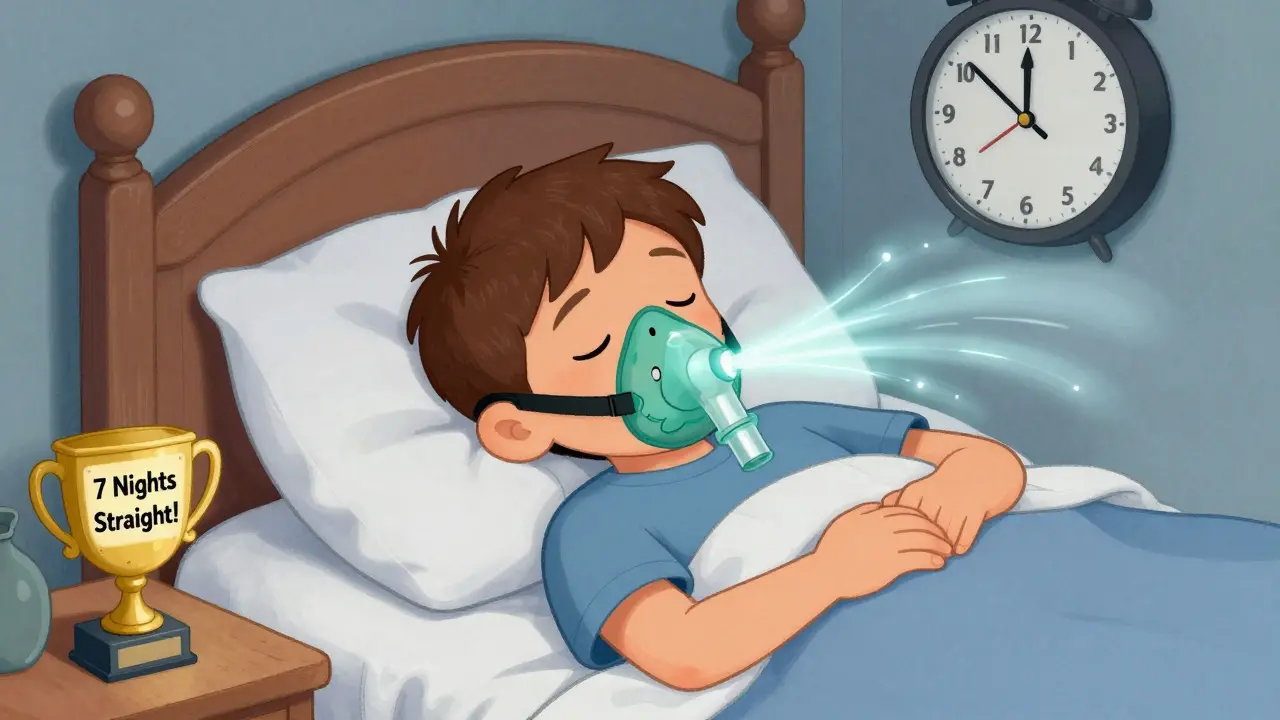
For CPAP users, the goal is consistency. It’s not just about the machine-it’s about routine. Put the mask on at the same time every night. Make it part of bedtime, like brushing teeth. Let your child pick the mask color or design. Celebrate small wins. A week of full use? That’s a victory.
Parents often worry about long-term effects. The good news? When treated, most children catch up developmentally. Their attention spans improve. They stop acting out. Their growth charts start climbing again. The brain, heart, and lungs begin to heal.
But untreated? That’s where the real danger lies. Chronic low oxygen and broken sleep can damage memory, learning, and emotional control. Some studies link untreated pediatric OSA to higher risks of ADHD, poor school performance, and even high blood pressure in adolescence.
What Should Parents Do Next?
If your child snores, breathes through their mouth, or seems exhausted during the day, talk to your pediatrician. Don’t wait. Ask about a sleep study. Ask if enlarged tonsils or adenoids could be the cause. Ask about surgery, CPAP, or steroid sprays.
There’s no one-size-fits-all. A 4-year-old with huge tonsils and no other issues? Surgery first. A 10-year-old with obesity and mild apnea? Try steroids and weight management. A child with Down syndrome or cerebral palsy? CPAP is likely the best long-term option.
The key is action-not waiting. Sleep apnea doesn’t go away on its own. But with the right treatment, most kids don’t just sleep better-they thrive.
Is surgery always necessary for pediatric sleep apnea?
No. Surgery is the first-line treatment for most healthy children with enlarged tonsils and adenoids, but it’s not the only option. For mild cases, doctors may start with nasal steroid sprays or montelukast. For children with obesity, neuromuscular conditions, or craniofacial abnormalities, CPAP is often preferred. Surgery is recommended when the airway blockage is clear and the child is otherwise healthy.
Can CPAP be used for toddlers?
Yes. CPAP is safe and effective for toddlers, even under age 2, if they have severe sleep apnea and aren’t candidates for surgery. Specialized pediatric masks are designed for small faces. The pressure settings are much lower than for adults-usually between 5 and 12 cm H₂O. Success depends on proper fitting and consistent use, which may take several weeks of gradual training.
How long does recovery take after adenotonsillectomy?
Full recovery usually takes 7 to 14 days. Children need soft foods, plenty of fluids, and rest. Pain peaks around days 3 to 5. With traditional surgery, kids may avoid eating for a few days. Partial tonsillectomy, which removes only the obstructing part, reduces recovery time by about 30% and lowers bleeding risk significantly. Most children return to school or daycare within 10 days.
Will my child outgrow sleep apnea without treatment?
Sometimes, but not reliably. While some mild cases may improve as the child grows, many do not. Untreated sleep apnea can lead to lasting problems like poor school performance, behavioral issues, slowed growth, and even heart strain. Waiting is risky. If your child has symptoms like loud snoring, breathing pauses, or daytime fatigue, it’s better to get it checked now.
What if CPAP doesn’t work for my child?
If CPAP isn’t working, the first step is to check the mask fit and pressure settings. Many issues are solved by adjusting the pressure or switching mask types. If the problem persists, doctors may consider other options: orthodontic expansion, additional surgery, or newer treatments like hypoglossal nerve stimulation. It’s rare for CPAP to be completely ineffective-usually, it’s a matter of finding the right setup.
Can allergies cause pediatric sleep apnea?
Allergies don’t directly cause sleep apnea, but they can make it worse. Allergic inflammation can swell tonsils and adenoids, making airway blockage more likely. Treating allergies with antihistamines or nasal steroids can reduce swelling and improve breathing. In many cases, managing allergies is part of the overall treatment plan, especially if the child also has asthma or eczema.
Children with sleep apnea aren’t just restless-they’re fighting for air every night. The good news? We have tools that work. Whether it’s a simple surgery, a quiet mask, or a daily spray, the right treatment can turn sleepless nights into restful ones-and tired kids into bright, alert, thriving children.
Oluwatosin Ayodele
December 25, 2025 AT 00:19Let me break this down for you - tonsillectomy isn't even the real solution. It's a band-aid. The real issue is modern diets flooding kids with inflammatory sugars and processed carbs that make adenoids swell like balloons. No one talks about this because Big Pharma doesn't profit from dietary advice. You think a kid with OSA needs surgery? Try removing high-fructose corn syrup from their life for 30 days and see what happens. I've seen it work. No surgery. No CPAP. Just real food.
Mussin Machhour
December 25, 2025 AT 23:56My niece had this exact issue at 4. Snored louder than my old fridge. We did the surgery - adenotonsillectomy - and holy crap, it was like a different kid. Went from zombie mode to running around like a maniac by day 5. No more night terrors, no more ADHD-like focus issues. Just pure energy. Honestly? If your kid snores like a chainsaw, don't wait. Do the thing.
Bailey Adkison
December 26, 2025 AT 03:22Stop calling it 'adenotonsillectomy' like it's some fancy procedure. It's tonsil and adenoid removal. Two words. Not a medical buzzword. And the claim that 70-80% of cases are caused by this? Where's your citation? The AAP doesn't say that. The American Academy of Otolaryngology does. You're conflating sources. Precision matters. Also CPAP pressure for kids isn't 'lower' - it's calibrated. There's a difference.
Gary Hartung
December 27, 2025 AT 08:30Oh wow, another feel-good medical article that ignores the elephant in the room - corporate greed. Who profits from 85% of kids getting surgery? Hospitals. Surgeons. Mask manufacturers. CPAP companies. And don't get me started on the $12,000 sleep studies that insurance barely covers. Meanwhile, the real solution - sleep hygiene, reducing screen time before bed, eliminating allergens - gets buried under jargon and surgical hype. This isn't medicine. It's a revenue stream disguised as science.
Carlos Narvaez
December 28, 2025 AT 12:45CPAP doesn't work because kids aren't adults. You can't just slap a mask on a 3-year-old and expect compliance. The real problem? No one trains parents how to do this right. It's not about the machine. It's about behavioral conditioning. And yet, pediatric sleep clinics treat it like a plug-and-play device. Pathetic.
Harbans Singh
December 29, 2025 AT 12:30This is such an important topic. In India, many parents still think snoring is normal for kids. I've seen children with severe OSA because families thought it was just 'growing pains.' The fact that steroid sprays and montelukast can help is huge - especially where surgery isn't accessible. We need more awareness here. Thanks for sharing the science. It helps.
Justin James
December 31, 2025 AT 02:06Did you know the CDC has quietly buried data showing that adenotonsillectomy rates spiked 300% after the 2012 AAP guidelines? Coincidence? Or is it tied to the same lobbying that pushed fluoride into water and vaccines into every child? The sleep study machines? Made by Philips. The CPAP masks? Made by ResMed. The tonsillectomy kits? Made by Medtronic. All publicly traded companies with shareholders. And suddenly every kid with a snore is a surgical candidate? I don't trust this. There's a profit motive here. Always is.
Rick Kimberly
December 31, 2025 AT 15:15While the clinical efficacy of adenotonsillectomy is well-documented, one must not overlook the importance of longitudinal follow-up. The recurrence rate, as cited, varies considerably based on comorbidities. Moreover, the psychological impact of mask adherence in pediatric populations remains underexplored in peer-reviewed literature. A multidisciplinary approach - encompassing ENT, pulmonology, and developmental psychology - is imperative for sustainable outcomes.
Katherine Blumhardt
December 31, 2025 AT 18:28OMG I just read this and my heart is breaking for all these kids 😭 I had no idea snoring could be this dangerous. My son snores a little and I thought it was cute?? Like a little piggy 😅 I'm calling the pediatrician tomorrow. This is life changing. Thank you for writing this. I'm sharing it with EVERY mom group I'm in 💪❤️
sagar patel
January 1, 2026 AT 09:58Montelukast is a joke. It's an asthma drug repurposed because pharma needed a new market. The studies show marginal benefit at best. And the side effects? Nightmares. Mood swings. Suicidal ideation in children. You're trading one risk for a worse one. Don't be fooled by the placebo effect of 'improved snoring.' The real issue is inflammation from processed food. Fix the diet first. Everything else is noise.
Michael Dillon
January 2, 2026 AT 23:22Okay but why are we still talking about CPAP like it's the future? The real innovation is hypoglossal nerve stimulation - and it's been approved for kids since 2022. But hospitals won't use it because it costs $50K and insurance won't cover it. So we keep forcing toddlers into masks that look like alien helmets. This isn't medicine. It's institutional inertia. We're treating symptoms because the system won't fund the cure.
Terry Free
January 3, 2026 AT 19:13Of course surgery is the answer. You don't treat a blocked pipe by giving it a vitamin. You clear the blockage. Tonsils and adenoids aren't optional accessories. They're obstructive tissue. If your kid's airway is clogged, you don't 'manage' it - you remove the clog. The fact that people still debate this shows how far we've drifted from basic anatomy. CPAP is for people who can't handle a 2-hour surgery. That's it.
Sophie Stallkind
January 4, 2026 AT 09:45The clinical implications of untreated pediatric obstructive sleep apnea are profound and extend beyond the immediate physiological manifestations. The neurocognitive sequelae, including deficits in executive function and memory consolidation, are well-documented in longitudinal cohort studies. Therefore, early intervention is not merely advisable - it is ethically imperative. The cost of inaction far exceeds the cost of intervention.
Linda B.
January 5, 2026 AT 02:53They say surgery is first-line. But what if the real cause is mold in the bedroom? Or electromagnetic interference from smart devices disrupting melatonin? No one measures that. Sleep studies only look at breathing - not environmental toxins. And CPAP masks? They're made with phthalates. I'd rather have my kid snore than inhale plastic fumes all night. This whole system is designed to keep you dependent. Wake up.