PPIs: What They Are, How They Work, and What You Need to Know
When you take a PPIs, proton pump inhibitors are drugs that block acid production in the stomach. Also known as proton pump inhibitors, they’re among the most prescribed medications in the U.S.—used for heartburn, ulcers, and GERD. But just because they’re available over the counter doesn’t mean they’re safe for long-term use without oversight.
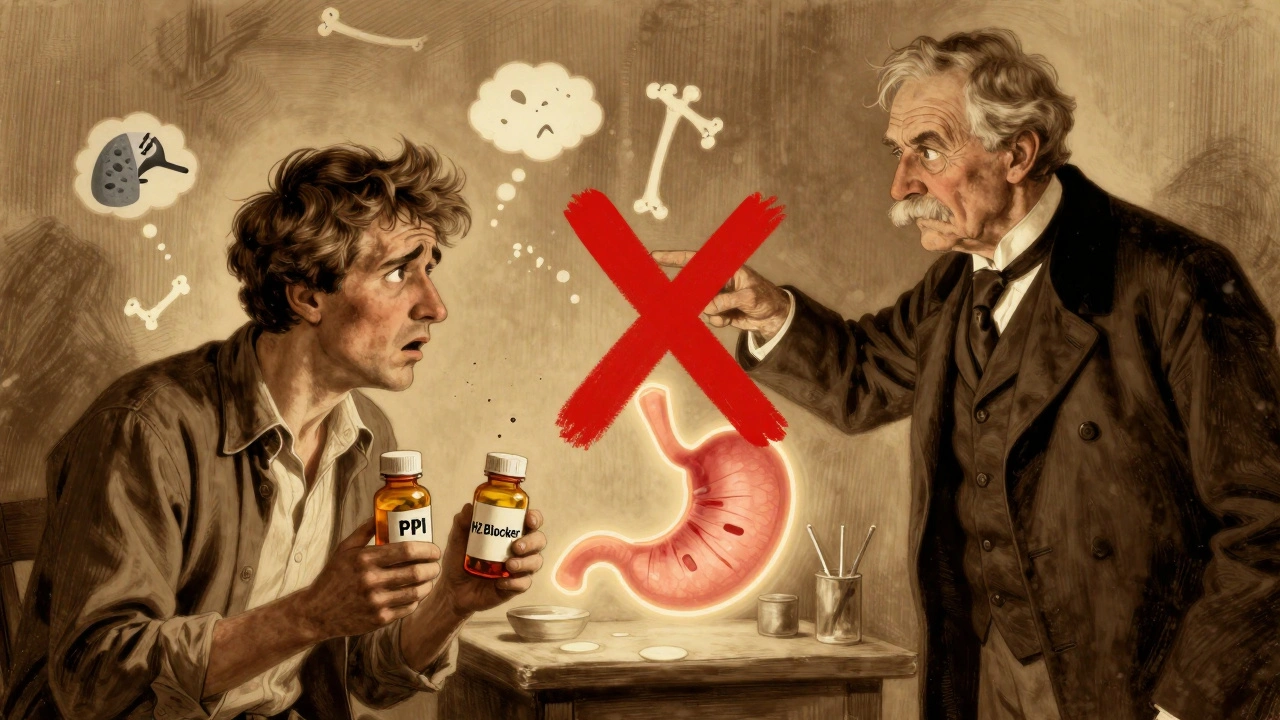
PPIs work by shutting down the acid pumps in your stomach lining. That sounds helpful, right? But your stomach needs acid to digest food, kill bacteria, and absorb nutrients like magnesium, calcium, and vitamin B12. Long-term use can lead to deficiencies, bone loss, and even an increased risk of infections like C. diff. And it’s not just about stomach issues—studies show a link between prolonged PPI use and kidney problems, dementia, and heart complications. The real danger? Many people stay on them for years without ever checking if they still need them.
Other medications you might be taking can interact badly with PPIs. For example, clopidogrel (a blood thinner) becomes less effective when taken with some PPIs. And if you’re on antibiotics or antifungals, your doctor should know you’re using one. Even something as simple as a daily aspirin can become riskier when combined with long-term acid suppression. The key isn’t to avoid PPIs entirely—it’s to use them only when necessary and for the shortest time possible.
There are alternatives. Lifestyle changes like losing weight, cutting out late-night meals, or avoiding spicy foods can reduce symptoms for many. H2 blockers like famotidine work differently and may be safer for occasional use. And if your reflux is caused by something else—like a hiatal hernia or low stomach acid—PPIs won’t fix the root problem. That’s why knowing your triggers matters more than just popping a pill.
Below, you’ll find real-world guides on how PPIs fit into broader medication risks—from drug interactions and side effects to how they relate to other conditions like kidney disease, dementia, and polypharmacy. These aren’t theoretical discussions. They’re based on what people actually experience, what clinicians see in practice, and what the data shows when you dig past the marketing.