

- 11
By now, you’ve probably heard that Tugain Solution - the topical minoxidil treatment - is one of the most common options for hair loss. But does it really work for you? And are there better, safer, or cheaper ways to get results without the side effects? If you’re sitting there wondering whether to stick with Tugain or try something else, you’re not alone. Thousands of people in Australia and beyond are asking the same question every day.
What is Tugain Solution, really?
Tugain Solution is a brand name for a 5% minoxidil solution, the same active ingredient found in Rogaine and many generic versions. It’s applied directly to the scalp once or twice daily. Minoxidil was originally developed as a blood pressure medication, but doctors noticed patients using it grew thicker hair - so they repurposed it for hair loss. It’s been on the market since the 1980s and is approved by the Therapeutic Goods Administration (TGA) in Australia.
Here’s how it works: minoxidil opens potassium channels in hair follicles, which may extend the growth phase of hair. It doesn’t fix the root cause - like genetics or hormones - but it tricks follicles into staying active longer. That’s why results take time. Most people don’t see anything until after 3-4 months, and full results can take up to a year.
But here’s the catch: you have to keep using it. Stop applying Tugain, and your hair will likely fall out again within a few months. That’s not a cure - it’s maintenance. And for some, it comes with side effects: scalp itching, flaking, unwanted facial hair, or even dizziness in rare cases.
Why people look for alternatives
People stop using Tugain for a few clear reasons:
- It doesn’t work for them - about 30-40% of users see minimal regrowth
- The application is messy - sticky, oily residue that stains pillows
- They hate the daily routine - forgetting doses leads to inconsistent results
- They’re worried about side effects or just don’t want chemicals on their scalp
That’s why alternatives exist. Not all are equally backed by science, but some have real data behind them. Let’s look at the ones that actually matter.
Finasteride: The oral option
If Tugain is a surface-level fix, finasteride goes deeper. It’s an oral tablet - usually 1mg daily - that blocks DHT, the hormone that shrinks hair follicles in genetically prone people. Unlike minoxidil, finasteride targets the main cause of male pattern baldness.
Studies show finasteride stops hair loss in 86% of men and leads to visible regrowth in 65%. It’s FDA-approved and widely prescribed in Australia under brand names like Propecia. But it’s not available over the counter - you need a prescription.
Some men worry about sexual side effects: lowered libido, erectile dysfunction. The risk is low - around 2-4% in clinical trials - and often reversible after stopping. Still, it’s something to discuss with a doctor before starting.
Many people combine finasteride with Tugain. A 2019 study in the Journal of the American Academy of Dermatology found that combo therapy led to significantly better results than either alone. If you’re serious about regrowth, this pairing is the gold standard.
Low-Level Laser Therapy (LLLT): Light for hair
Think of LLLT as a spa treatment for your scalp. Devices like the iRestore helmet or Capillus cap use red light at specific wavelengths to stimulate follicles. It’s non-invasive, painless, and has no systemic side effects.
Research shows LLLT can improve hair density in 70-80% of users after 16-26 weeks. One 2021 trial published in Lasers in Surgery and Medicine found results comparable to 5% minoxidil - without the mess or scalp irritation.
The downside? Cost. A good home device runs $300-$600 AUD. You also need to use it 3-4 times a week for 20-30 minutes. It’s not a quick fix, but if you’re tech-savvy and want a chemical-free option, it’s worth considering.
Platelet-Rich Plasma (PRP): Your own growth factors
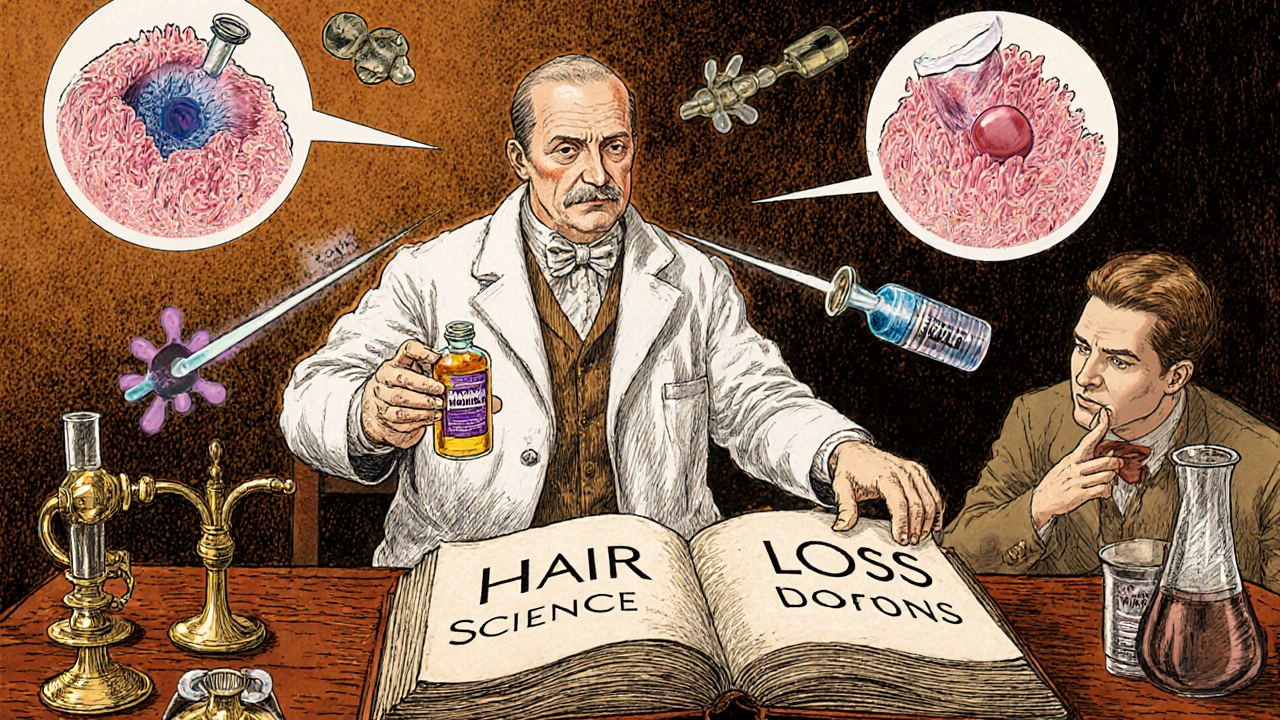
PRP is a procedure where your blood is drawn, spun in a centrifuge to concentrate platelets, then injected into your scalp. Those platelets release growth factors that can wake up dormant follicles.
Studies from Sydney’s University of Technology and the University of Melbourne show PRP can improve hair count and thickness over 3-6 months. Results are often better than minoxidil alone, especially for early-stage thinning.
But PRP isn’t cheap. Each session costs $400-$800 AUD, and you need 3-6 sessions, then maintenance every 6-12 months. It’s not covered by Medicare. Still, for people who’ve tried minoxidil with no luck, PRP can be a game-changer.
Topical peptides and natural alternatives
There’s a growing market for “natural” hair serums - things like pumpkin seed oil, rosemary oil, saw palmetto, or caffeine-based solutions. Some of these have promising data.
A 2022 study in International Journal of Trichology compared 2% rosemary oil to 2% minoxidil. After six months, both groups saw similar increases in hair count. Rosemary oil also caused less scalp itching.
Pumpkin seed oil, taken orally, showed a 40% increase in hair count in a small 2014 trial. Saw palmetto blocks DHT like finasteride - but weaker. It’s not as potent, but it’s safer for people who can’t take prescription meds.
Caffeine shampoos? They may help slightly by blocking DHT locally, but they won’t regrow hair on their own. Think of them as a supportive player, not the main act.
What about hair transplants?
If your hairline is receding badly or you’ve lost significant density, no topical treatment will fully fix it. That’s where hair transplants come in.
FUE (Follicular Unit Extraction) is the most common method. Surgeons remove individual follicles from the back of your head and implant them into thinning areas. Results look natural. Recovery takes about a week. Full results appear in 12-18 months.
In Australia, FUE costs $5,000-$15,000 AUD depending on the number of grafts. It’s not cheap, but it’s permanent. Many people use minoxidil or finasteride after a transplant to protect remaining hair.
Transplants aren’t for everyone - they’re best for stable, advanced hair loss. If you’re still shedding, wait until it stabilizes first.

How to choose what’s right for you
There’s no one-size-fits-all. Your best option depends on your goals, budget, and how far your hair loss has progressed.
Here’s a simple guide:
- Early thinning, budget under $50/month: Try 5% minoxidil (Tugain) or rosemary oil. Give it 6 months.
- Modest thinning, willing to see a doctor: Ask about finasteride. It’s more effective than minoxidil alone.
- Prefer no chemicals: Try LLLT device. Use consistently for 6+ months.
- Minoxidil didn’t work: Consider PRP. It’s more expensive but often effective where topicals fail.
- Advanced balding, want permanent results: Consult a hair transplant surgeon. Combine with meds to protect remaining hair.
Don’t rush. Hair regrowth is slow. Track progress with monthly photos under the same lighting. Take measurements with a ruler - count hairs in a 1cm² patch every 3 months. That’s the only way to know if something’s working.
The bottom line
Tugain Solution isn’t magic. It’s a tool - useful for some, useless for others. The truth is, the best hair loss treatment is the one you’ll stick with. If minoxidil irritates your scalp or you forget to use it daily, you’re wasting your money.
Finasteride works better for most men with genetic hair loss. LLLT and PRP offer solid alternatives without pills. Natural oils can help, but don’t expect miracles. And transplants? They’re the only permanent fix.
What works for your friend might not work for you. Genetics, age, and how early you start matter more than any brand name. Talk to a dermatologist or trichologist - they can check your scalp, run tests, and point you to the right path.
There’s no shame in trying something new. The goal isn’t to use the most popular product. It’s to get results - safely, sustainably, and without wasting time or money.
Is Tugain Solution better than generic minoxidil?
No, Tugain Solution isn’t better than generic minoxidil. Both contain the same active ingredient - 5% minoxidil. The difference is in the brand, packaging, and price. Generic versions cost about half as much and work just as well. Unless you have a specific reaction to the base formula (like alcohol or propylene glycol), there’s no reason to pay extra for Tugain.
Can I use Tugain and finasteride together?
Yes, using Tugain and finasteride together is the most effective approach for male pattern baldness. Studies show this combination leads to significantly better hair regrowth than either treatment alone. Finasteride stops further hair loss by blocking DHT, while minoxidil stimulates new growth. Many dermatologists in Australia recommend this combo for patients with moderate to severe thinning.
Does minoxidil work for women?
Yes, but with caveats. Women can use 2% minoxidil safely, and some doctors prescribe 5% off-label. However, female pattern hair loss is often linked to hormones, so minoxidil alone may not be enough. If you’re experiencing sudden shedding, consult a doctor to rule out thyroid issues, PCOS, or iron deficiency. Minoxidil helps maintain hair but doesn’t fix the root hormonal cause.
How long does it take to see results from alternatives like PRP or LLLT?
PRP usually shows results after 3-4 months, with best outcomes at 6 months. LLLT devices take 4-6 months to show noticeable improvement. Both require consistent use - skipping sessions delays results. Unlike minoxidil, these treatments don’t cause shedding at first, so you won’t notice changes right away. Patience is key.
Are natural oils like rosemary or pumpkin seed oil safe?
Yes, they’re generally safe when used topically or taken as supplements. Rosemary oil has been shown to be as effective as 2% minoxidil in small studies, with fewer side effects. Pumpkin seed oil, taken orally, may help block DHT. But don’t expect dramatic regrowth - these work best as supportive treatments, especially for early thinning. Always patch-test oils first to avoid allergic reactions.
Can I stop using minoxidil after a hair transplant?
You can, but most surgeons recommend continuing minoxidil or finasteride after a transplant. Transplanted hair is permanent, but your existing hair around it may still be vulnerable to DHT. Stopping treatment can lead to further thinning, making the transplant look unnatural over time. Think of it like sunscreen - you don’t stop using it just because you got a tan.
What to do next
If you’re unsure where to start, book a consultation with a dermatologist or trichologist. Many clinics in Sydney offer free scalp scans using digital imaging. That way, you’ll know if your hair loss is genetic, hormonal, or due to something else - like stress or nutrient deficiency.
Don’t waste months on random products. Track your progress. Take photos. Be honest about what you’re willing to stick with. Hair regrowth isn’t a sprint - it’s a marathon. And the winner isn’t the one who uses the most expensive product. It’s the one who stays consistent.
Sherri Naslund
November 19, 2025 AT 14:15minoxidil is just a bandaid on a bullet wound bro. they dont tell you it makes your scalp itch like hell and your pillow looks like a crime scene. i used it for 8 months and ended up with more face hair than my dad. why am i paying for this chemical drama when i could just wear a hat?
Ashley Miller
November 20, 2025 AT 05:24lol so Tugain is just big pharma’s way of selling you water with extra steps. next they’ll charge you for sunlight to grow hair. did you know the FDA almost banned minoxidil in the 90s because it was basically a glorified weed killer? but nooo, let’s sell it to guys who think they’re still 22.
Martin Rodrigue
November 20, 2025 AT 22:51While the article provides a comprehensive overview of hair loss interventions, it is important to note that the efficacy of minoxidil is contingent upon consistent application and biological receptivity. The pharmacokinetics of topical minoxidil demonstrate variable absorption rates across individuals, which may explain the 30–40% non-response rate cited. Furthermore, the combination of finasteride and minoxidil is supported by robust meta-analyses, including a 2019 JAAD study, which demonstrated a synergistic effect on terminal hair density. One must also consider the role of androgen receptor polymorphisms in treatment responsiveness.
Jessica Engelhardt
November 22, 2025 AT 16:55USA makes better hair stuff. why are we even talking about this? Tugain is just a ripoff. finasteride? yeah that’s the real deal. i tried rosemary oil and my scalp looked like a cactus. if you’re not using FDA-approved stuff you’re just wasting time. also, PRP is for rich people who think they’re in a sci-fi movie. get real.
Hannah Machiorlete
November 24, 2025 AT 05:41you know what’s worse than losing hair? spending 2 years trying every scam product out there. i tried everything from caffeine shampoos to dragon blood serum (yes, that’s a thing). turned out i had low iron. fix that and my hair stopped falling out like confetti. no minoxidil. no lasers. just a blood test and some pills. why does no one talk about this?
Bette Rivas
November 24, 2025 AT 16:10It’s critical to emphasize that hair regrowth is not a linear process and requires longitudinal tracking. Monthly photographic documentation under standardized lighting conditions, coupled with trichoscopic analysis, provides the only objective metric for evaluating intervention efficacy. Many users abandon treatments prematurely due to the delayed onset of visible results, which typically occur between 4–6 months for minoxidil and 6–8 months for LLLT. Additionally, the placebo effect is substantial in hair loss studies, making blinded, controlled trials essential for validating anecdotal claims. PRP, while promising, remains off-label in most jurisdictions and lacks standardized protocols for platelet concentration and delivery method, leading to high variability in outcomes. Always consult a board-certified trichologist before proceeding with invasive or costly interventions.
prasad gali
November 25, 2025 AT 17:31you people are wasting money. in india we use onion juice and amla oil since 1980s. no chemicals. no lasers. no $800 sessions. just pure ayurveda. your scalp is crying for natural. minoxidil is poison. finasteride? that’s for weak men who can’t handle their own hormones. try yoga, reduce stress, eat curry. your hair will thank you. science is just corporate marketing with a lab coat.
Paige Basford
November 27, 2025 AT 00:05i just want to say i tried the rosemary oil thing and honestly? it was kinda nice. smelled like a spa. no itching. no mess. but after 4 months i was like… is this doing anything? then i found out my sister used the same stuff and she’s got a full head of hair at 45. maybe i just need more time? also, is it weird that i started massaging my scalp like i’m giving myself a head rub every night? feels kinda therapeutic tbh.
Ankita Sinha
November 27, 2025 AT 22:14okay but have you tried scalp micropigmentation? it’s not regrowth but it looks 100% real. i did it last year and people think i got a transplant. no maintenance, no daily routines, no sticky residue. just look good and move on. also, if you’re stressing about hair loss, you’re making it worse. breathe. meditate. stop checking your pillow every morning. your hair doesn’t care how much you worry.
Abdula'aziz Muhammad Nasir
November 29, 2025 AT 03:19Thank you for sharing this detailed overview. In my practice as a trichologist in Lagos, I’ve seen patients benefit most from a tiered approach: first, rule out nutritional or hormonal causes. Second, if genetics are confirmed, combine finasteride with minoxidil. Third, for those seeking non-pharmaceutical options, LLLT has shown consistent results with minimal risk. PRP is viable but requires access to quality clinics. Natural oils are supportive, not curative. The key is patience and professional guidance. Hair loss is not a failure-it’s a biological process. Manage it wisely.
Tara Stelluti
November 29, 2025 AT 03:37my ex left me because i was balding. so i spent 12k on a transplant. then he came back saying he missed my ‘natural look’. now i’m just sitting here with a full head of hair and zero self-worth. why do we do this to ourselves?